Digital nudges to push car-lite behavior shifts in Singapore
Applying in-app digital nudges to encourage Singaporean towards active mobility
Feb 2024
Mobile App
Client Project
7 min read
The project was short but a fruitful one. Being a solo designer, I delivered a concept and develop design that future-proof and human at the same time
Background
In the early of 2024 I got to collaborate with Nippon Koei (NK), a Japanese engineering consulting firm specializing in infrastructure development, urban planning, and environmental management. NK’s Singapore representative won a competition, and Awarded by Land Transport Authority (LTA) Singapore for their solution to address sustainable challenges in Singapore CBD, Jurong Lake District (JLD).
The solution NK provide is to develop a digital product that encourage private vehicle user to move towards active mobility (walk-cycle-ride), or in other words, shift the commuter into “car-lite” model, especially in JLD area. The solution will also be trialed as a demo to the commuters who will visit destinations within JLD.
Problems
The Walk-Cycle-Ride Mobility platform market in Singapore
Fragmented Market
Mobility application market in Singapore is fragmented and cluttered, with many different apps offering different services. This can be confusing and inconvenient for passengers and car drivers.
Limited User Adoption
Despite the availability of various mobility applications, many car drivers in Singapore still choose to drive instead of using public transportation. There are barriers to entry or challenges with the current offerings that prevent car drivers from switching to use Walk-Cycle-Ride modes and public transportation.
Siloed Data
High velocity of data is generated and siloed, unable to give a full picture of the users' mode choices to public transport service providers to optimise services, provide a great end to end Walk-Cycle-Ride experience, and scenario plan for new innovative services.
As the statement above, I think it's safe to go with this problem statement;
How Might We
encourage private vehicle users to go car-lite and promote more active mobility (Walk-Cycle-Ride) for their trips within Jurong Lake Dirstrict?
Early Concepts
NK came up with early concepts of mobility app aims to create seamless walk-cycle-ride experience in JLD to achieve their goal.
Backed by their own API, NK also came up with use cases of touchpoints that include "nudge design" to shift user behavior towards sustainable transportation choices through personalization, nudging, social aspects, gamifications and rewards.
Early concept of touchpoints to NUDGE car users and frequent drivers to be car-lite. These touchpoints will demonstrated by a combination of a NK APIs and NK Data Insight Platform
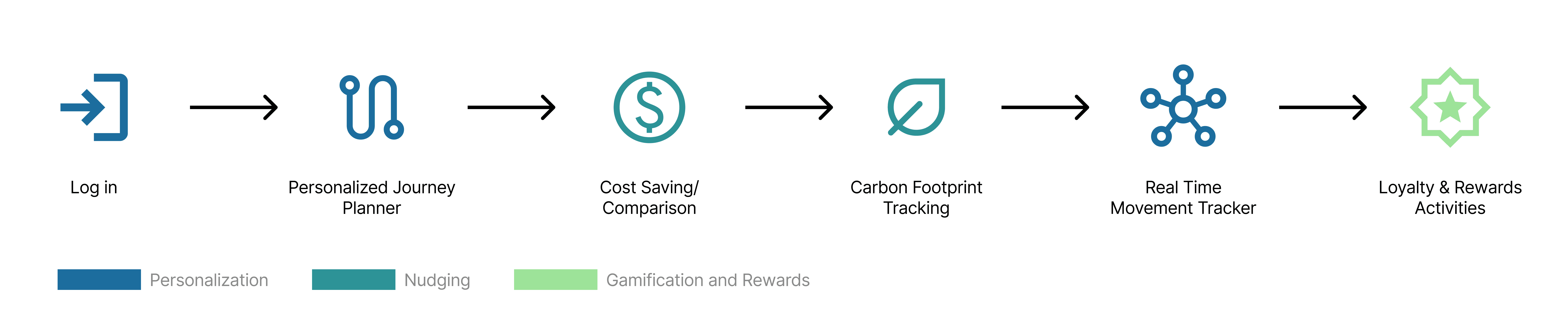
With this concept, NK's mobility app has the potential to become a useful tool for commuters to make the most optimal use of the various transport options available through features such as real-time cost and environmental impact comparison between different modes
Secondly, we also need to define Nudge UI UX component and workflow for the system based on NK API capability. Since it will be trialed, OZONE as a journey planner need to be prepared some scenarios to target the nudge to the right personas.
Why we need to define the Nudge and its target personas?
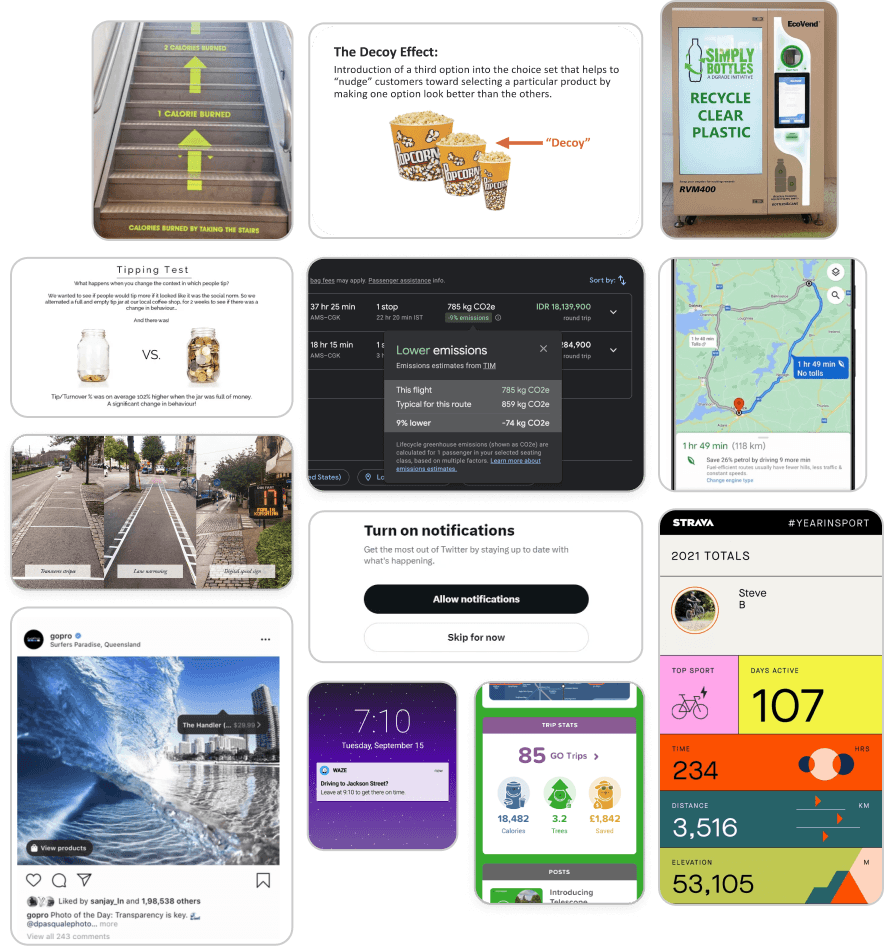
Nudge in UX design is defined as a subtle form of using design, information and interaction elements to guide user behavior in digital environments, without restricting the individual's freedom of choice. Nudges are very related to personalization. Meaning, nudges are at the most effective when it given to the right people and right preferences.
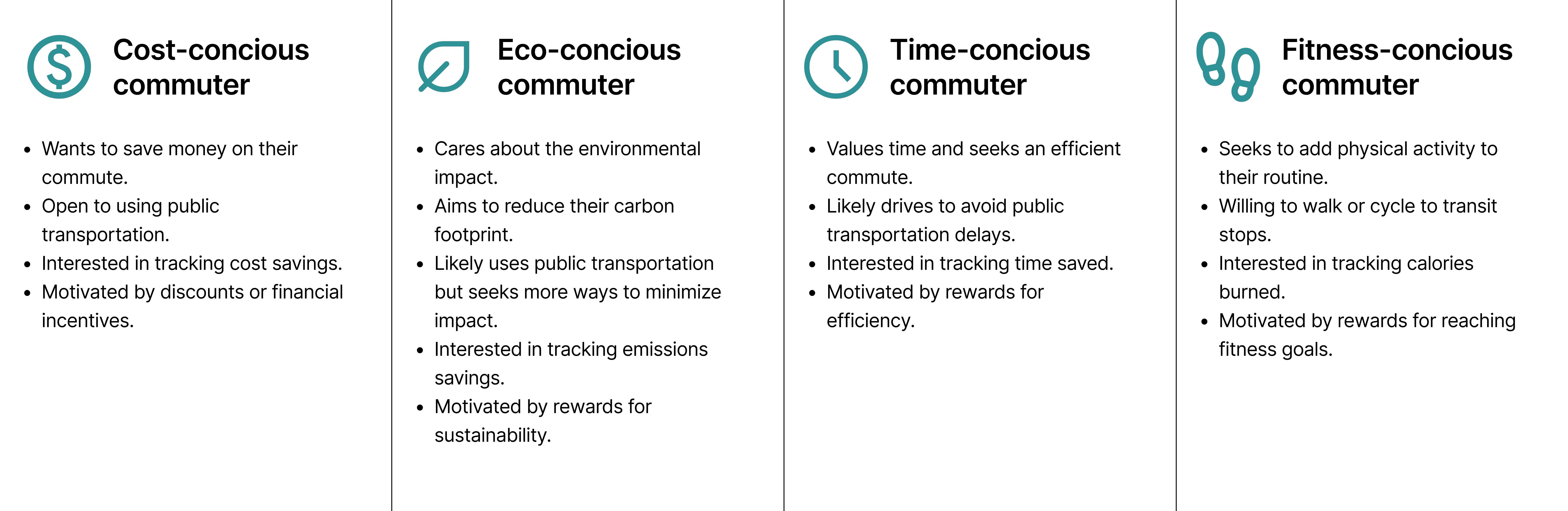
With NK's API, these are personas that set through the user behaviour analysis and profiling for personalised nudging. Later, these personas will be pretty much affected the Nudge design within OZONE Journey Planner
Approach
Given the situations with the limited timeframes, I had to set up different types of assumptions to help us figure out what we want and which approach is the most suitable design solution based on our engineering feasibility, viability, and other constraints. It was crucial to address the challenge efficiently and gather insights quickly to kickstart the design process, especially without access to user samples. As a result, I relied heavily on desk research and maintained ongoing communication with the client.
Product Benchmarking
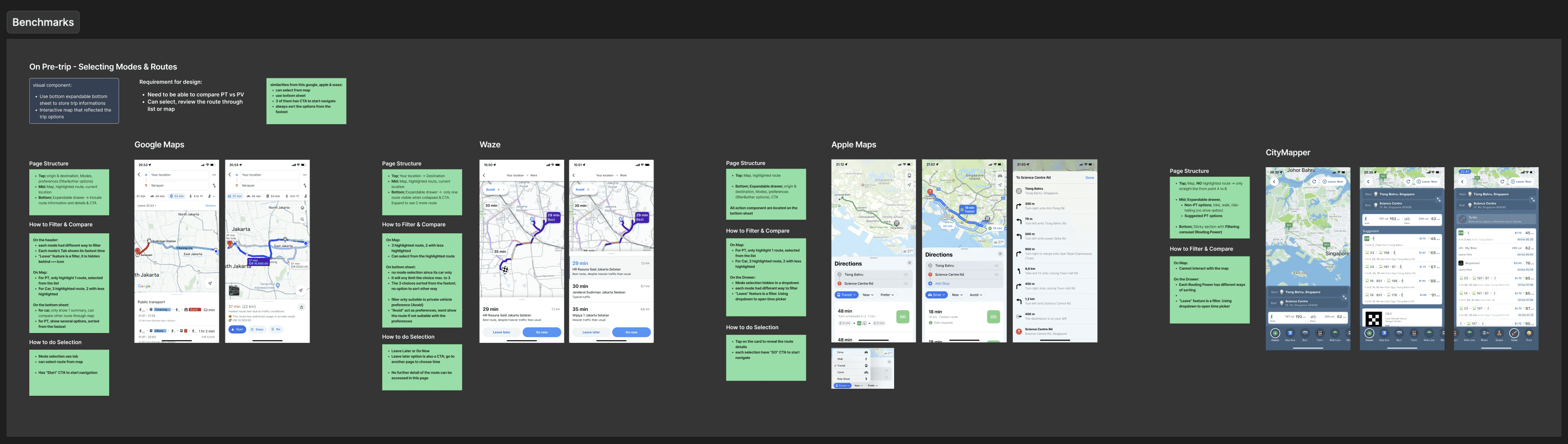
Understanding different types of journey planner apps, identify how existing products integrate nudges in their design and identify opportunities for the journey planner.
I benchmarked Google Maps and Apple Maps, and specific transit app like City Mapper and Waze for driver.
The benchmark was intended to identify essential functions for OZONE itself.
Finding Balance Between Familiarity and Novelty
As a demo app not intended for full public launch, and with short timelines we focused on prioritizing and organizing features that would have the most effective impact, avoiding excessive innovation of new elements, but at the same time keeping the product scalability.
By taking the good examples of journey planner framework and best practice of applying nudge, I assumed that my benchmark from 4 mobility product is enough to start the design exploration.
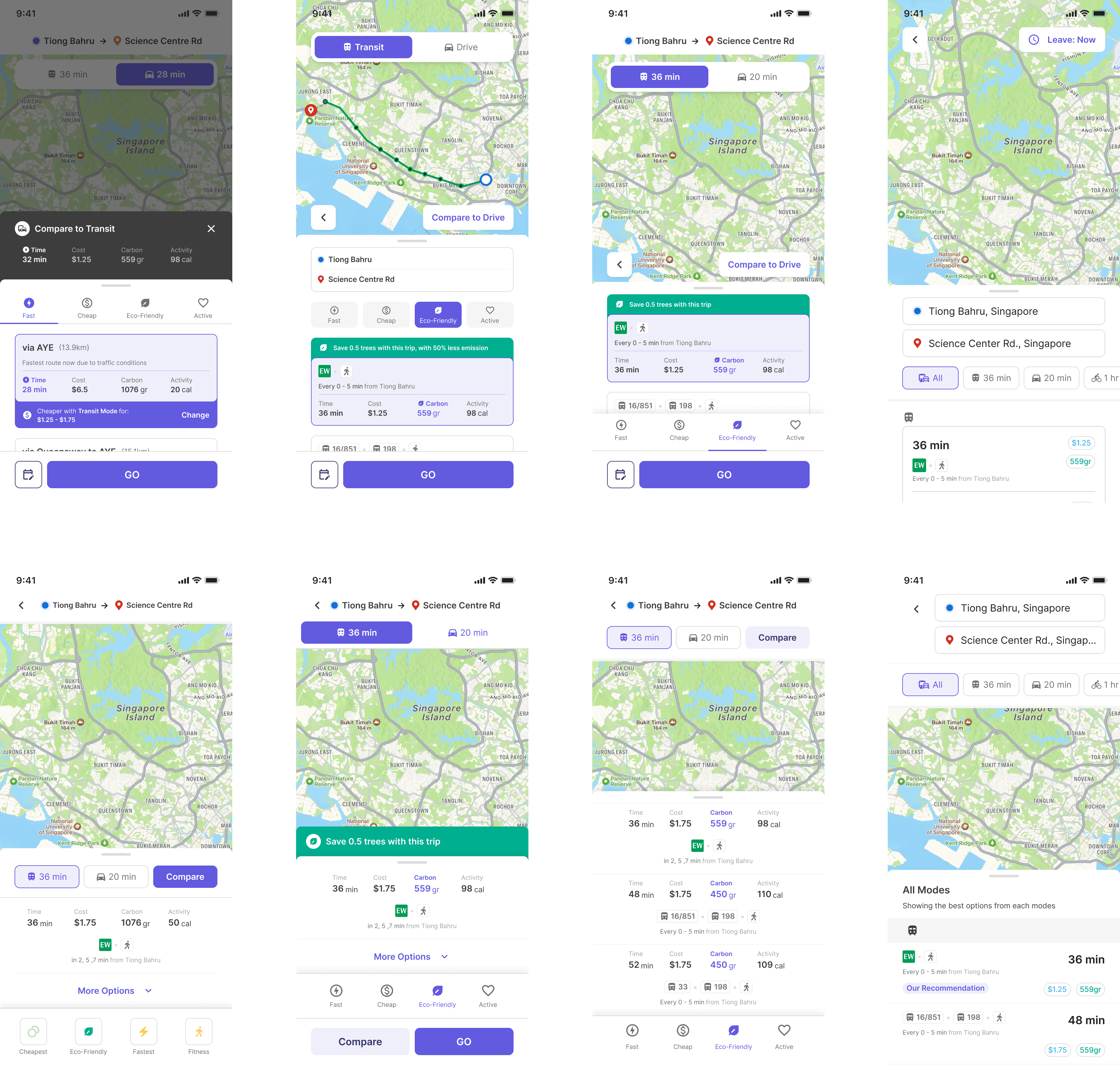
The goal of the explorations is to test the journey planner framework, including how to apply NUDGE and other informations. I started the exploration from the most crucial place where user will decide their preferences of commute.
Solution #1
Ensuring Straightforward and Spot-On Recommendations
Before diving deep into the nudge component itself, we ensured that a good journey planner must effectively and successfully guide users to their destinations regardless of any nudge features. To support the framework, we also ensured that our recommendations were aligned with user needs and the on-ground situation in Singapore. Thus, we presented information in an easy-to-understand manner, striking a balance in its presentation.
The end-to-end flow of choosing way of commute is seamless. The experience is not forcing the user to use on option or another, instead it provided enough informations to guide user to decide, but at the same time is also frictionless.
The Journey Planner have 2 modes to choose, Drive and Transit. This meant for the testing to cover many use cases, primarily to see the shifting between private car into public transportations
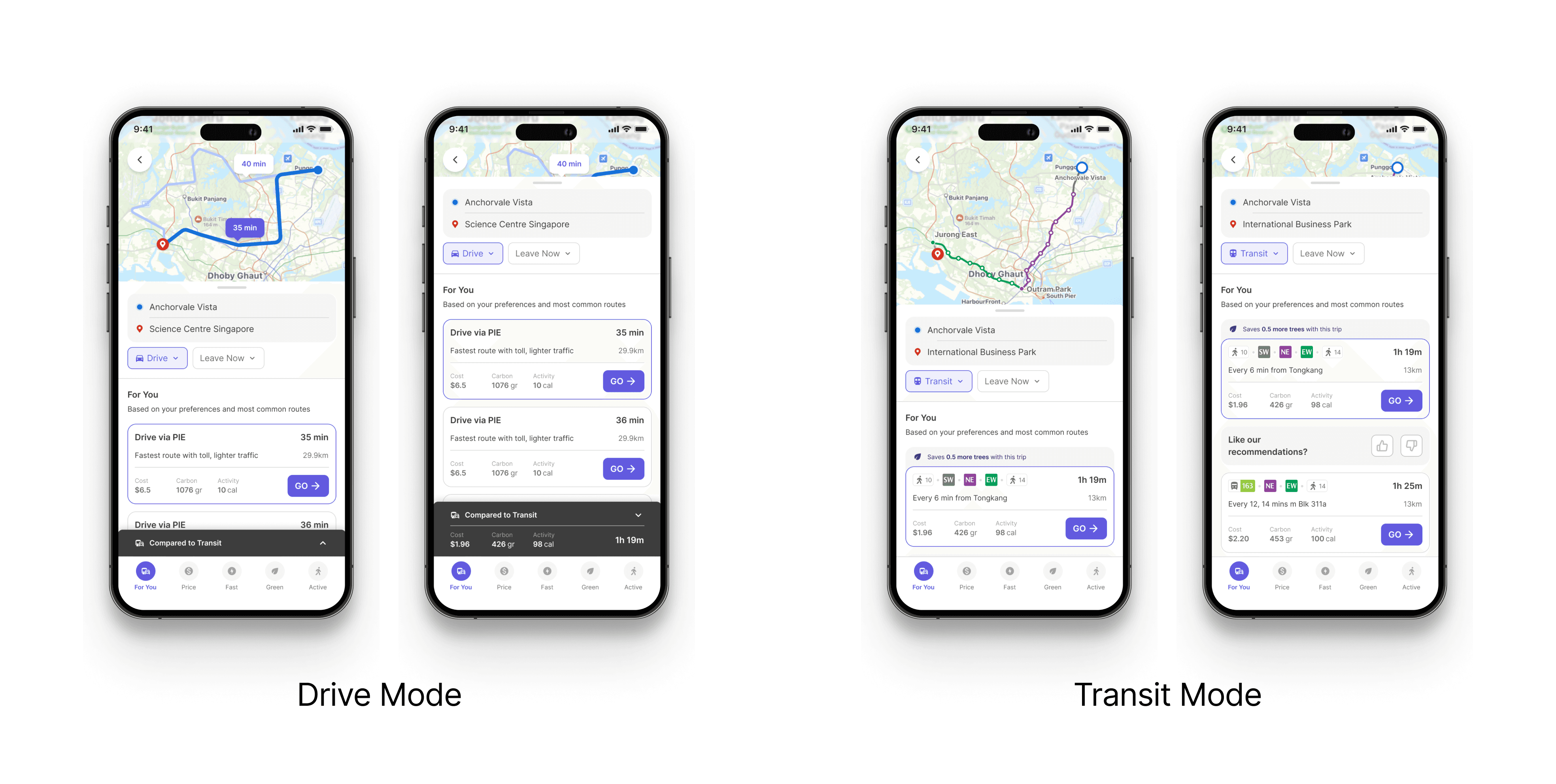
Not forgetting the target personas, I provided the lists with options of preferences based on our defined personas. User can choose a trip based on their conciousness; Price, Time, Eco, and Fitness, but we also cater to general user who usually don't have any preferences in commuting by providing "For You" tab, which gives the best recommendations to commute.

Solution #2
Encouraging through nudges without sacrificing convenience
I discovered that nudge can be applied in many forms. Setting a robust framework could either limit the nudge placements or the nudges end up disrupting the main experience. Regarding to our mission to private vehicle users to go car-lite, we went through back and forth iterative process, and achieved ways to apply nudges around the designed framework;
Decider Nudges
Nudges that you come across when you’re about to make a decision – it helps with information transparency.
The nudge is designed to be place-sensitive especially the one that related to Jurong Lake District (JLD). As JLD will be a car-lite area, when JLD set as destination, it will give: 1.) Public Transport Recommendation, and 2.) Combination of Parking+Walk/Cycle, as an option to enter JLD area with private car.
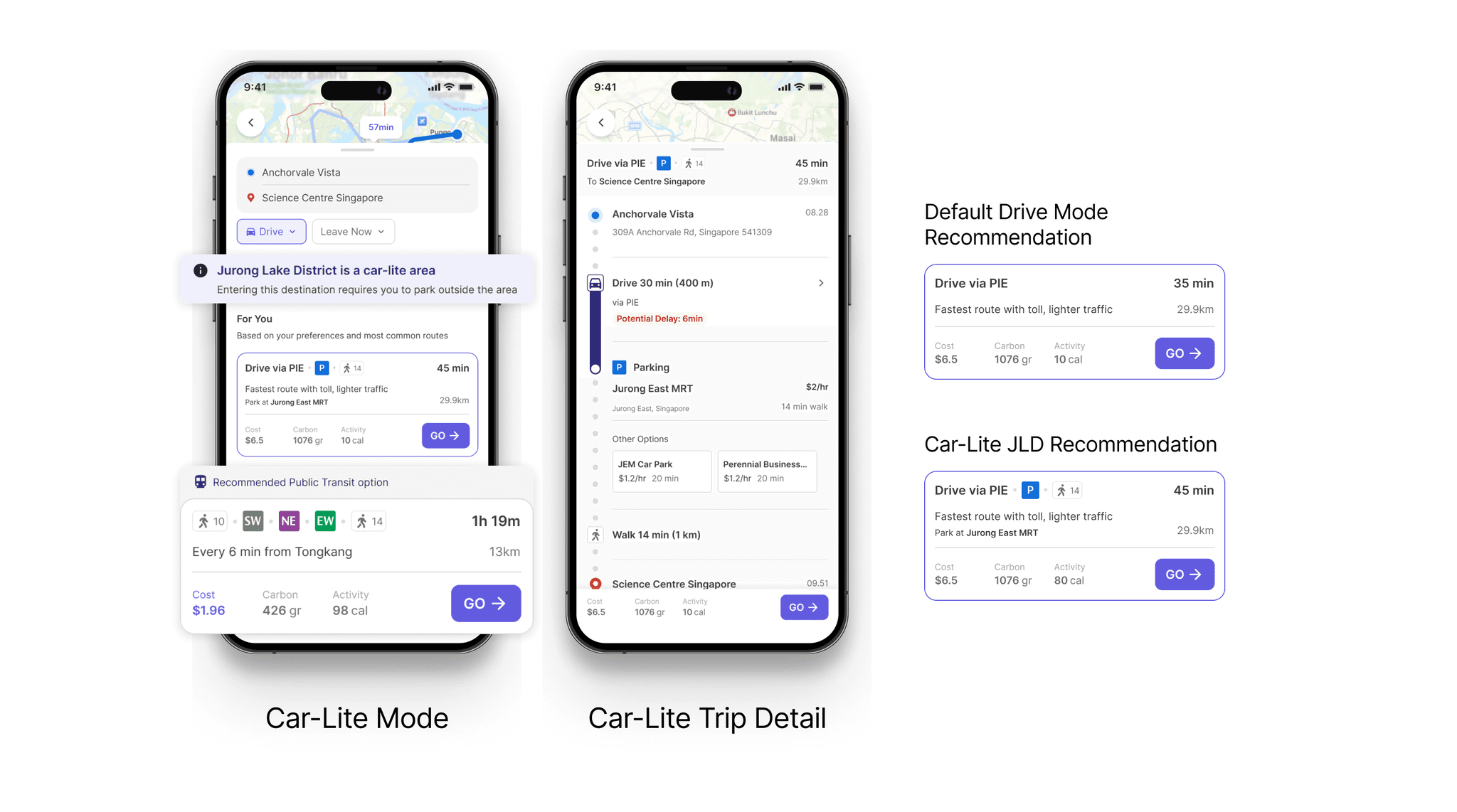
Other than place-sensitive, the nudge also time sensitive. For example, I provide a "Weekend Recommendations" where the system recommends some destinations that suitable for active mobility activities, especially in JLD. This feature meant to provide a guided walking tour to the neighbourhood in Singapore while promoting car-lite.
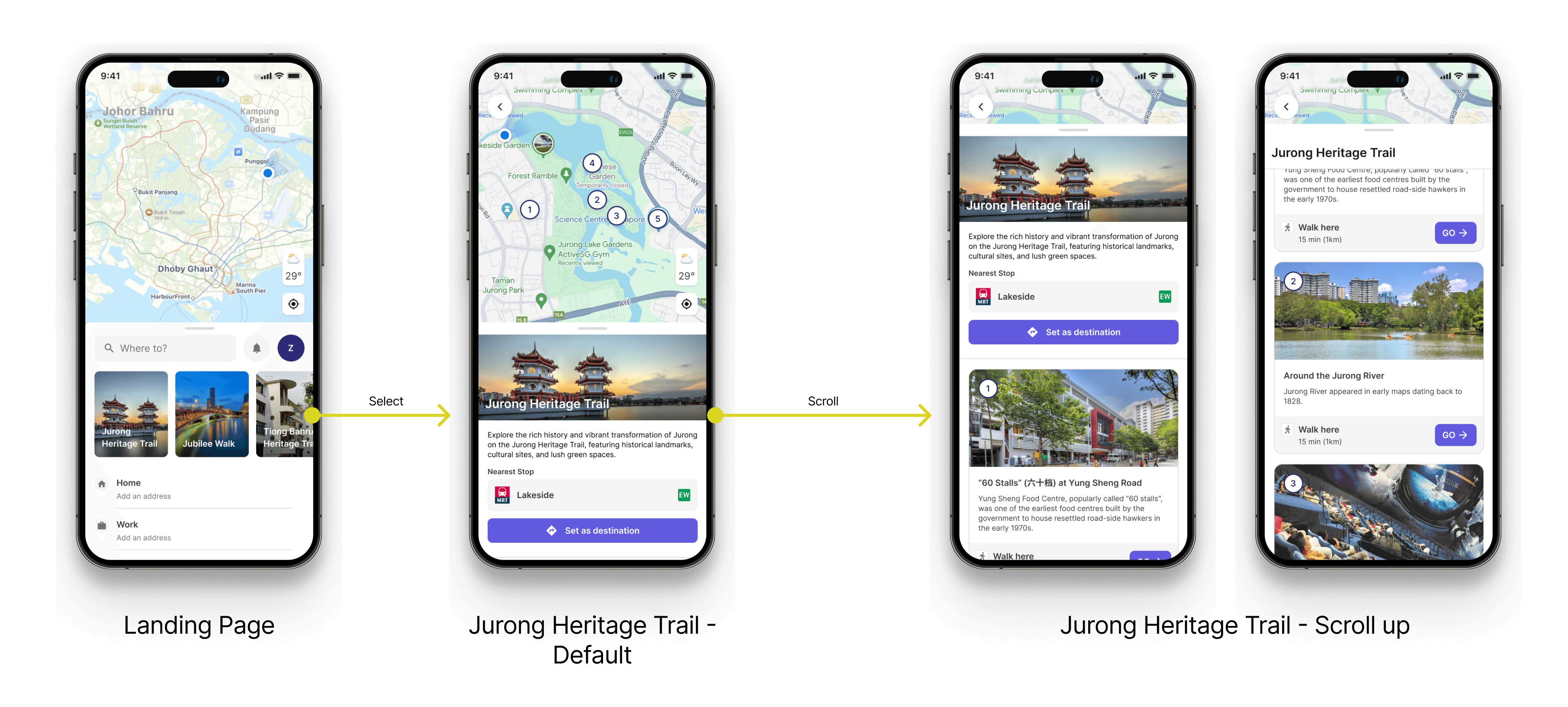
Impact-based Nudges
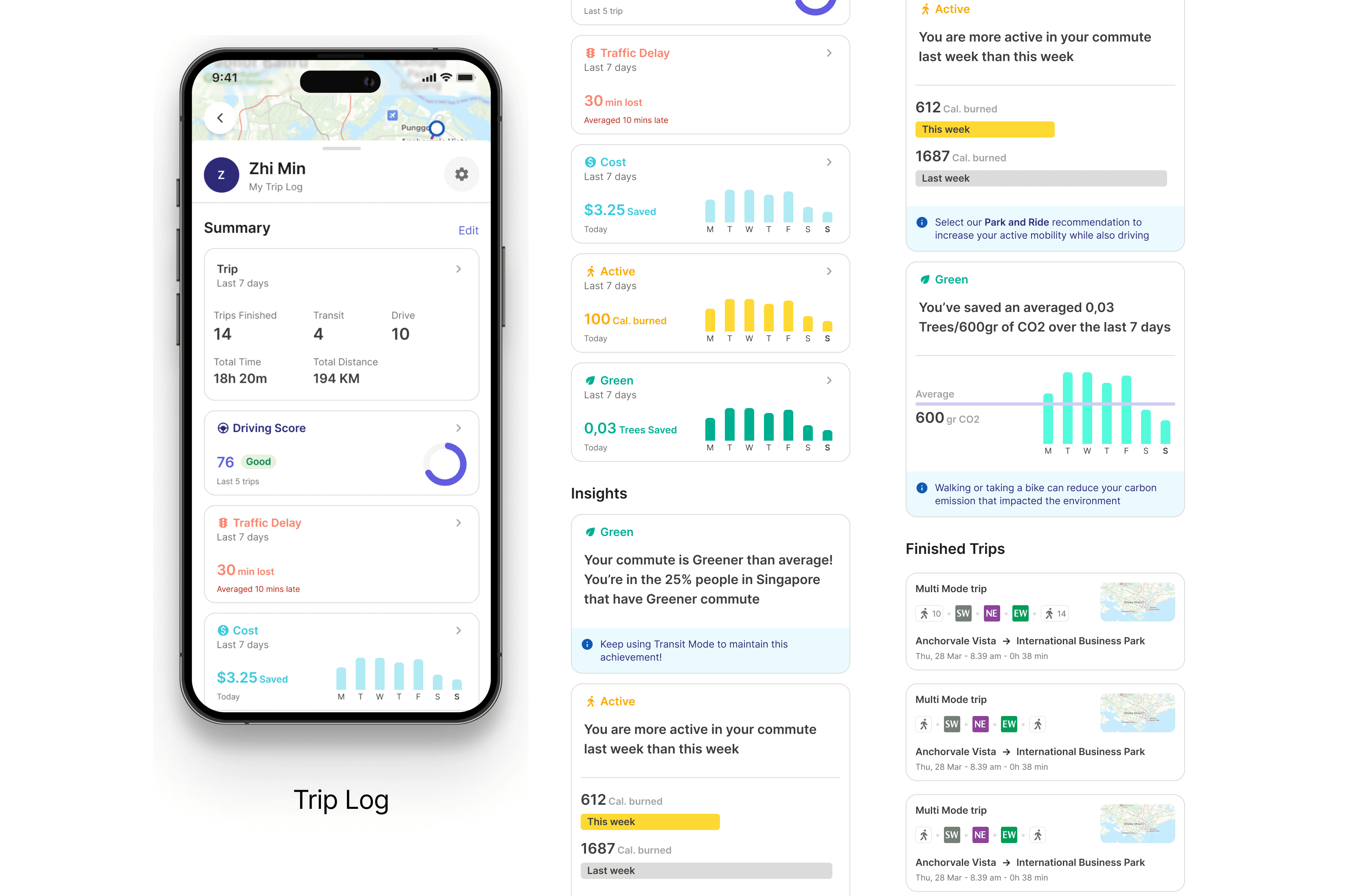
Nudges that are fueled with data and insight and served again as personalized recommendations for the users
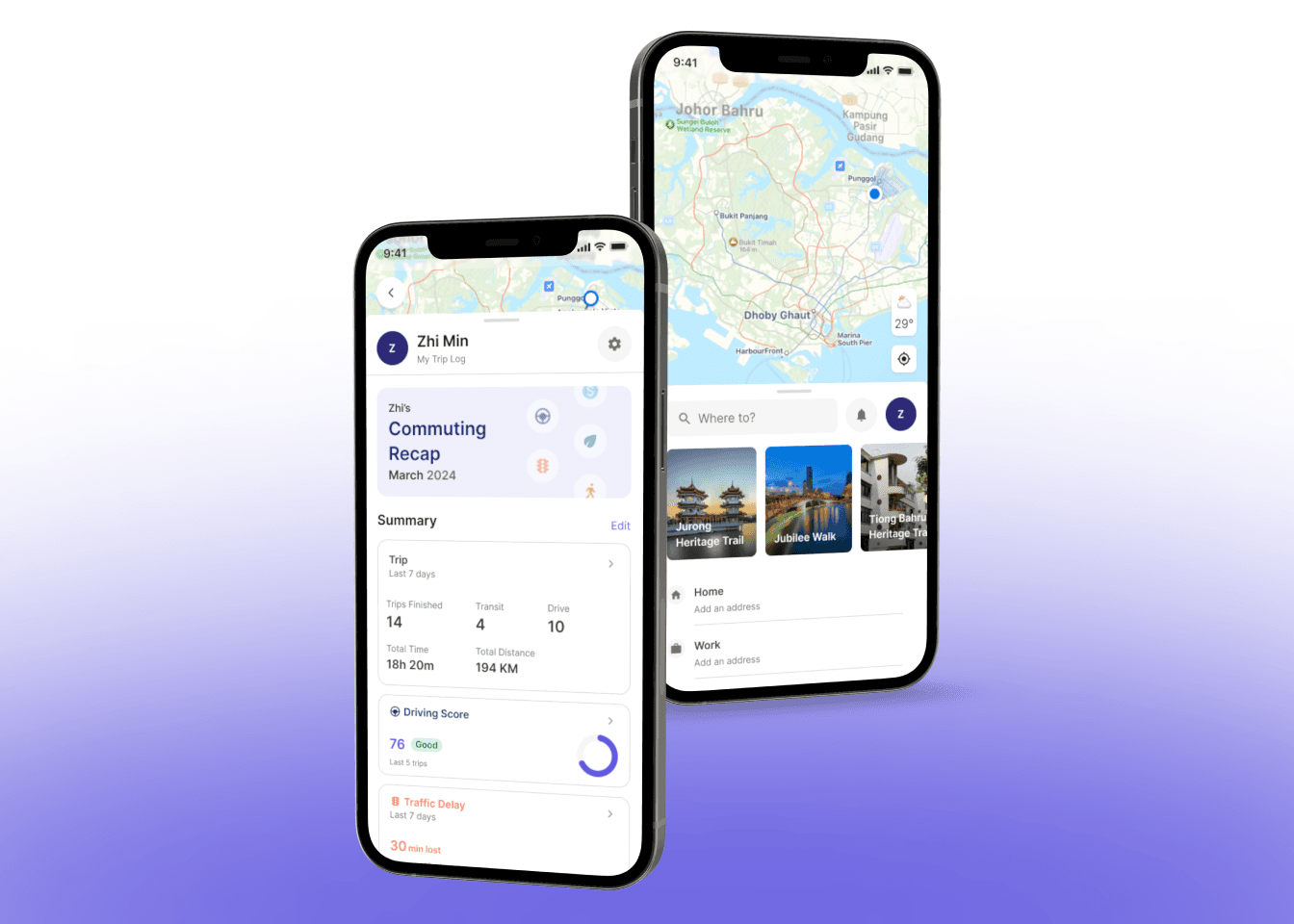
user will have a trip log to monitor their commuting activities and summaries, including insights that provided by the syetem to recommend actionable items towards active mobility and car-lite activities.
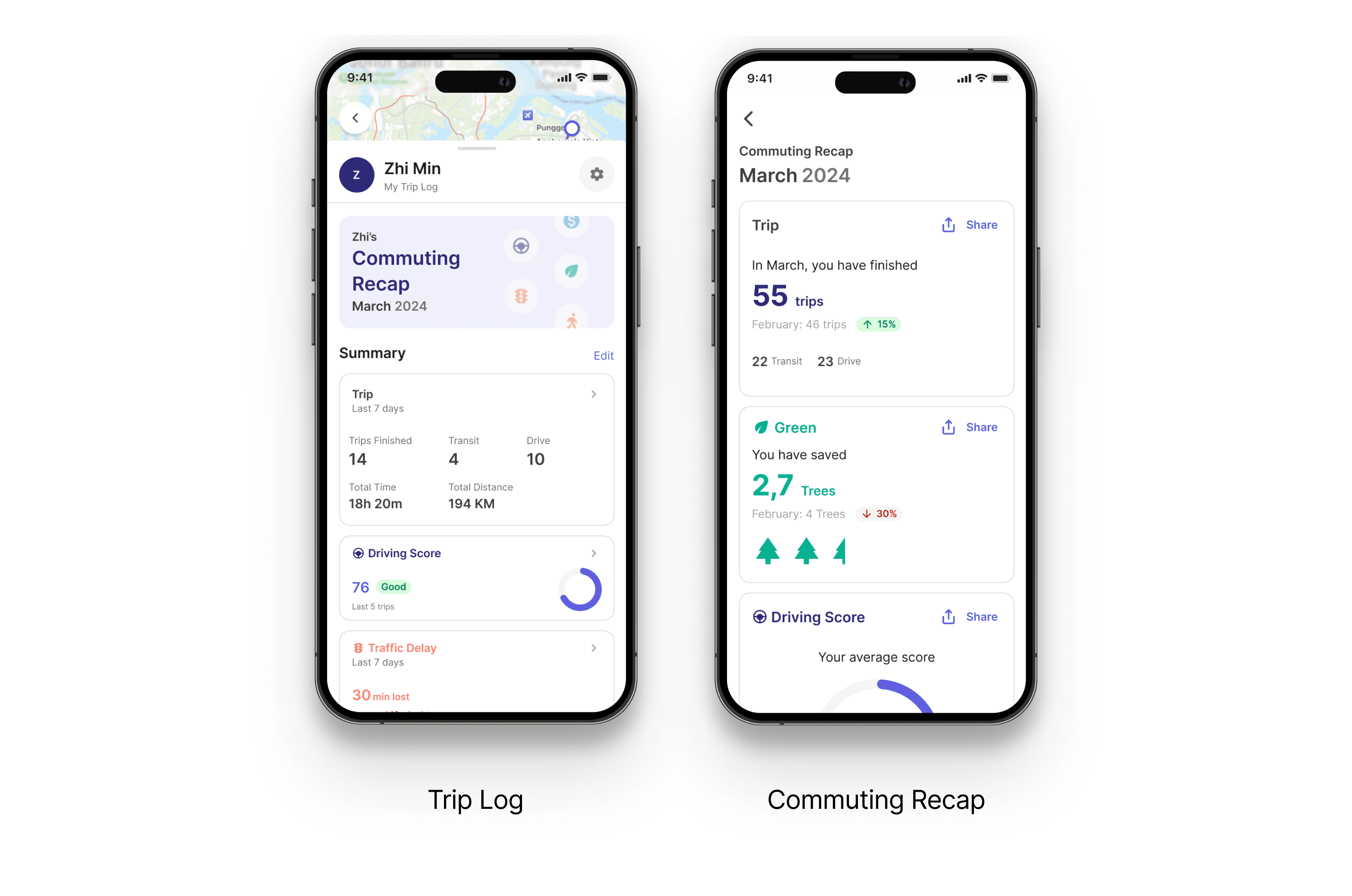
To maintain the engagement, I designed a "Commuting Recap" as a nudge that play a role in social influence.
Pro-active Nudges
Nudges that helps you think ahead about your commuting decisions
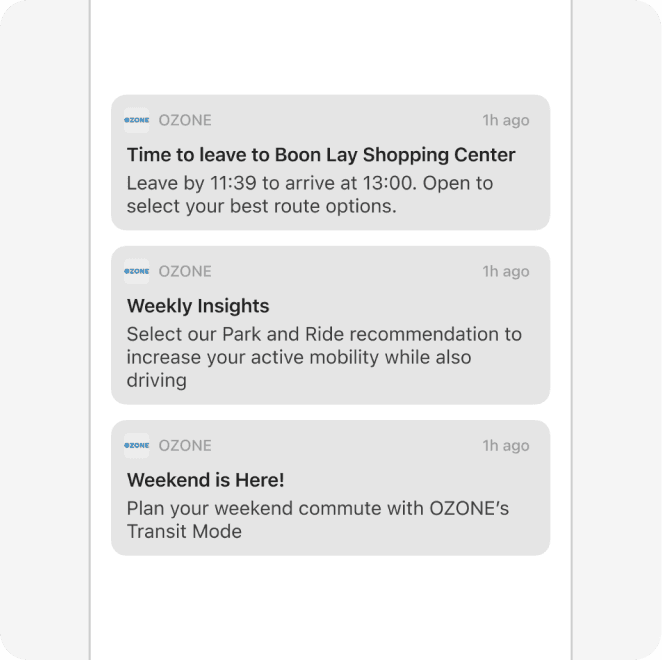
Nudges also comes from the push notifications. It ranges as a tool to promote car-lite, a reminder to start the commute and a reminder to catch up with the weekly insights provided by OZONE.
Learnings
Being a solo designer gives me freedom to explore, but at the same time it's easy to get lost in the design process
As a designer, time-conciousness is really important. The short timeline in this projects required a good planning on which task that I want to tackle as a designer as early as possible.
Insights can be gathered anywhere, with any methods. In this project, without a proper research process, I had to communicate and download a lot of context about Singapore and the commuting habit, especially as a foreigner.
OZONE is currently in development phase. Will update more results in the future
Thank you for reading up to this point!