OZONE DEMO APP

Nudging Toward Sustainable Mobility in Singapore

PRODUCT DESIGN, INTERACTION DESIGN, PROTOTYPING
YEAR

YEAR

2024

2024

TIMELINE

TIMELINE

4 WEEKS

4 WEEKS

ROLE

ROLE

PRODUCT DESIGNER (SOLO)

PRODUCT DESIGNER (SOLO)

CREDITS

CREDITS

SIXTY TWO

SIXTY TWO

35 min

40 min

⛅️️

29°

9:41

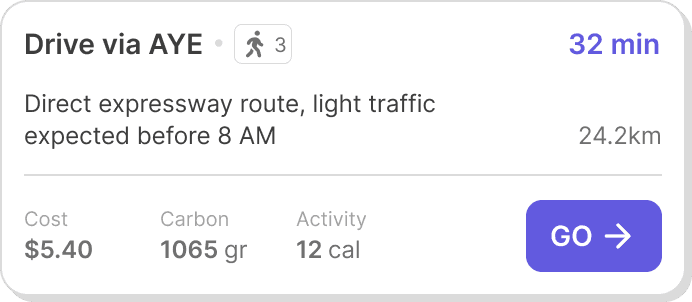
Drive via AYE

3

Direct expressway route, light traffic expected before 8 AM

32 min

24.2km

Cost

$5.40

Carbon

1065

gr

Activity

12

cal

GO

You’ll save up to $2.30 with Bus and MRT

Takes a slightly longer way but avoids tolls and high fuel zones.

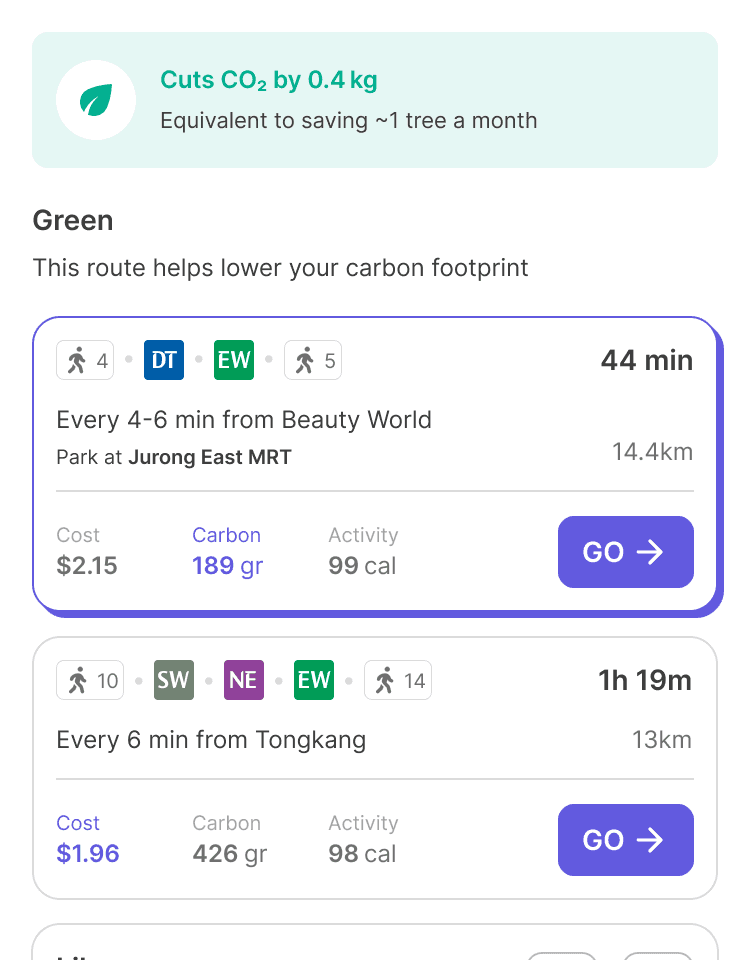
Cuts CO₂ by 0.4 kg

Equivalent to saving ~1 tree a month

6

105

EW

6

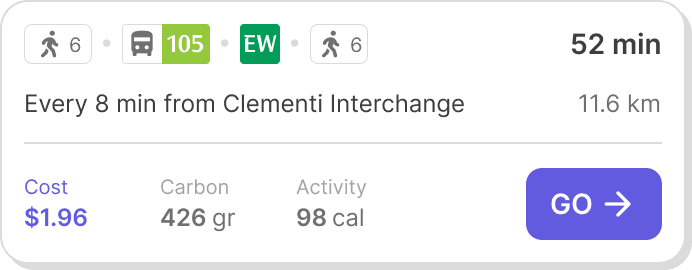
Every 8 min from Clementi Interchange

52 min

11.6 km

Cost

$1.96

Carbon

426

gr

Activity

98

cal

GO

4

DT

EW

5

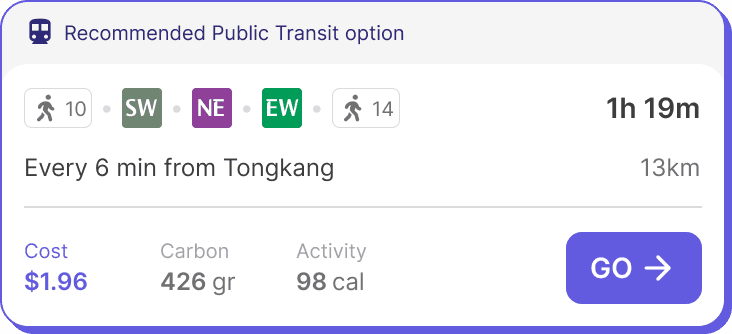
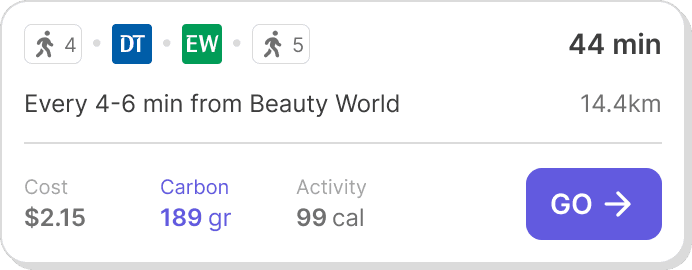
Every 4-6 min from Beauty World

44 min

14.4km

Cost

$2.15

Carbon

189

gr

Activity

99

cal

GO

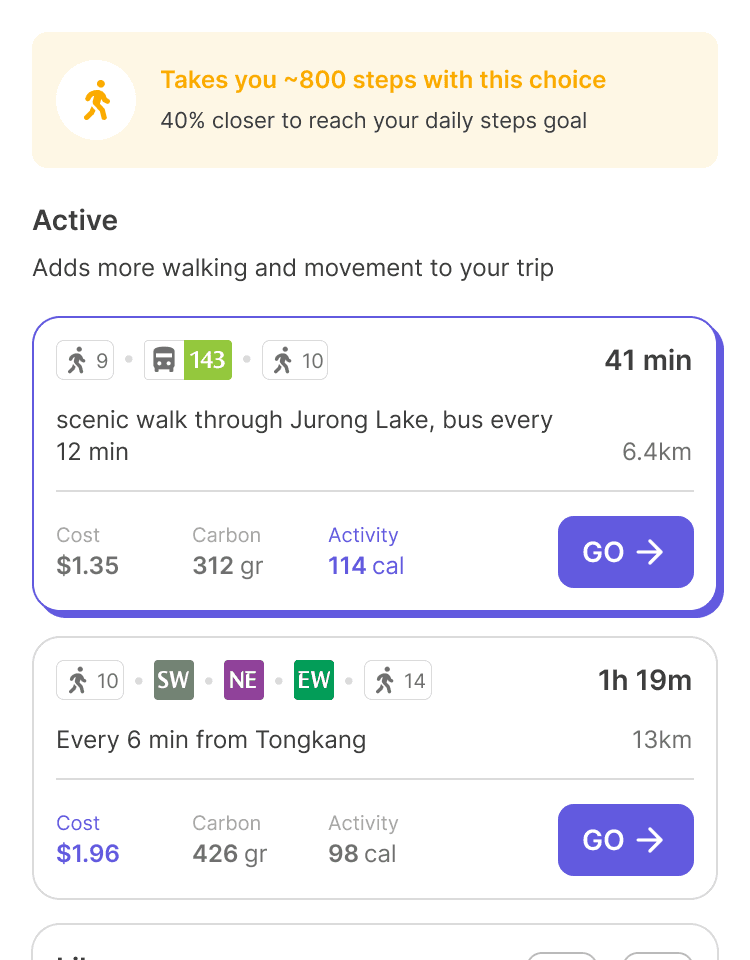
Takes you ~800 steps with this choice

40% closer to reach your daily steps goal

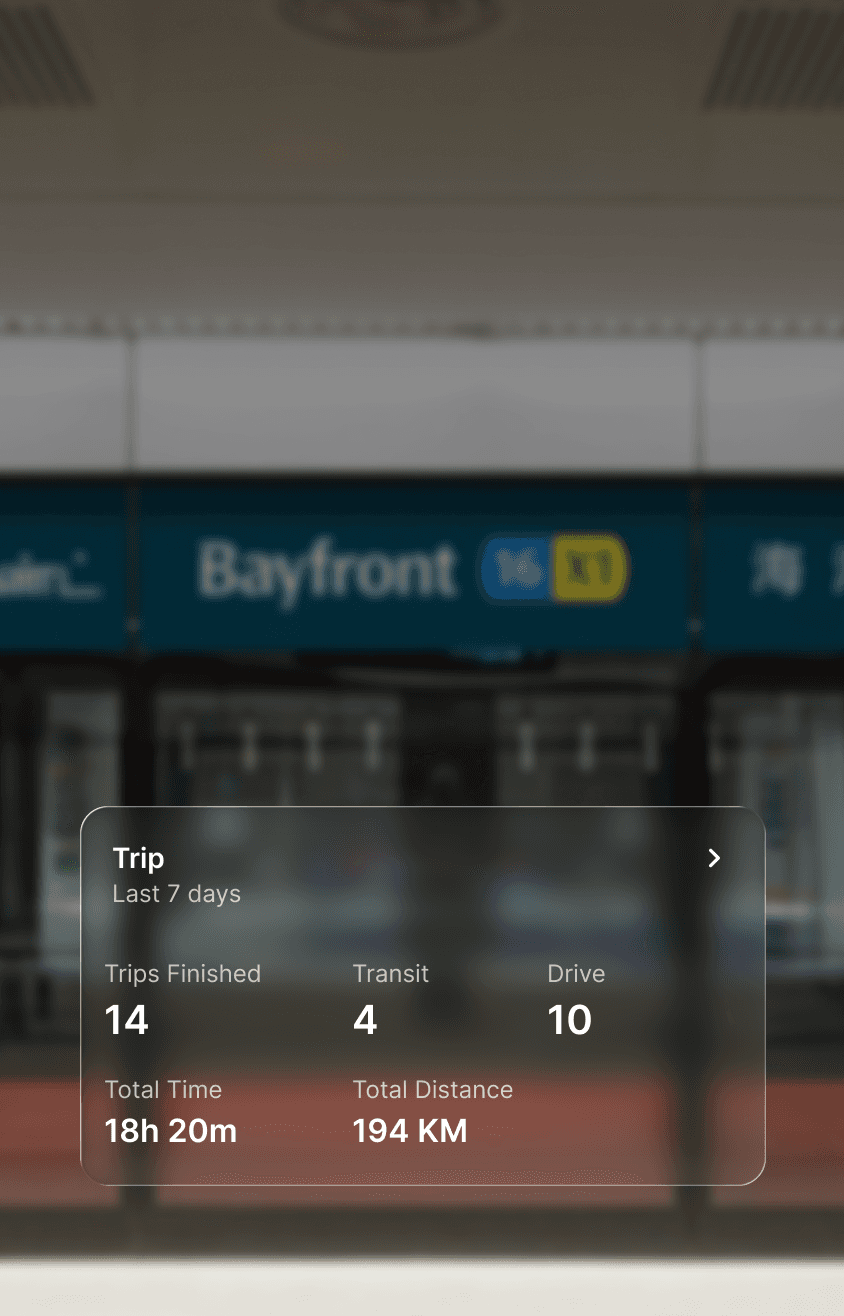
Trip

Share

In March, you have finished

55

trips

February: 46 trips

15%

22

Transit

23

Drive

Traffic Delay

Last 7 days

30

min lost

Averaged 10 mins late

Active

Last 7 days

100

Cal. burned

Today

M

T

W

T

F

S

S

Cost

Last 7 days

$3.25

Saved

Today

M

T

W

T

F

S

S

Green

You’ve saved an averaged 0,03 Trees/600gr of CO2 over the last 7 days

M

T

W

T

F

S

S

600

gr CO2

Average

Walking or taking a bike can reduce your carbon emission that impacted the environment

35 min

40 min

⛅️️

29°

9:41

Pre-Decision

During Decision

After Decision

Drive via AYE

3

Direct expressway route, light traffic expected before 8 AM

32 min

24.2km

Cost

$5.40

Carbon

1065

gr

Activity

12

cal

GO

You’ll save up to $2.30 with Bus and MRT

Takes a slightly longer way but avoids tolls and high fuel zones.

Cuts CO₂ by 0.4 kg

Equivalent to saving ~1 tree a month

6

105

EW

6

Every 8 min from Clementi Interchange

52 min

11.6 km

Cost

$1.96

Carbon

426

gr

Activity

98

cal

GO

4

DT

EW

5

Every 4-6 min from Beauty World

44 min

14.4km

Cost

$2.15

Carbon

189

gr

Activity

99

cal

GO

Takes you ~800 steps with this choice

40% closer to reach your daily steps goal

Trip

Share

In March, you have finished

55

trips

February: 46 trips

15%

22

Transit

23

Drive

Traffic Delay

Last 7 days

30

min lost

Averaged 10 mins late

Active

Last 7 days

100

Cal. burned

Today

M

T

W

T

F

S

S

Cost

Last 7 days

$3.25

Saved

Today

M

T

W

T

F

S

S

Green

You’ve saved an averaged 0,03 Trees/600gr of CO2 over the last 7 days

M

T

W

T

F

S

S

600

gr CO2

Average

Walking or taking a bike can reduce your carbon emission that impacted the environment

35 min

40 min

⛅️️

29°

9:41

Pre-Decision

During Decision

After Decision

Drive via AYE

3

Direct expressway route, light traffic expected before 8 AM

32 min

24.2km

Cost

$5.40

Carbon

1065

gr

Activity

12

cal

GO

You’ll save up to $2.30 with Bus and MRT

Takes a slightly longer way but avoids tolls and high fuel zones.

Cuts CO₂ by 0.4 kg

Equivalent to saving ~1 tree a month

6

105

EW

6

Every 8 min from Clementi Interchange

52 min

11.6 km

Cost

$1.96

Carbon

426

gr

Activity

98

cal

GO

4

DT

EW

5

Every 4-6 min from Beauty World

44 min

14.4km

Cost

$2.15

Carbon

189

gr

Activity

99

cal

GO

Takes you ~800 steps with this choice

40% closer to reach your daily steps goal

Trip

Share

In March, you have finished

55

trips

February: 46 trips

15%

22

Transit

23

Drive

Traffic Delay

Last 7 days

30

min lost

Averaged 10 mins late

Active

Last 7 days

100

Cal. burned

Today

M

T

W

T

F

S

S

Cost

Last 7 days

$3.25

Saved

Today

M

T

W

T

F

S

S

Green

You’ve saved an averaged 0,03 Trees/600gr of CO2 over the last 7 days

M

T

W

T

F

S

S

600

gr CO2

Average

Walking or taking a bike can reduce your carbon emission that impacted the environment

CONTENT

ABOUT THE PROJECT

OVERVIEW

DESK RESEARCH

3-STAGE NUDGE FRAMEWORK

PROCESS

ABOUT THE PROJECT

ABOUT THE PROJECT

ABOUT THE PROJECT

ABOUT THE PROJECT

ABOUT THE PROJECT

Designing a Digital Mobility Solution for Singapore Commuter

In early 2024, I collaborated with Nippon Koei (NK), a Japanese engineering consultancy, after their Singapore team won a Land Transport Authority (LTA) competition to tackle urban sustainability challenges in the CBD and Jurong Lake District (JLD).


Their winning idea, OZONE, is a digital journey planner designed to support Singapore’s “car-lite” vision by promoting walking, cycling, and public transportation over private car use. Since NK brought technical expertise, my role was to help translate that into a user-centered digital experience that could engage and influence everyday behavior.

What I did

  • Completed the project in a 4-week sprint, balancing speed with strategic clarity

  • Collaborated closely with cross-functional stakeholders

  • Conducted product benchmarking and desk research to support design decisions in absence of user testing

  • Created a high-fidelity design and prototype, with embedded digital nudges into key touch points

Overview

What is the design vision for OZONE?

We aim to design a lightweight, intuitive journey planner that could subtly encourage behavior change through nudging mechanism, making walking, cycling, and public transport feel like the easier choice in daily life.


To move quickly, we focused on rapid iteration and prototyping over branding or complex visuals, ensuring the design could be easily understood and tested.


In collaboration with NK’s data and infrastructure team, we shaped strategic UX features based on behavioral insights, delivering a journey planner that uses embedded nudges to encourage smarter, more sustainable commuting choices.
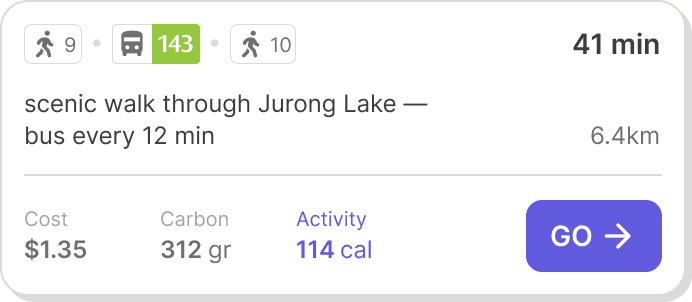
DESK RESEARCH

From Insights to Design Direction

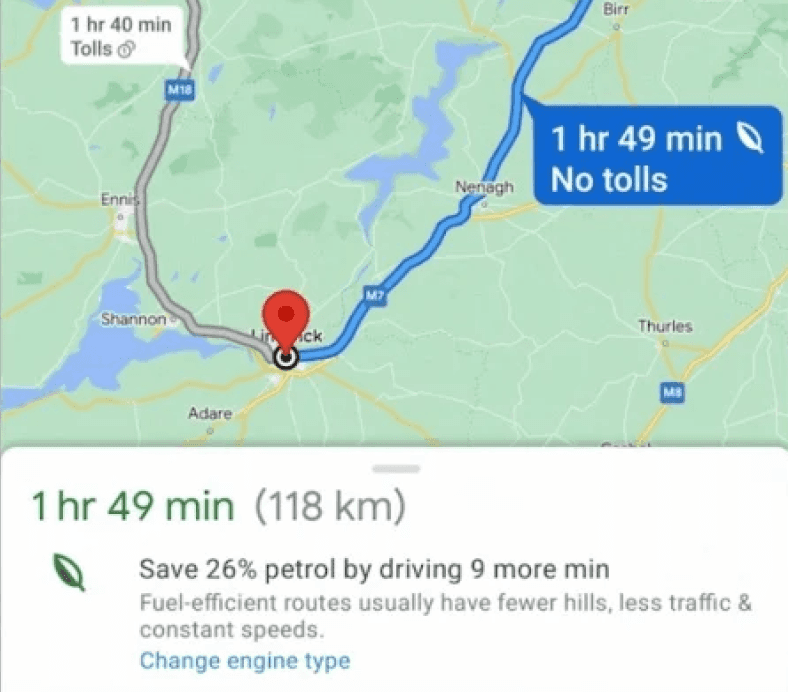
Given time constraints and limited access to user testing, I needed a way to shape OZONE’s experience around proven commuter behaviors. To move quickly without compromising user value, we conducted a desk research focused on a competitive analysis of journey planner apps and behavioral design principles.

What I analyzed

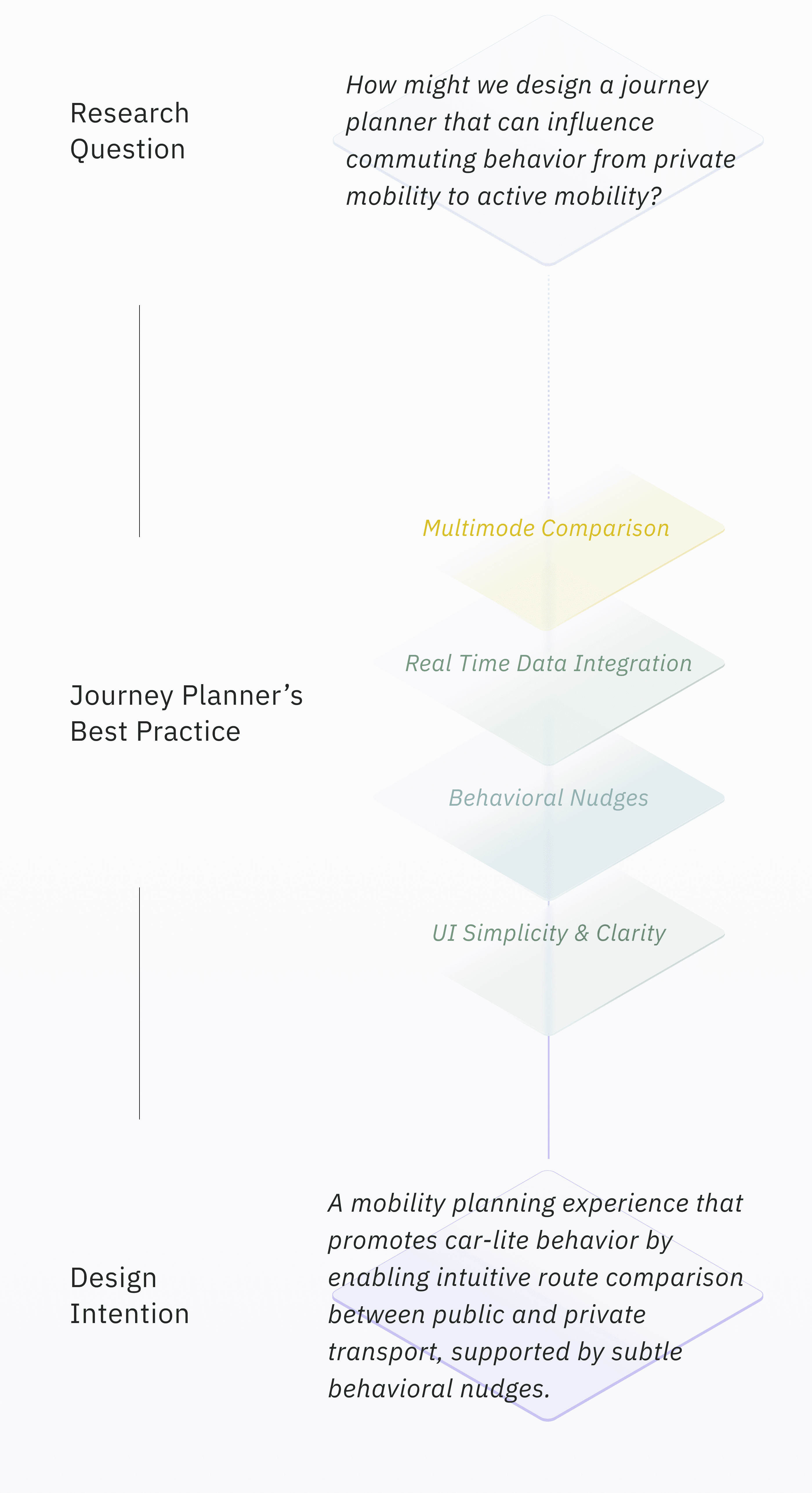
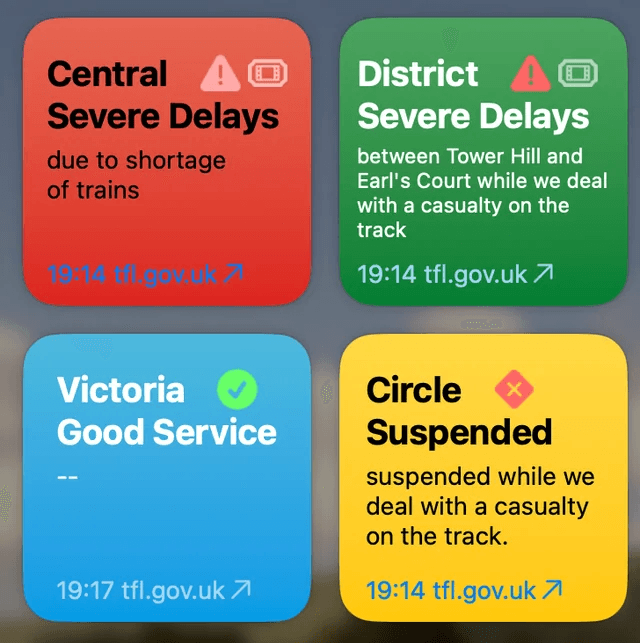
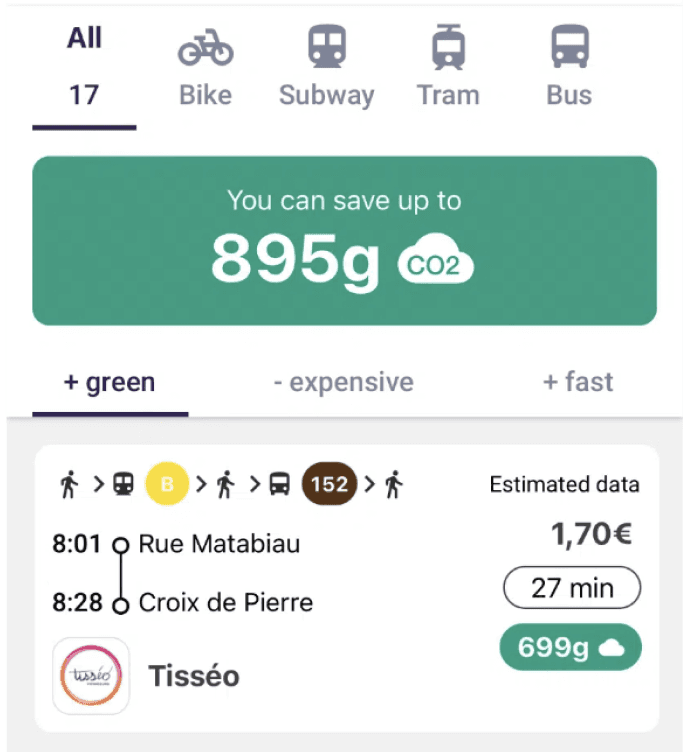
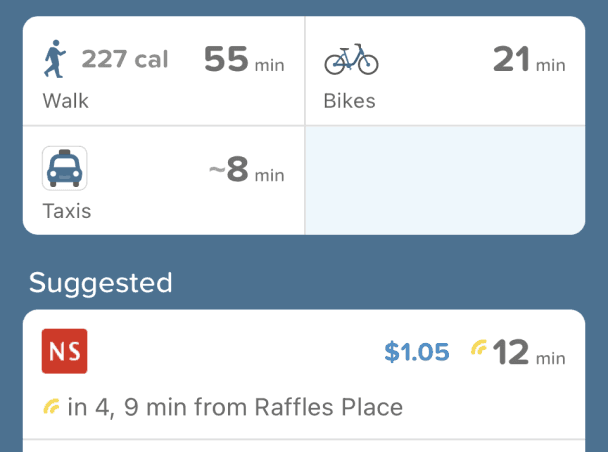
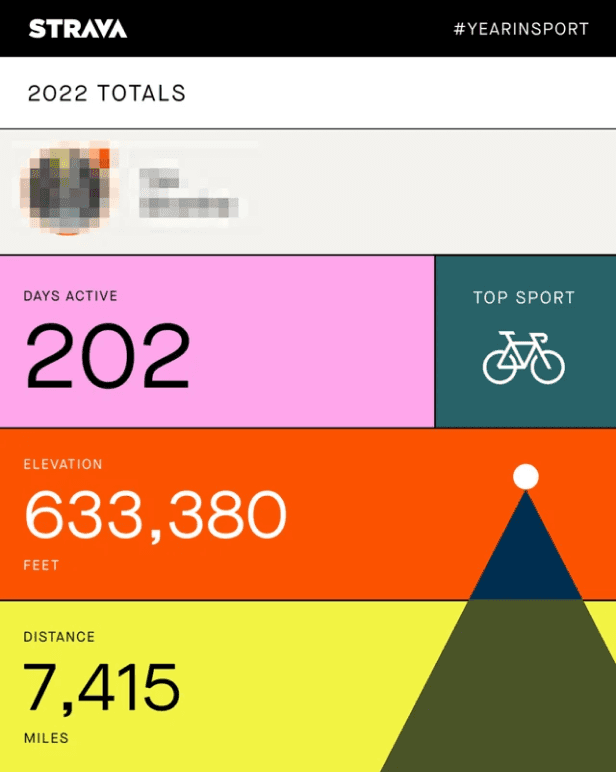
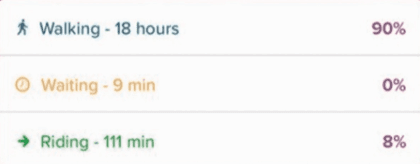
To define a relevant design strategy for OZONE, I started from the research question and find answers by analyzing how the best practice of popular journey planner apps like Google Maps, Waze, Apple Maps, and CityMapper would applied. Beyond technical capabilities, I mainly looked at how each platform uses subtle behavioral nudges to influence commuter choices.

From what I found of the best practices, I was able to shaped a clear design intention

[↑] Research Approach

How we came up with design intention

3-STAGE NUDGE FRAMEWORK

Strategizing behavioral cues across the user journey

To encourage car-lite behavior, I adopted a behavioral design approach based on the proven nudge theory.  I structured them to align with key decision points in the user journey; (1) before, (2) during, and (3) after the trip.

STAGE 1

Pre-Decision

Before choosing a route

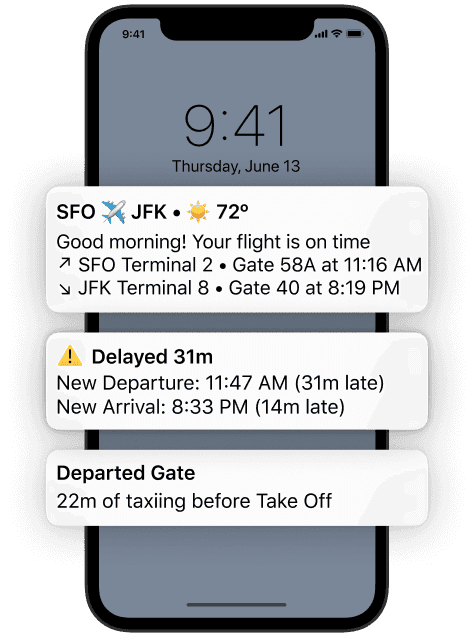
The nudge surface (smart) defaults before the user decide a route/trip

STAGE 2

During Decision

While comparing options

The nudge helps users compare and choose consciously

STAGE 3

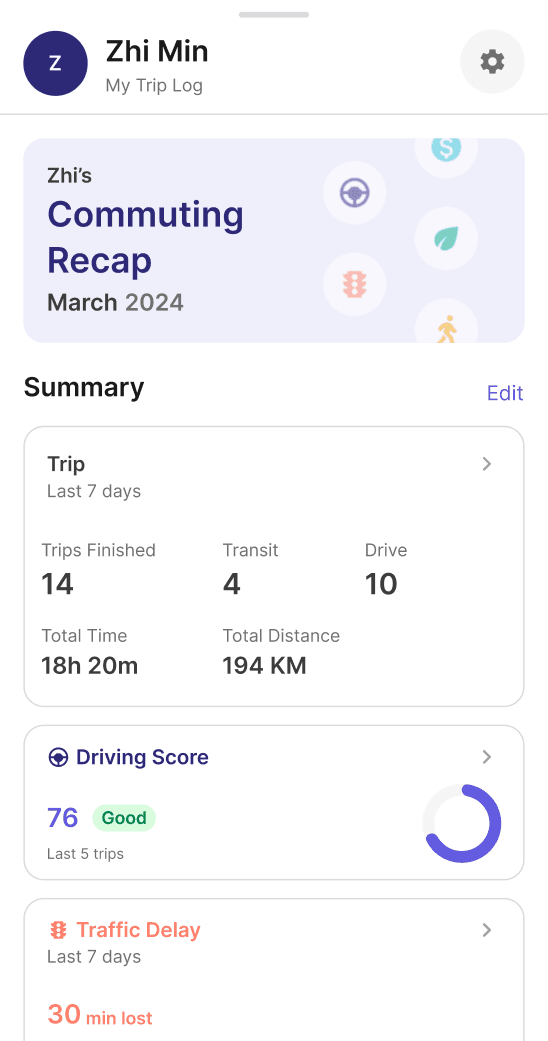
Post-Decision

After the trip

The nudge serves as a reflection that formed and supports habits. After a trip, users can see how their choices add up over time.

[↑] 3 Stage Nudge Framework

Each stage of the frameworks mirrors how behavioral cues are effective when delivered at relevant moments

Nudges to Habit: a Behavior Loop

While each nudge targets a specific stage in the commuter journey, together they continuously re-appearing in user's journey, shaping and reinforces user behavior over time.

Over time, this loop builds habits, aligns with the user’s commuting goals, and subtly moves behavior toward sustainability — without requiring drastic change or sacrificing usability.
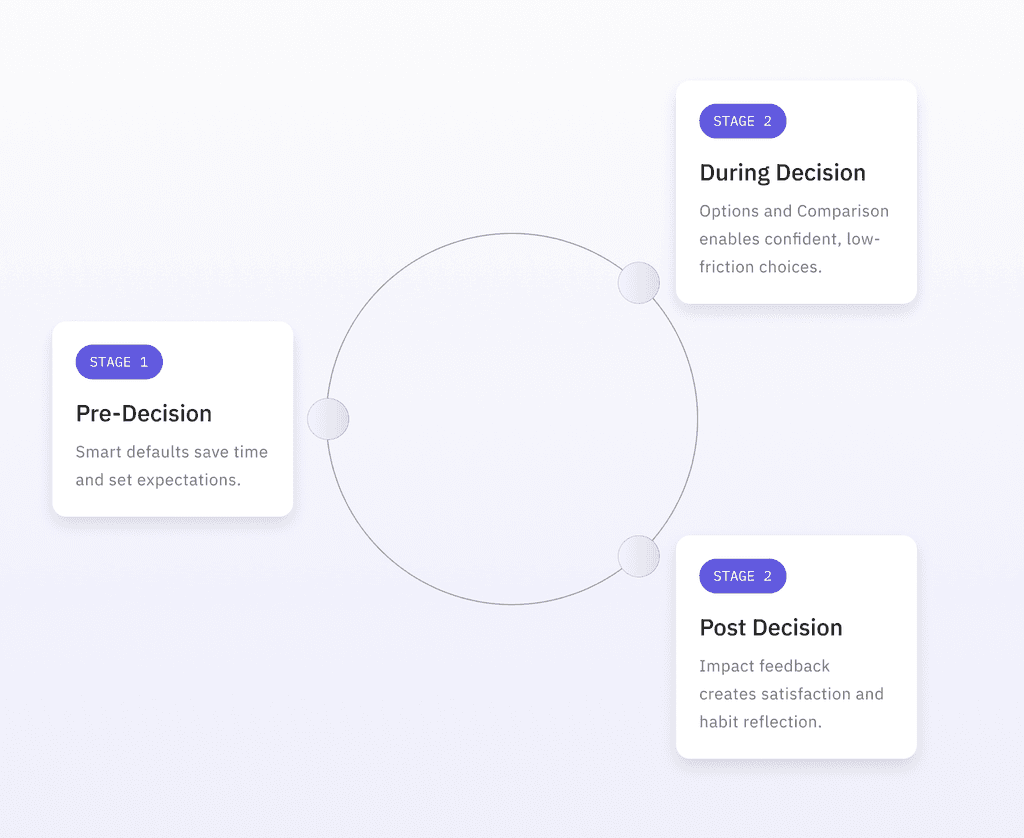
[↑] 3 Stage Nudge Framework on a loop

Pre-Decision → During Decision → Post-Decision → loops back to → Smarter Pre-Decision

DESIGN

Translating Framework into Design

With the 3-stage nudge strategy in place, we translated each behavioral cue into tangible design decisions. The following sections show how each stage was implemented through the interface.
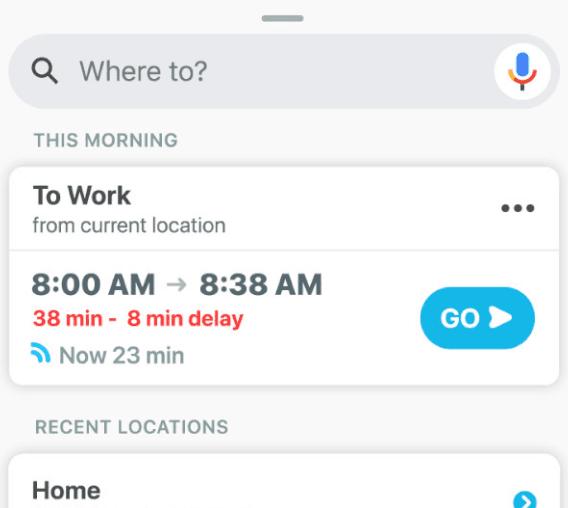
STAGE 1

Pre-Decision

Before choosing a route

Surface a smart, eco-friendly default before users begin comparing options.

STAGE 2

During Decision

While comparing options

When comparing, users need clear, impact-driven cues to choose better routes confidently.

STAGE 3

Post-Decision

After the trip

Reflection supports habit formation. After a trip, users can see how their choices add up over time.

STAGE 1

Pre-Decision

Before choosing a route

The nudge surfaces (smart) defaults before the user decides

STAGE 2

During Decision

While comparing options

When comparing, users need clear, impact-driven cues to choose better routes confidently.

STAGE 3

Post-Decision

After the trip

The nudge serves as a reflection that formed and supports habits. After a trip, users can see how their choices add up over time.

STAGE 1

Pre-Decision

Before choosing a route

The nudge surfaces (smart) defaults before the user decides

STAGE 2

During Decision

While comparing options

When comparing, users need clear, impact-driven cues to choose better routes confidently.

STAGE 3

Post-Decision

After the trip

The nudge serves as a reflection that formed and supports habits. After a trip, users can see how their choices add up over time.

STAGE 1

Pre-Decision

Before choosing a route

The nudge surfaces (smart) defaults before the user decides

STAGE 2

During Decision

While comparing options

When comparing, users need clear, impact-driven cues to choose better routes confidently.

STAGE 3

Post-Decision

After the trip

The nudge serves as a reflection that formed and supports habits. After a trip, users can see how their choices add up over time.

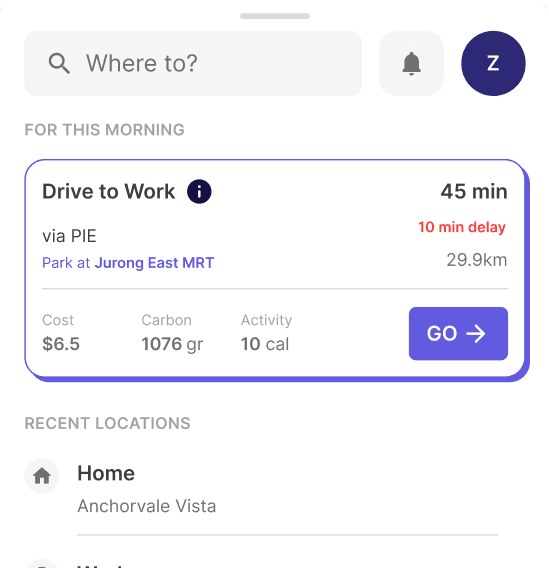
Stage 1; Pre-Decision

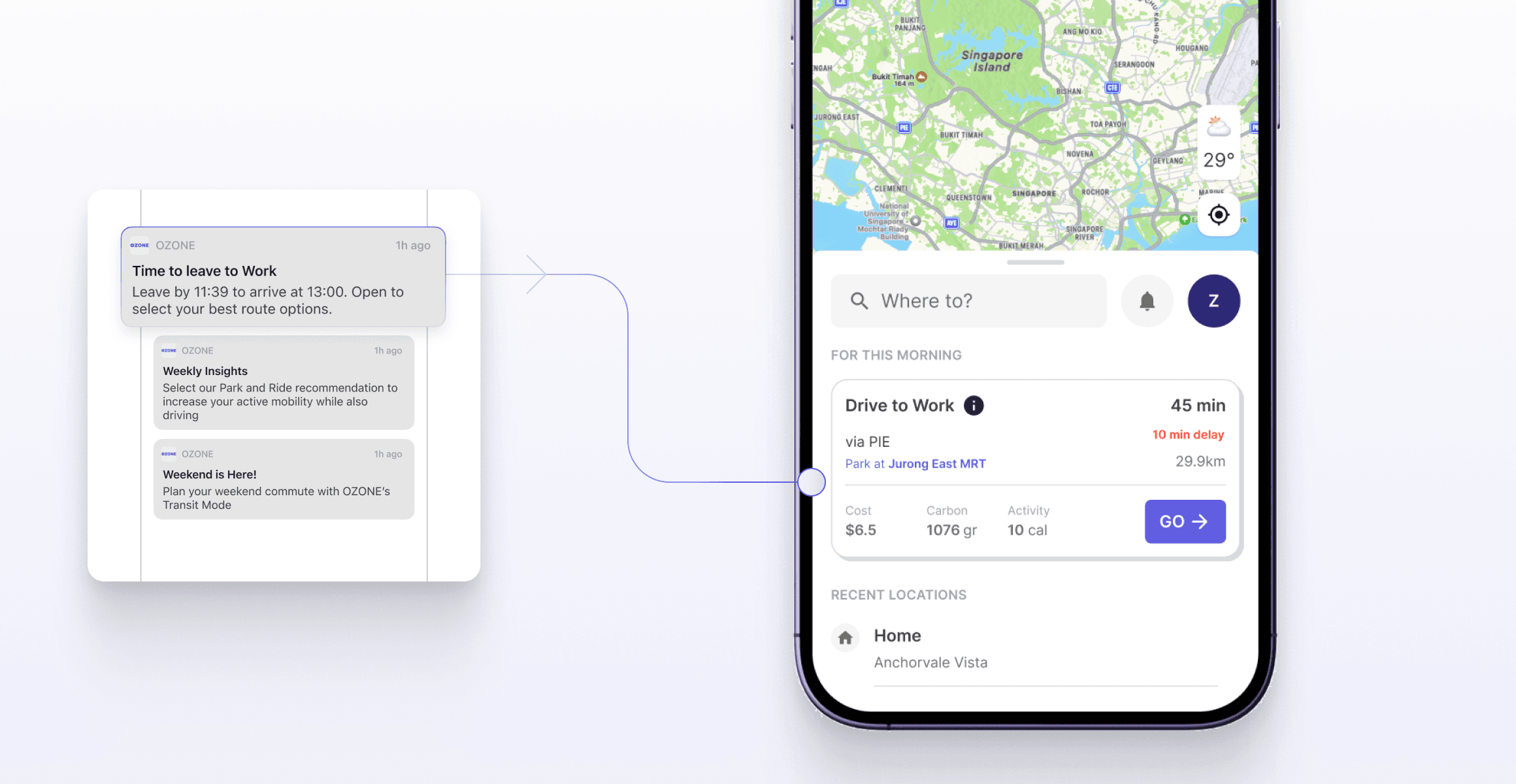
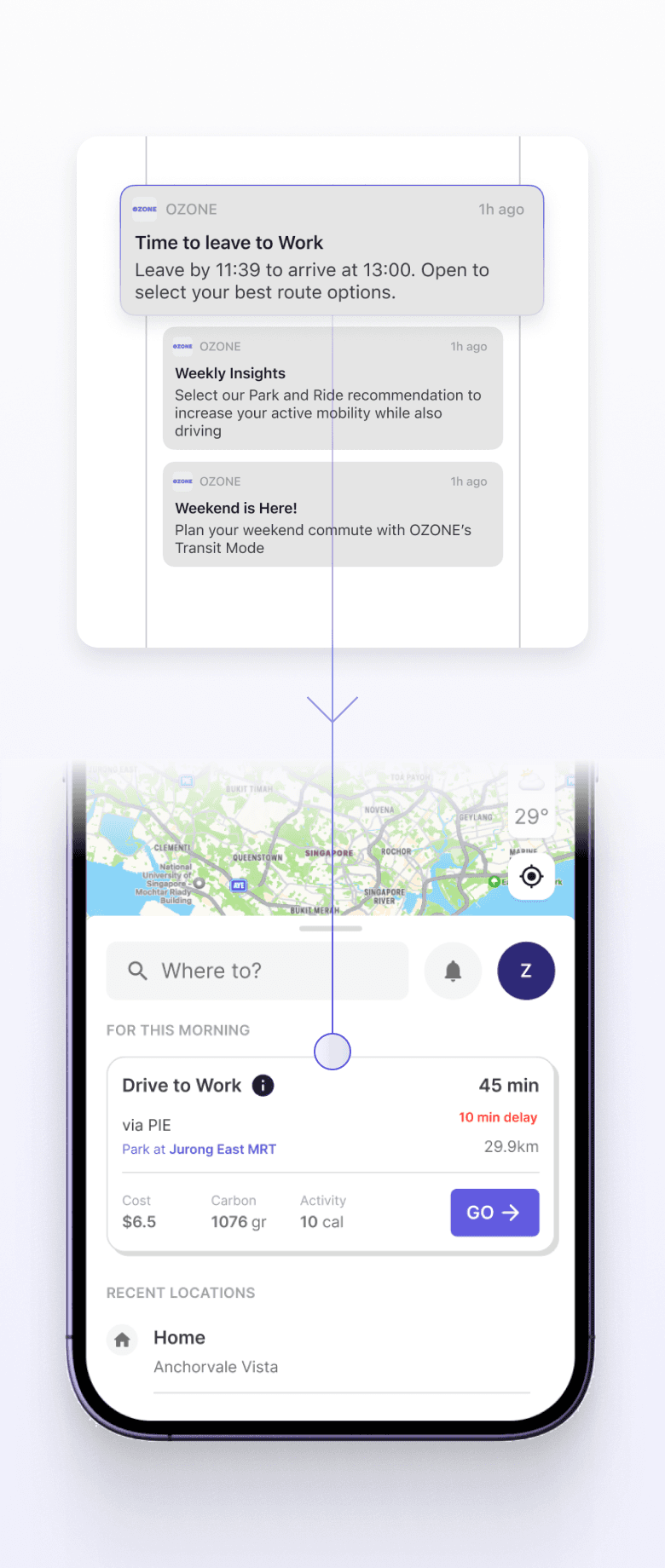
Stage 1 (Pre-Decision) helps users make better choices before they even start deciding or even before opening the app. It focuses on smart defaults and proactive nudges, delivered through widgets, push notifications, or a ready-to-go homepage. By anticipating intent, the system surfaces the most relevant route at the right moment, minimizing effort and hesitation.
STAGE 1

STAGE 1

Pre-Decision

Pre-Decision

STAGE 1

Pre-Decision

STAGE 1

Pre-Decision

[↑] OZONE's homepage

How the nudge is implemented at the start of user's journey

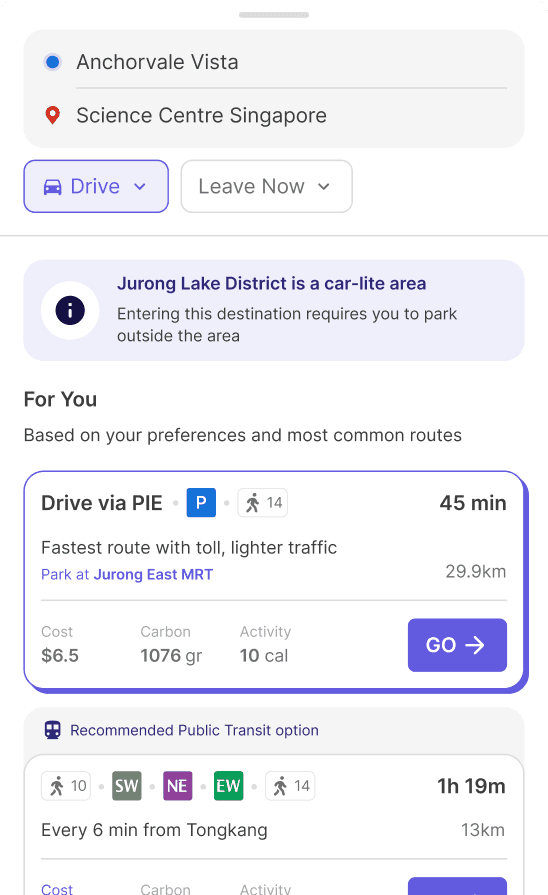
Stage 2; During Decision

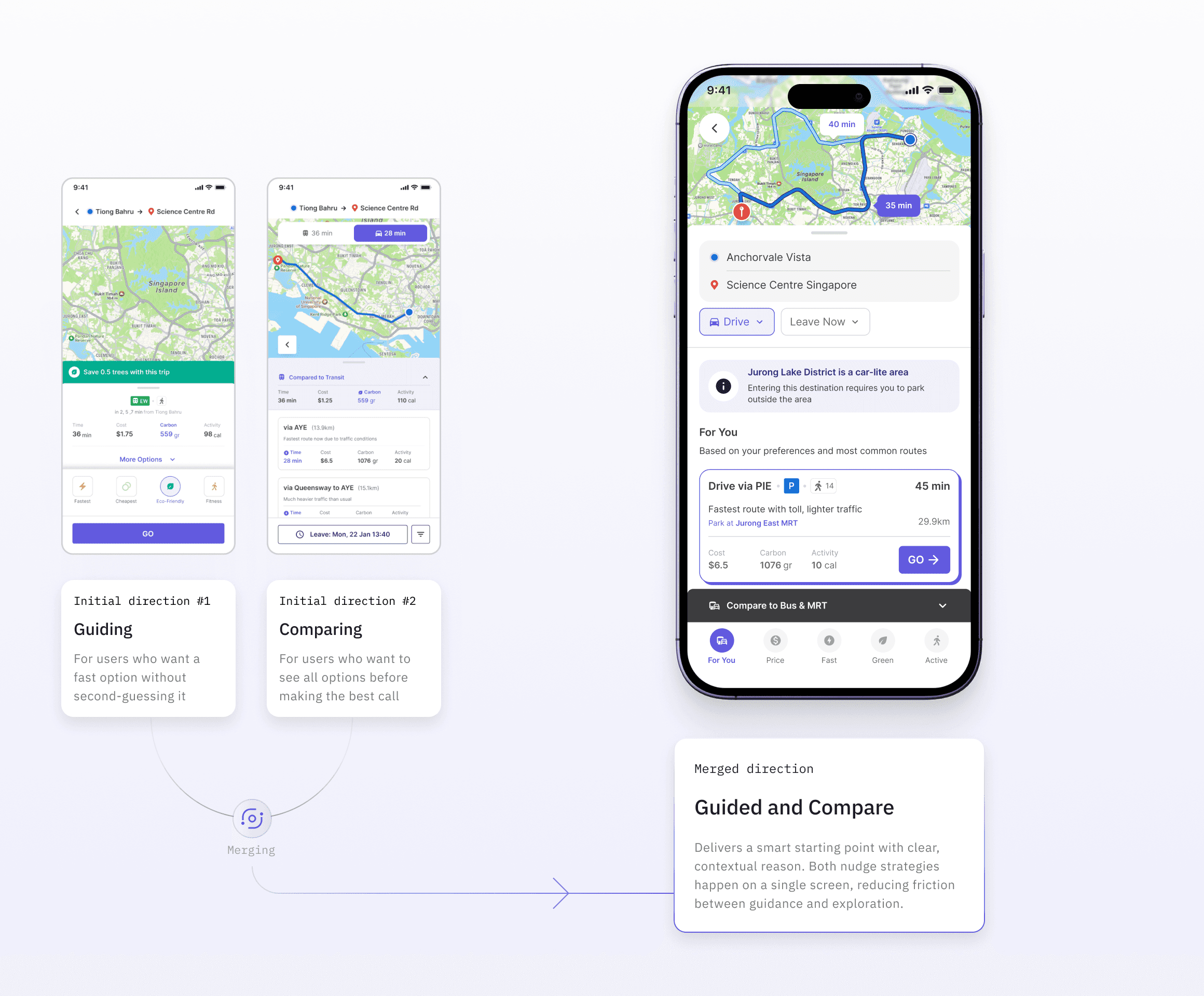
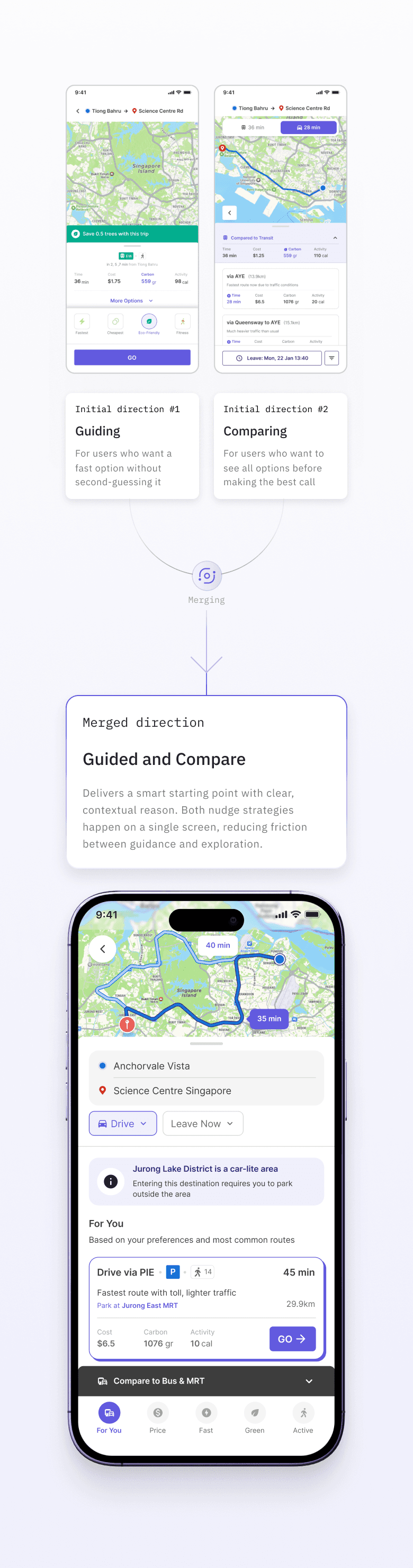
Stepping up to stage 2 is where users can actively decide between options. Initially, we explored two approaches — Direction 1, focused on proactive suggestions and Direction 2, which emphasized comparative insights.

But the clients wants both and realized both approaches could complement each other. By creating a well structured and clear information architecture, we combined the benefits of both into a single screen.

Users get timely suggestions and can compare options in one flow, creating a smoother, more confident decision-making experience that builds trust and supports diverse commuting goals.
STAGE 2

STAGE 2

During Decision

During Decision

[↑] Search results & recommendations

2 initial directions of nudging merged into 1 screen
STAGE 2

During Decision

STAGE 2

During Decision

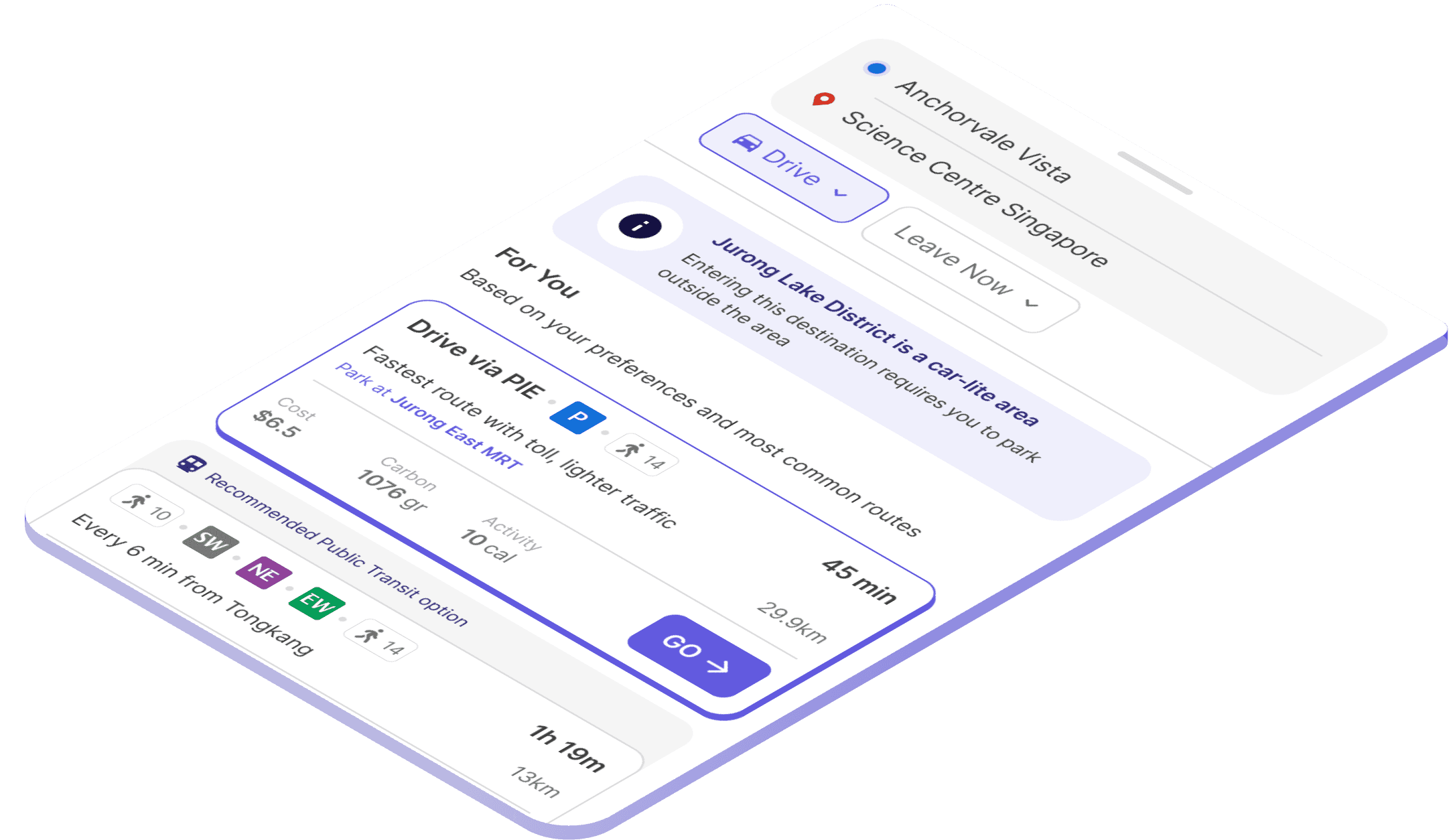
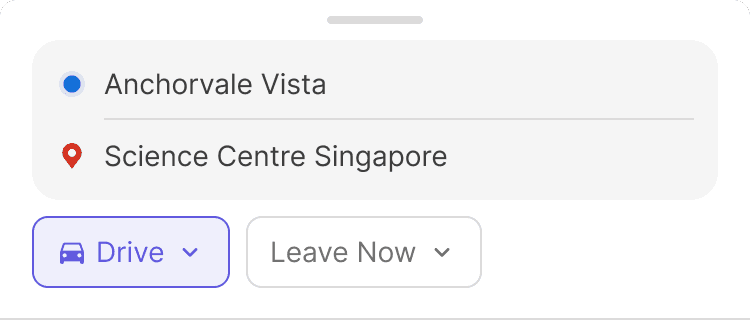
In Stage 2, the journey shifts from suggestion to decision. Once users enter their origin and destination, the interface surfaces the most relevant routes in a clear, structured layout.

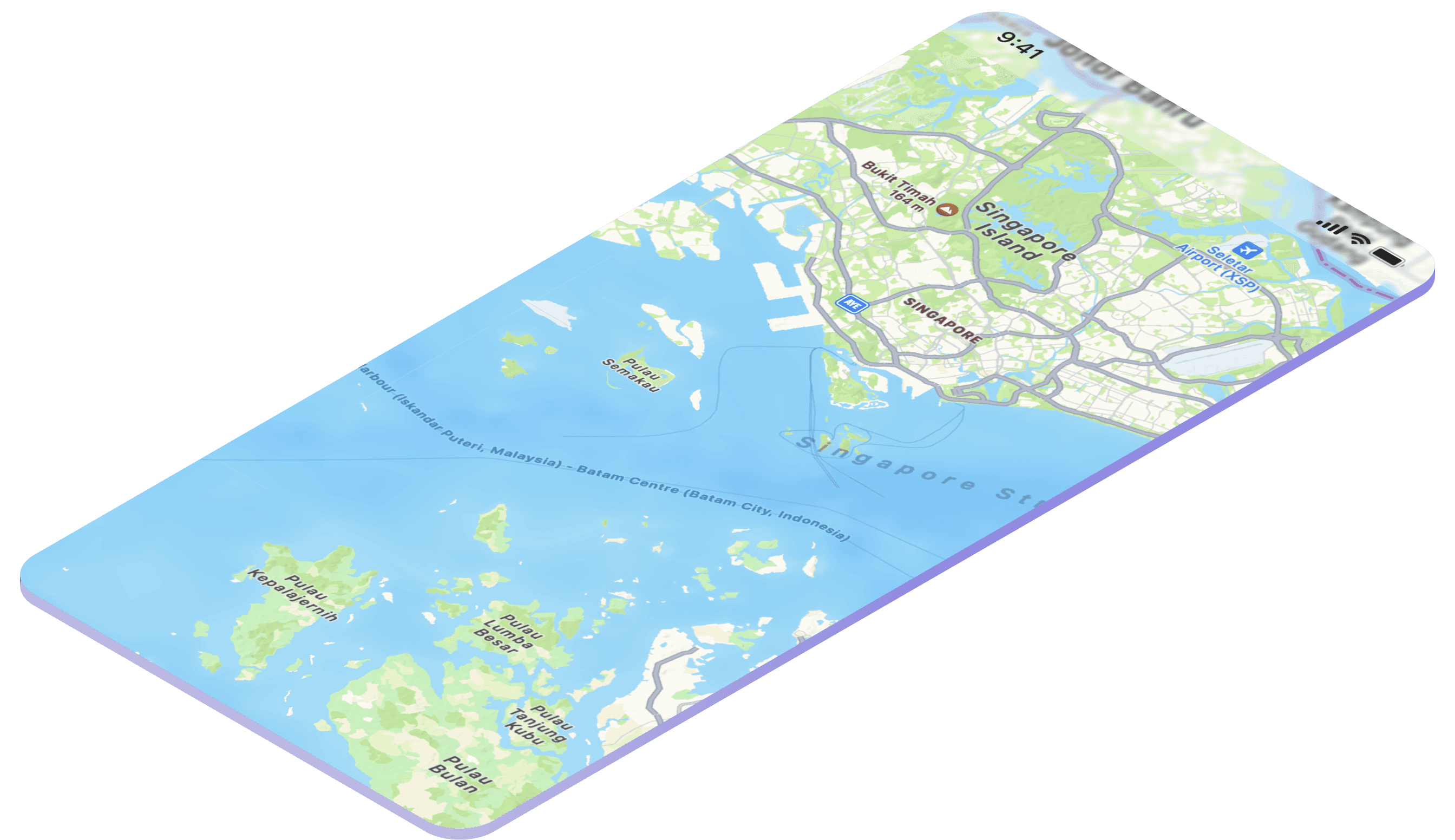
A Clear
Structural Layout

A Clear Structural Layout

Layered UI shows route options at a glance, with details only when needed.
STAGE 2

STAGE 2

STAGE 2

During Decision

During Decision

During Decision

[↑] OZONE stage 2's page structure

How I organize multiple layers of informations

The design supports quick mode switching between Drive and Transit, enabling exploration of possibilities without friction

Switch between Drive or Transit

Switch between Drive or Transit

From Orchard to Jurong Lake District, discover routes that help you get around Singapore in a way that works for you

Orchard Road

Jurong East

Drive

Transit

Leave Now

Drive

Transit

Orchard Road

Jurong East

Drive

Transit

Leave Now

Drive

Transit

Orchard Road

Jurong East

Drive

Transit

Leave Now

Drive

Transit

Orchard Road

Jurong East

Drive

Transit

Leave Now

Drive

Transit

STAGE 2

STAGE 2

STAGE 2

During Decision

During Decision

During Decision

[↑] Drive and Transit Mode

OZONE gives real-time data for users to decide between the modes

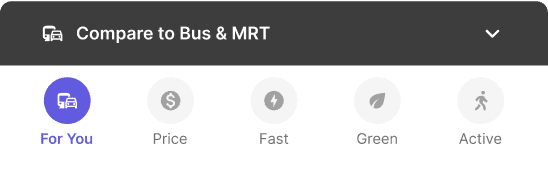
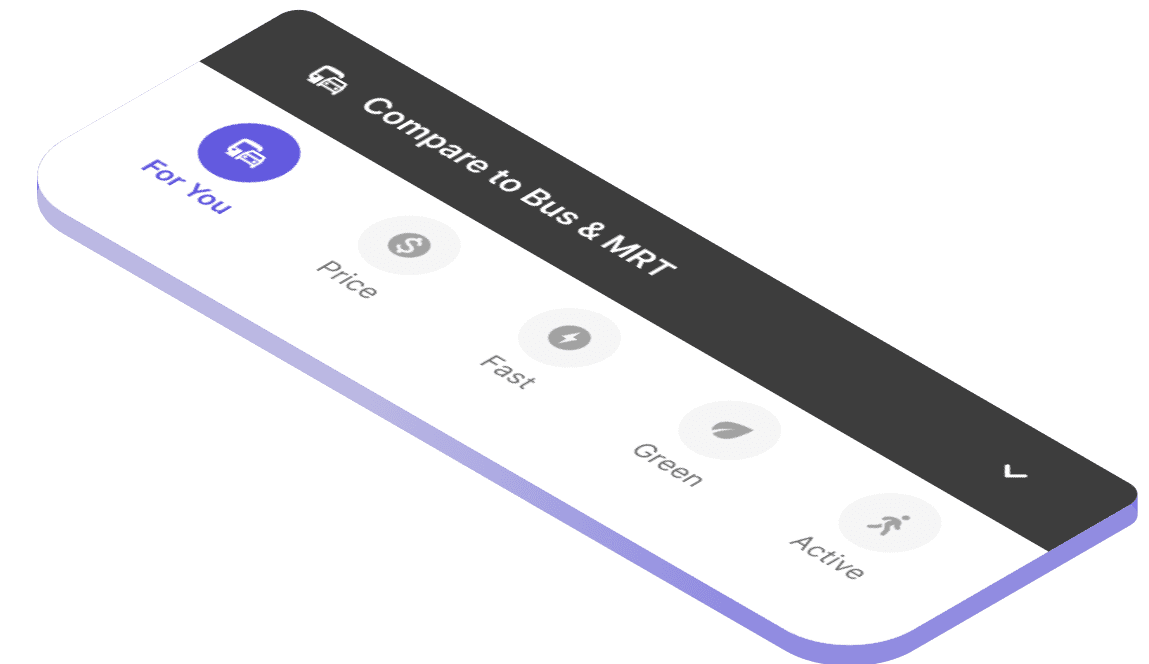
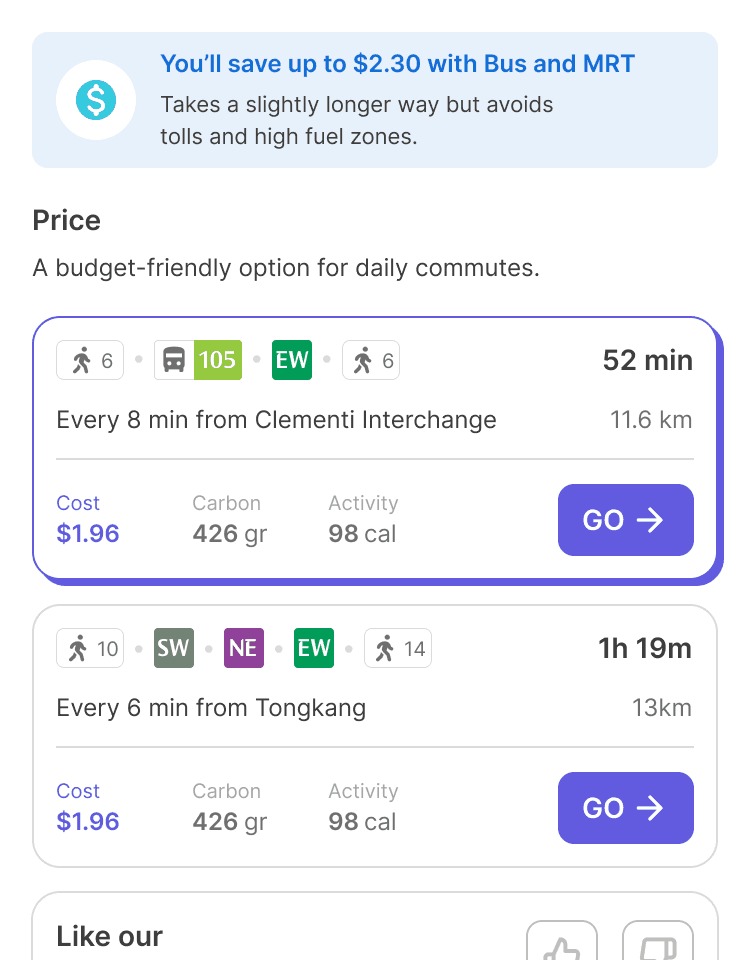
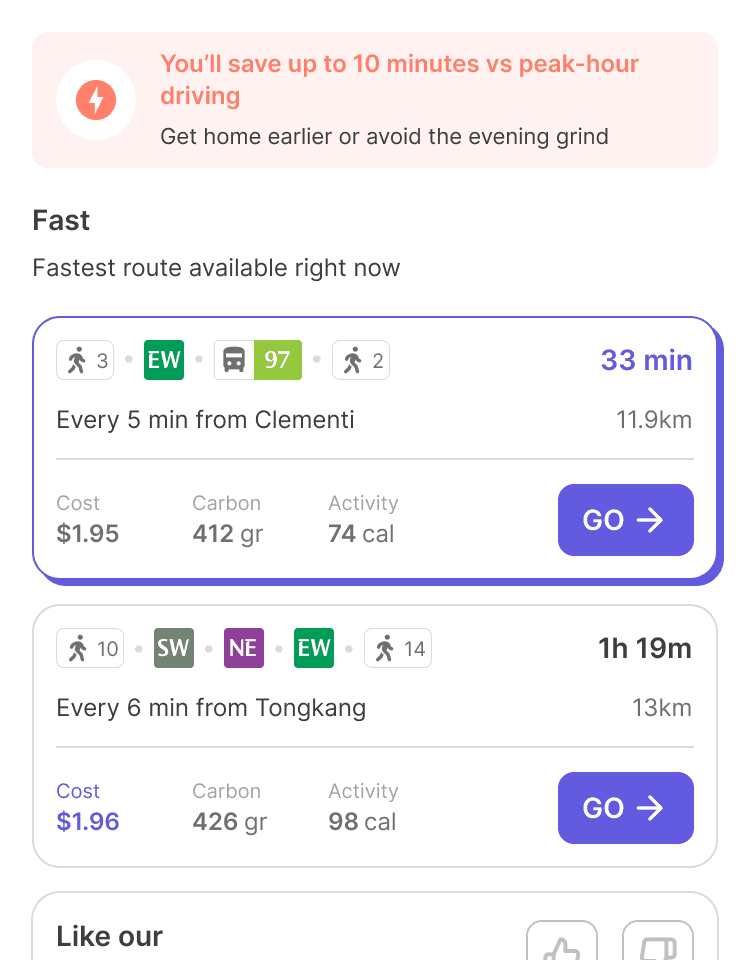
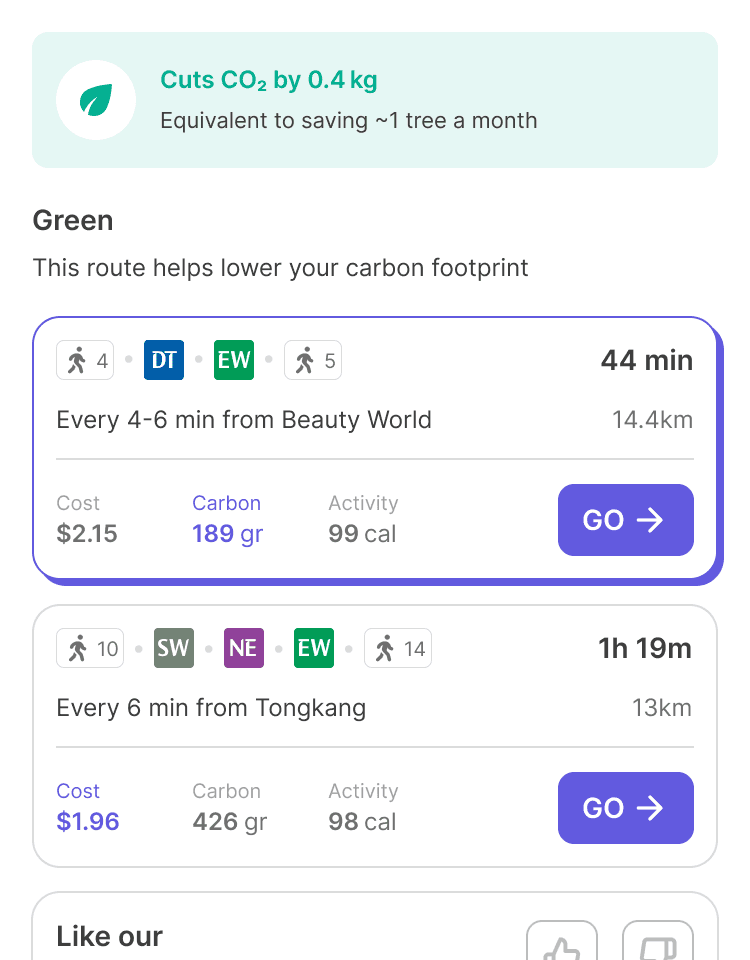
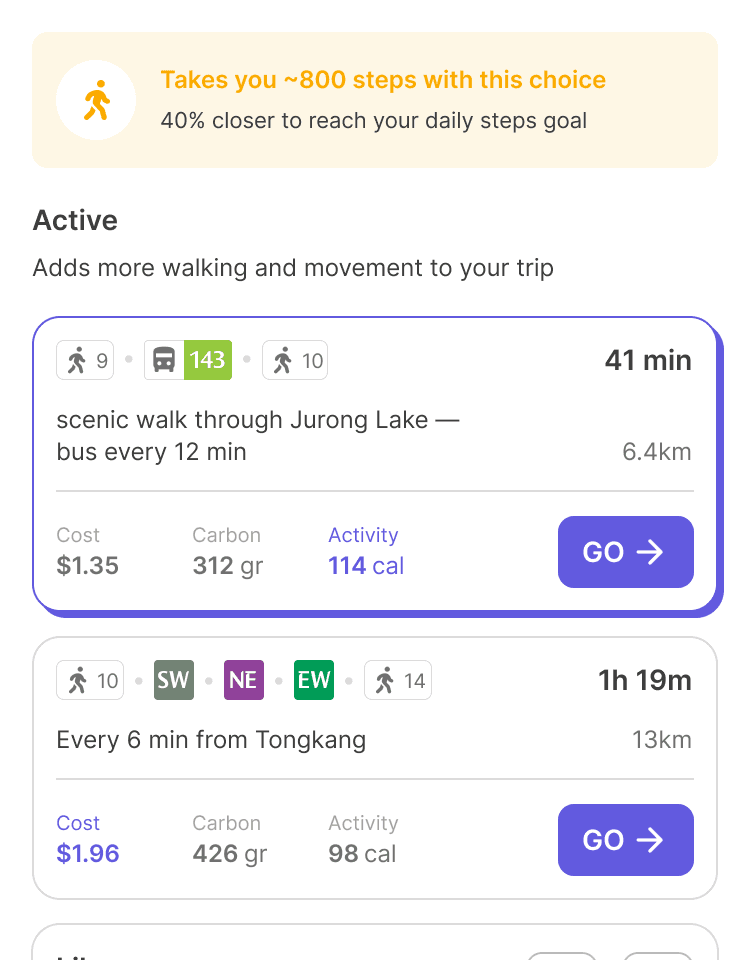
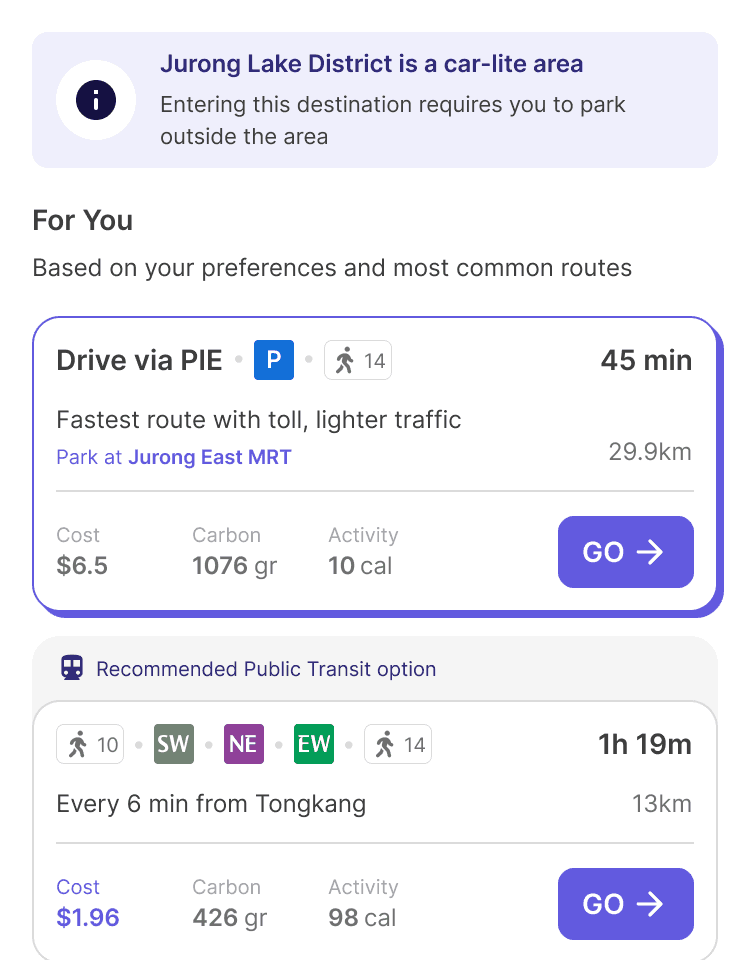
The bottom navigation surfaces different results complete with quantified route options, empowering commuters to make informed, efficient choices aligned with their commuting preferences

Optimized for Decision Making

Quickly filter routes by OZONE’s recommendations or your preferences – cost, time, carbon, or activity
Compare to Bus & MRT

Cost

$1.96

Carbon

426

gr

Activity

98

cal

For You

Price

Fast

Green

Active

Compare to Bus & MRT

Cost

$1.96

Carbon

426

gr

Activity

98

cal

For You

Price

Fast

Green

Active

Compare to Bus & MRT

Cost

$1.96

Carbon

426

gr

Activity

98

cal

For You

Price

Fast

Green

Active

Compare to Bus & MRT

Cost

$1.96

Carbon

426

gr

Activity

98

cal

For You

Price

Fast

Green

Active

STAGE 2

STAGE 2

STAGE 2

During Decision

During Decision

During Decision

[↑] OZONE's preferences tab – Interact with one of the tab to see different results

The tab accommodates different types of commuter

Weekend Recommendation: Explore with a Guided Walk

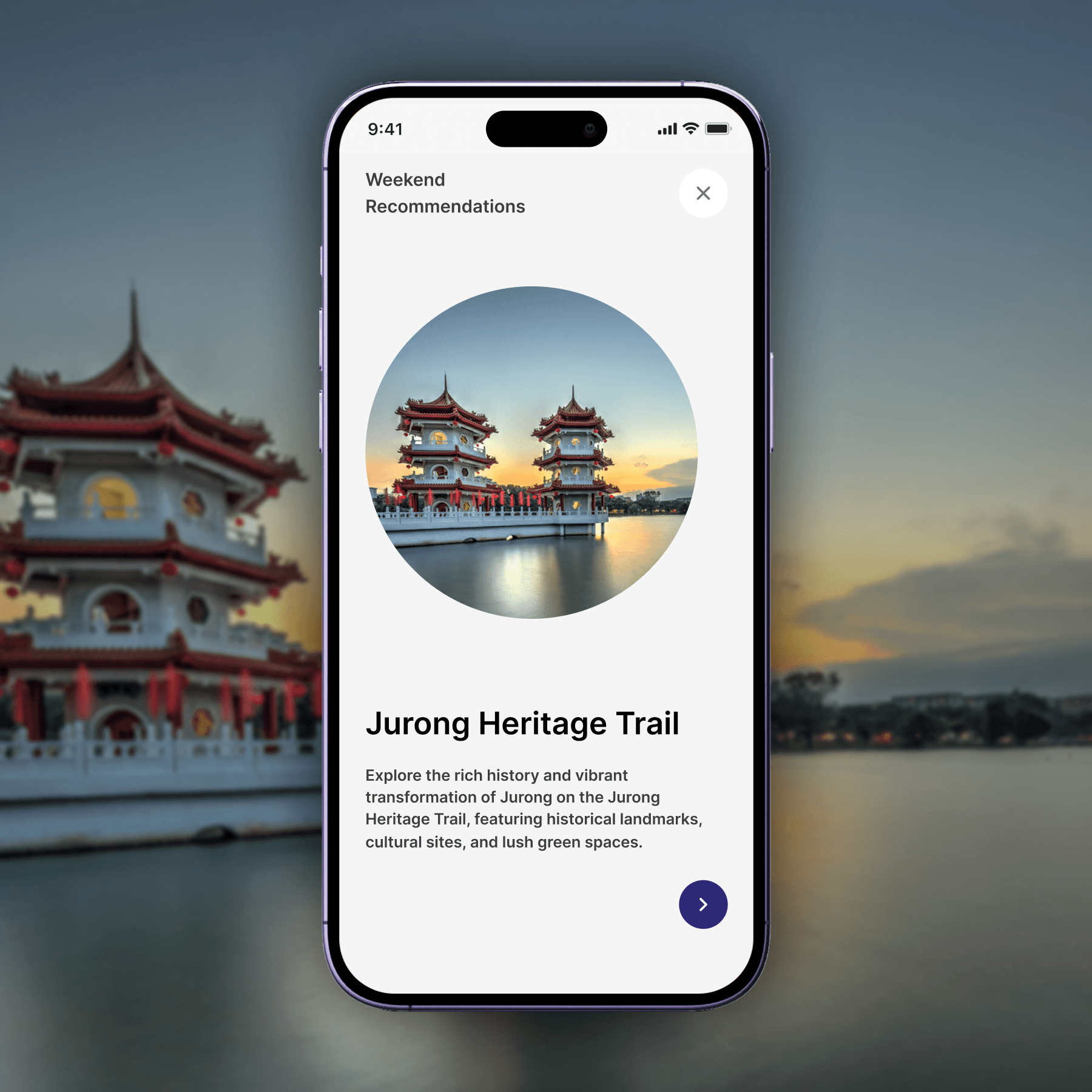
To nudge users further toward car-lite lifestyles, OZONE introduces Weekend Recommendations, designed to encourage exploration without private vehicles. These appear directly on the homepage during weekends, promoting activities like walking.

As a proof of concept, I integrated the Jurong Heritage Trail, one of Singapore’s official walking trails. I mocked up its route, checkpoints, and points of interest into a seamless, self-guided walking experience within the app. Users can follow the trail from point to point, with contextual information and visual cues that make the walk feel purposeful and informative.

This feature reframes the app not just as a commuter tool but as a weekend companion.
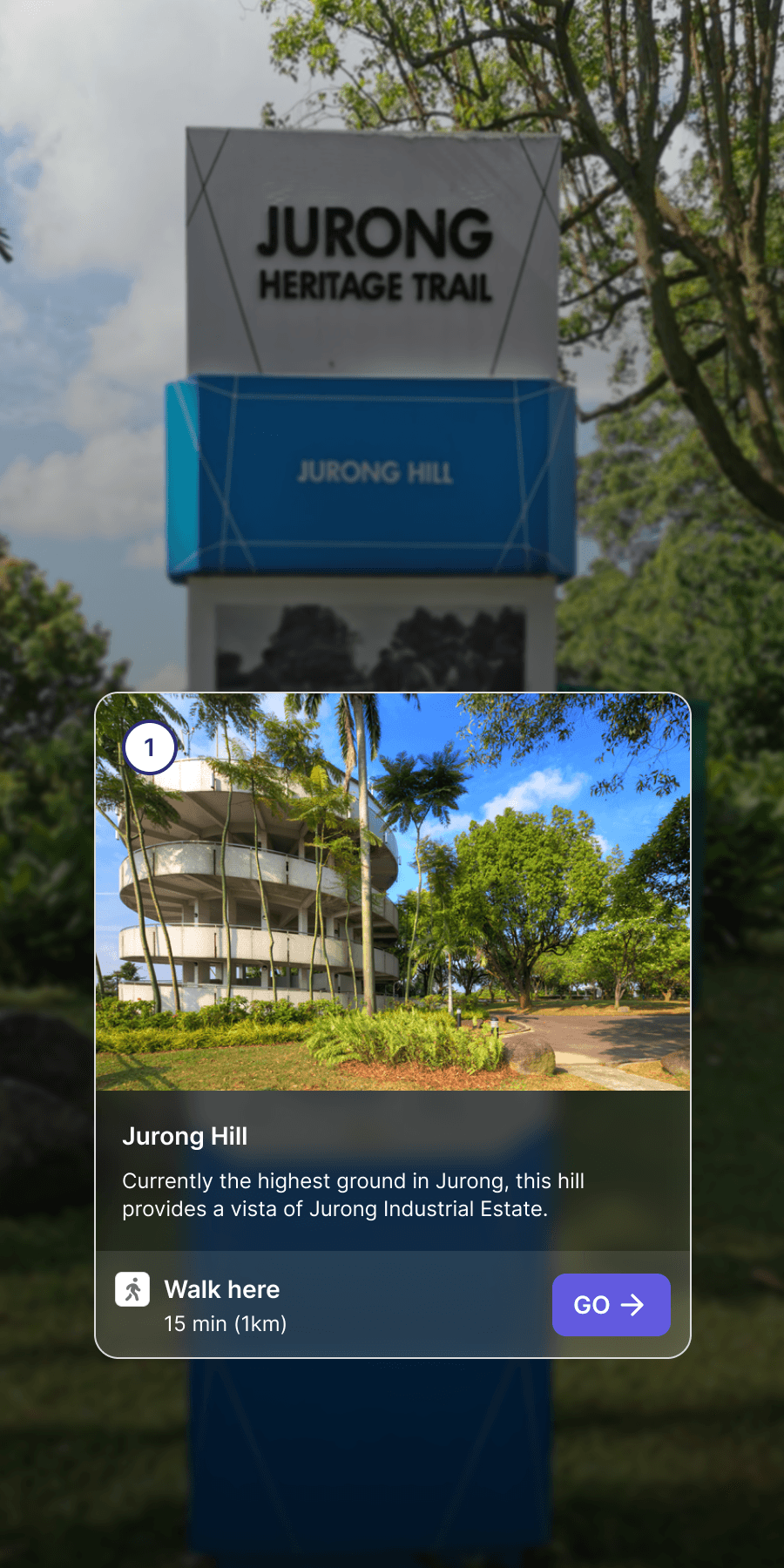
[↑] OZONE's Weekend Recommendations

Nudge users to walk through Singapore's official trails

Stage 3; Post-Decision

Stepping up to stage 2 is where users can actively decide between options. Initially, we explored two approaches — Direction 1, focused on proactive suggestions and Direction 2, which emphasized comparative insights.

But the clients wants both and realized both approaches could complement each other. By creating a well structured and clear information architecture, we combined the benefits of both into a single screen.

Users get timely suggestions and can compare options in one flow, creating a smoother, more confident decision-making experience that builds trust and supports diverse commuting goals.