OZONE
Designing a behavior-change system for Singapore's car-lite future
OZONE is a proof-of-concept mobility app built by Nippon Koei after winning the Jurong Lake District Innovation Challenge, an open competition run by the Singapore government to find new ways to shift daily commutes away from private vehicles. I joined through SixtyTwo as the sole Product Designer to turn Nippon Koei’s winning proposal into a working digital experience in four weeks.
Year
2024 – 4 weeks
Role
Product Designer
Stage
Proof of Concept
Credit
SixtyTwo
Client
Nippon Koei, LTA Singapore, SMRT
CONTEXT
Singapore needs 85% of all trips in Jurong Lake District to be Walk-Cycle-Ride (car-lite) by 2035.
While JLD already has MRT lines, bus services, and rapid development underway, infrastructure alone isn't attractive enough to shift long-time drivers away from their cars. Car owners and frequent drivers with established routines simply don't perceive public transport as a viable alternative.
SMRT posed a challenge through the Jurong Lake District Innovation Challenge:
“How might we encourage drivers to go car-lite and promote more Walk-Cycle-Ride modes of transport?”
Nippon Koei won the challenge with a concept for a personalized journey planner — an app that would surface the benefits of car-lite options at the right moment in a driver's day.
But existing journey planners in Singapore like Google Maps, Apple Maps, and Waze weren't setting a strong precedent. They follow the user's initial behavior without any effort to shift it: by the time a driver types a destination, they've already leaned towards driving. The moment that matters for behavior change happens before and after that, and that is where OZONE's opportunity comes in.
[↑] How ozone opportunity comes fit in the user journey
click to switch
RESEARCH
Understanding Behavioral Design
Before building the system, I found that behavioral nudge theories suggest people make better choices when the environment is designed around how they actually decide, that is by reshaping how options are presented, not restricting them.
I mapped these principles against the three opportunity moments from the commute loop — looking at how real products apply them, and what each gap demanded as a response.
INSIGHT 1
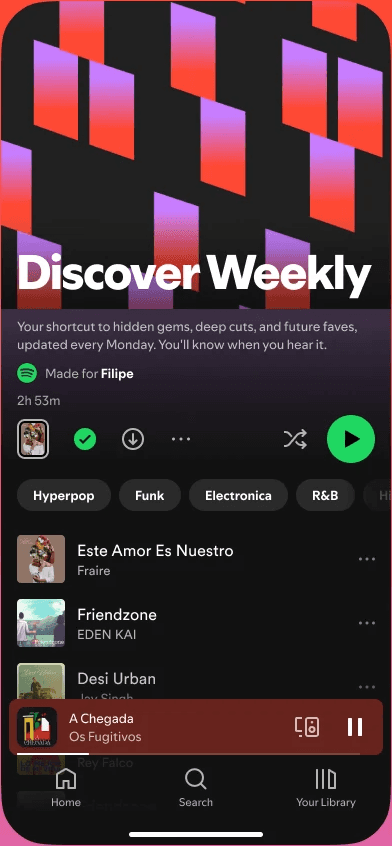
Smart defaults change behavior before users actively choose.
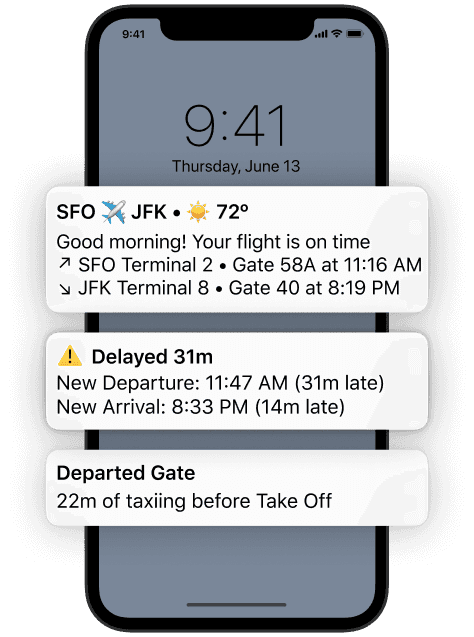
Spotify's Discover Weekly surfaces a personalized recommendation before the user searches.
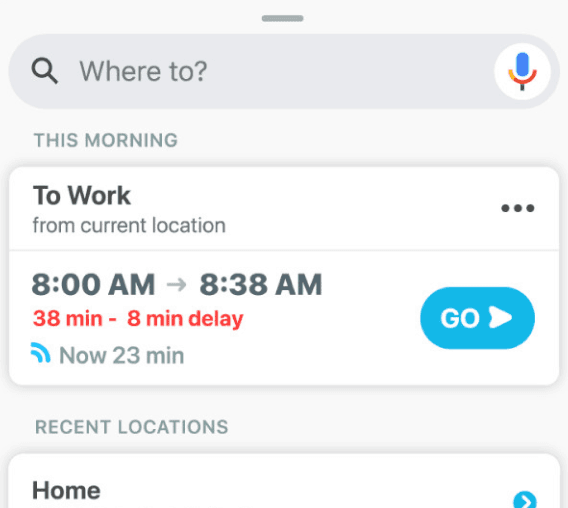
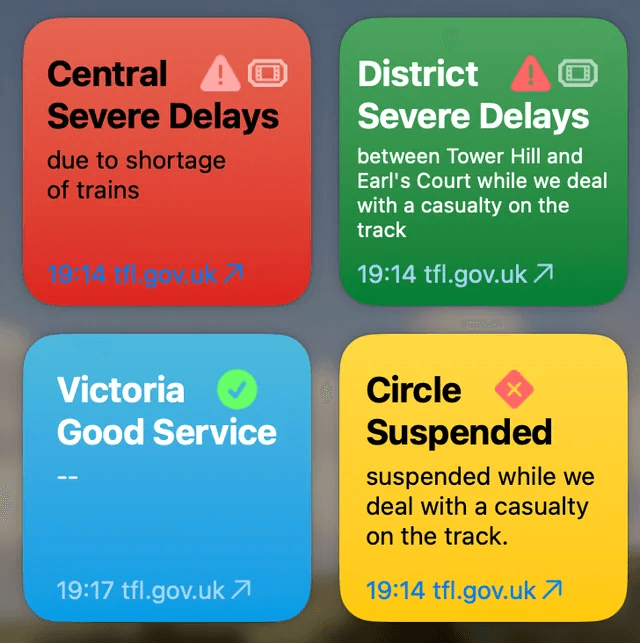
The same principle Waze applies with its proactive "To Work" homepage card, and iOS with timely notifications that arrive before you ask.
But no journey planner uses this to default to the most sustainable route.
EAST Framework + Nudge
Insight 2
Framing a comparison changes which option gets chosen.
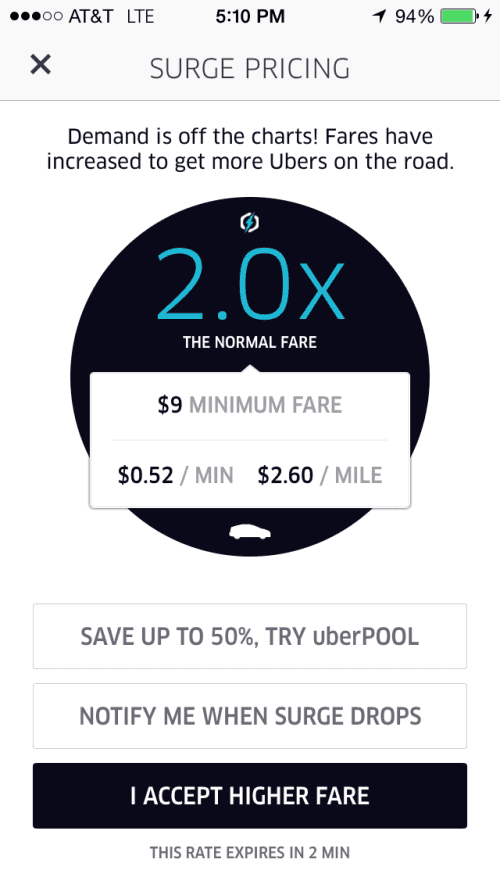
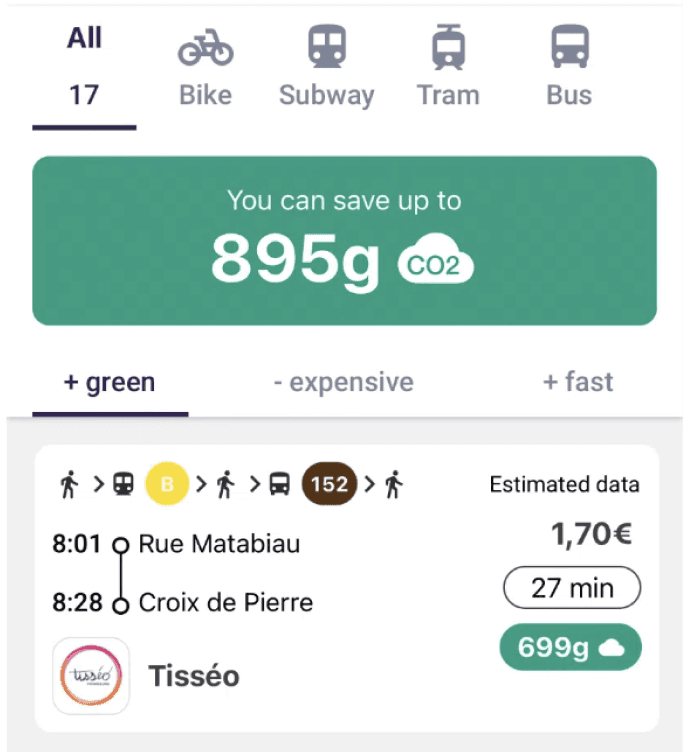
Uber visually frames surge pricing to shift user behavior toward cheaper times.
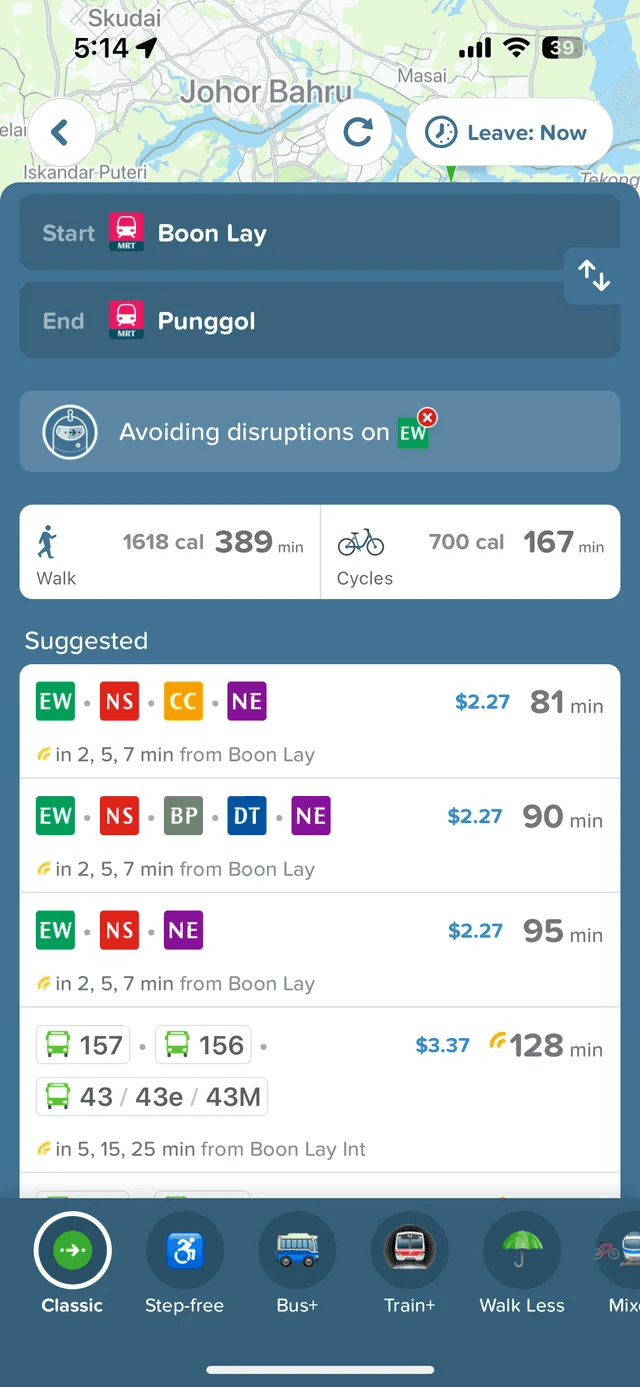
Citymapper and Ecomode applied this by showing cost and CO₂ alongside time in its multimode comparison.
This framing works, but it does not nudging you off the car
Anagnostopoulou et al. + EAST Framework
Insight 3
Seeing your impact makes the new behavior sticks
Duolingo's streak counter builds habits by making daily progress visible.
Citymapper shows post-trip impact data (trees saved, calories, money)
But it doesn't feed it back into tomorrow's recommendation.
Bamberg, 2013 + Bissel, 2025
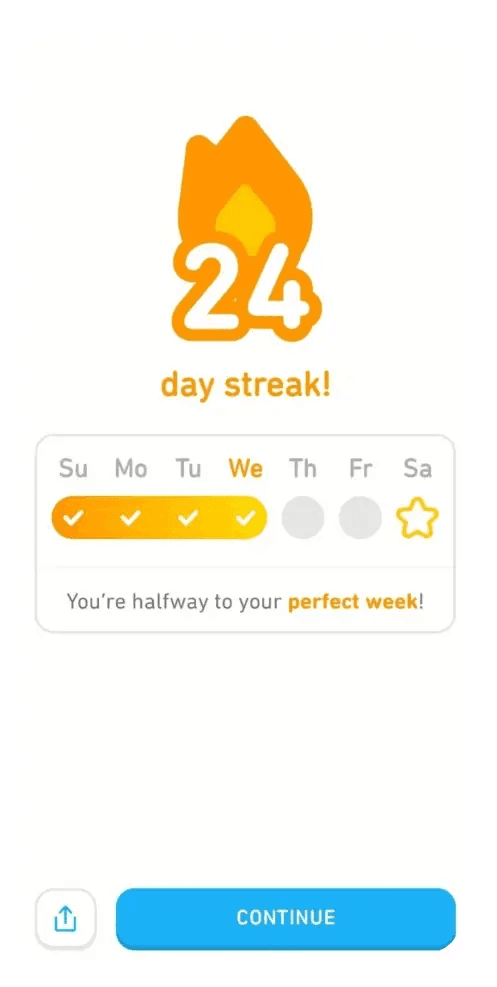
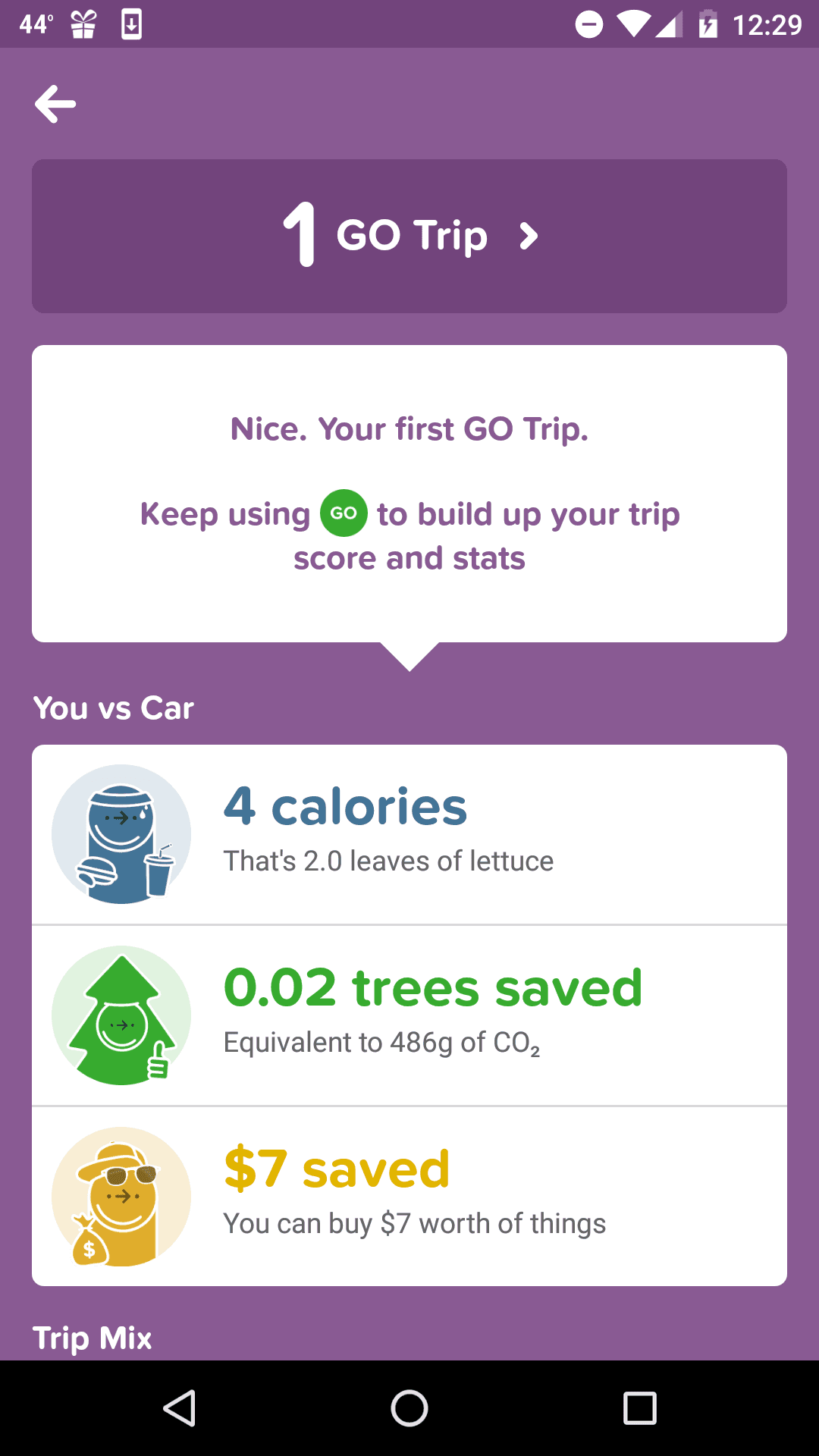
Most of the app nudges once, but none of them close the loop.
SYNTHESIZE
What OZONE needs to become
From the context, my job was clear:
Turn Nippon Koei’s winning proposal into a behavioral system
Design a journey planner that doesn’t just show routes, but nudges drivers toward more sustainable choices by shaping the decision at the right moments.
And from the research, OZONE needs to:
1. Surface the better default
Intervene before route search begins, so the sustainable option appears as the starting point rather than an alternative.
2. Reframe the trade-off
Present time, cost, CO₂, and effort in a way that makes the better choice feel like a gain, not a sacrifice.
3. Feed the next decision
Turn each trip into visible feedback that improves tomorrow’s recommendation and helps the system get smarter over time.
DESIGN APPROACH
The Commute Loop Framework
I built a framework around its needs and the commuting journey itself. OZONE couldn’t behave like a conventional journey planner. It needed to work as a loop, reaching drivers before they commit, while they compare options, and after the trip ends.
[↑] OZONE’s commute loop framework
The three stages translate into three distinct moments in the app — each one designed around a specific behavioral nudge.
Trip
Share
In March, you have finished
55
trips
February: 46 trips
15%
22
Transit
23
Drive
Traffic Delay
Last 7 days
30
min lost
Averaged 10 mins late
Active
Last 7 days
100
Cal. burned
Today
M
T
W
T
F
S
S
Cost
Last 7 days
$3.25
Saved
Today
M
T
W
T
F
S
S
Green
You’ve saved an averaged 0,03 Trees/600gr of CO2 over the last 7 days
M
T
W
T
F
S
S
600
gr CO2
Average
Walking or taking a bike can reduce your carbon emission that impacted the environment
Start
Compare
Reflect
35 min
40 min
⛅️️
29°
9:41
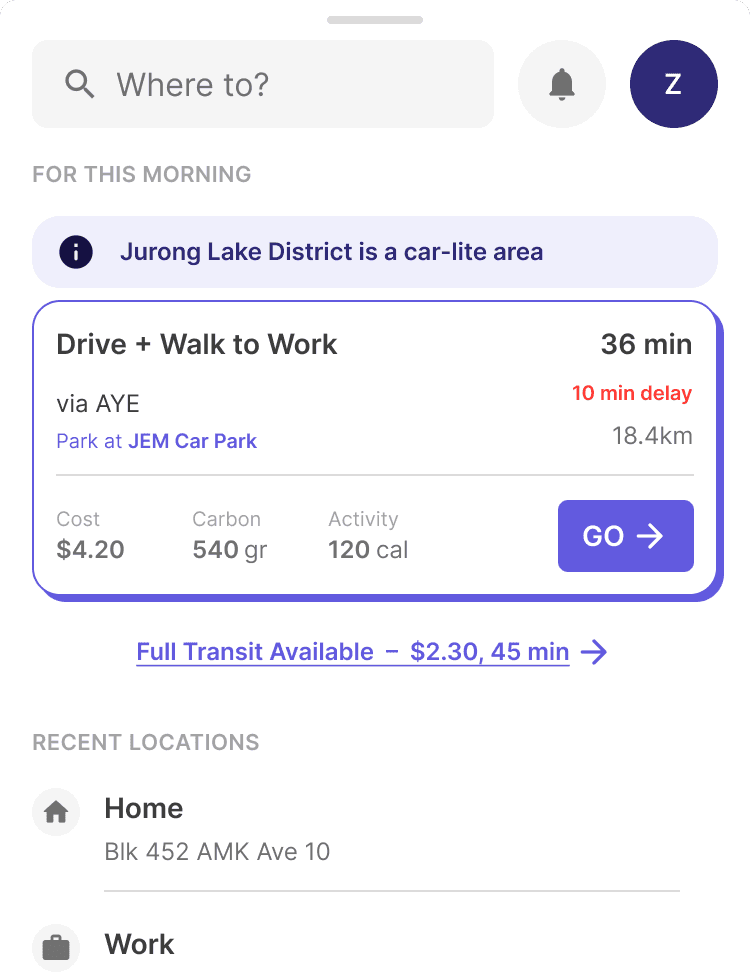

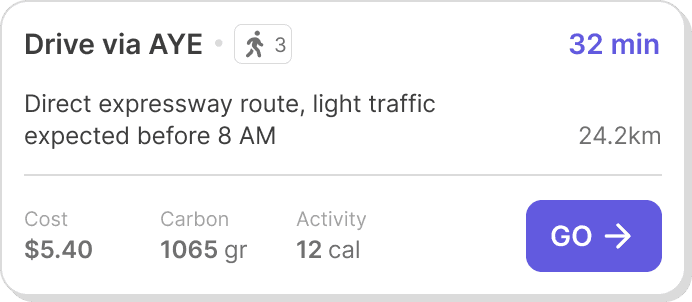
Surfaces a personalised commute recommendation before the driver searches. The homepage becomes the nudge.
Drive via AYE
•
3
Direct expressway route, light traffic expected before 8 AM
32 min
24.2km
Cost
$5.40
Carbon
1065
gr
Activity
12
cal
GO

You’ll save up to $2.30 with Bus and MRT
Takes a slightly longer way but avoids tolls and high fuel zones.

Cuts CO₂ by 0.4 kg
Equivalent to saving ~1 tree a month
6
•
105
•
EW
•
6
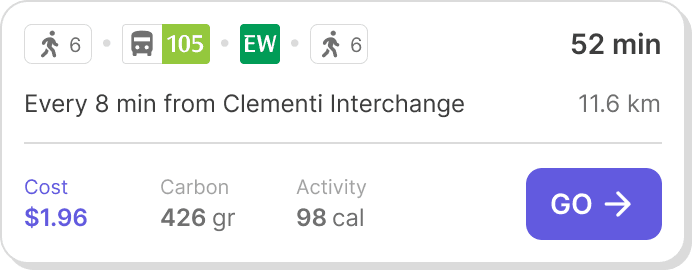
Every 8 min from Clementi Interchange
52 min
11.6 km
Cost
$1.96
Carbon
426
gr
Activity
98
cal
GO
4
•
DT
•
EW
•
5
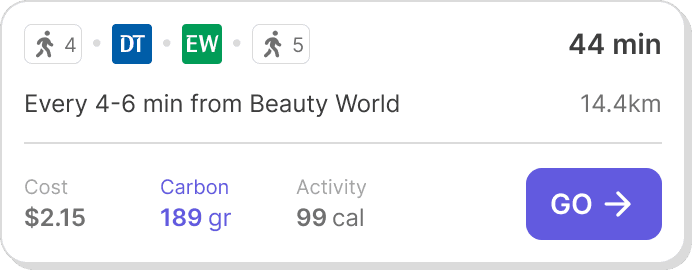
Every 4-6 min from Beauty World
44 min
14.4km
Cost
$2.15
Carbon
189
gr
Activity
99
cal
GO

Takes you ~800 steps with this choice
40% closer to reach your daily steps goal
From here, each stage becomes a design problem. Here’s how The Commute Loop got built — starting where the commute actually begins.
STAGE 1 — START
Surface the better default
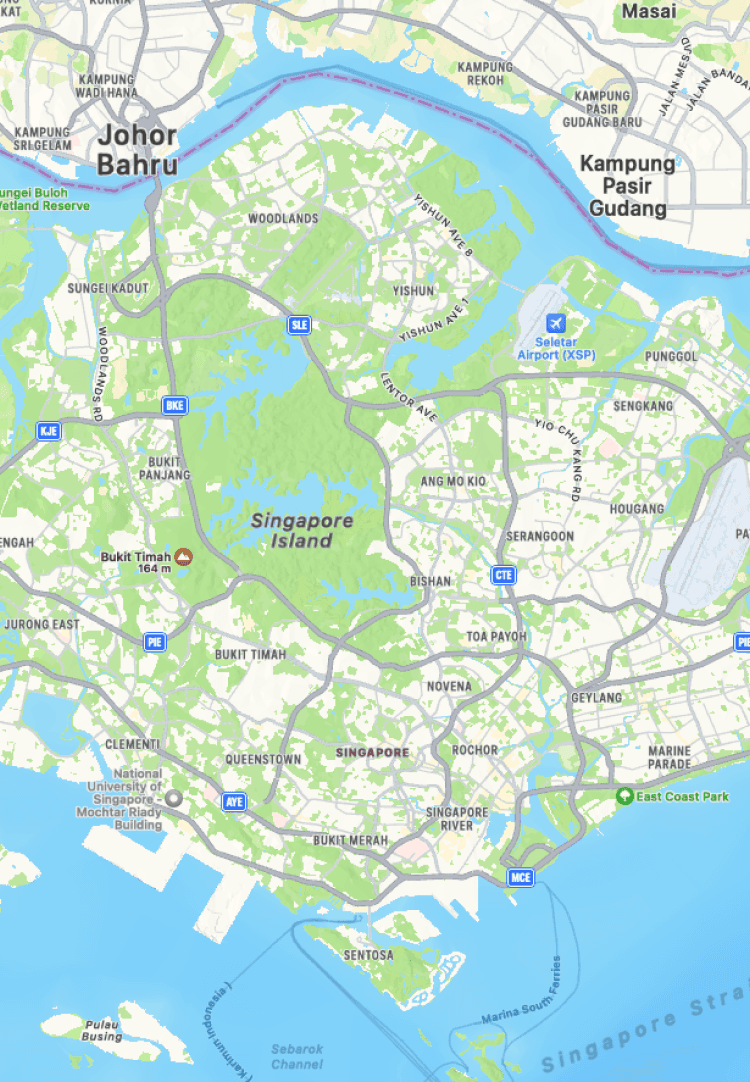
We’re going to follow Zhi Min’s journey using OZONE, he is a habitual driver from Toa Payoh. In OZONE’s onboarding, he picked cost and carbon as what he cares about, but by default, he drives. This morning he has a meeting at International Business Park in JLD. He opens OZONE and is provided with recommendations already shaped for today’s context.
OZONE surfaces a route option that nudges toward a better default for today’s conditions. The three cases below show what that looks like.


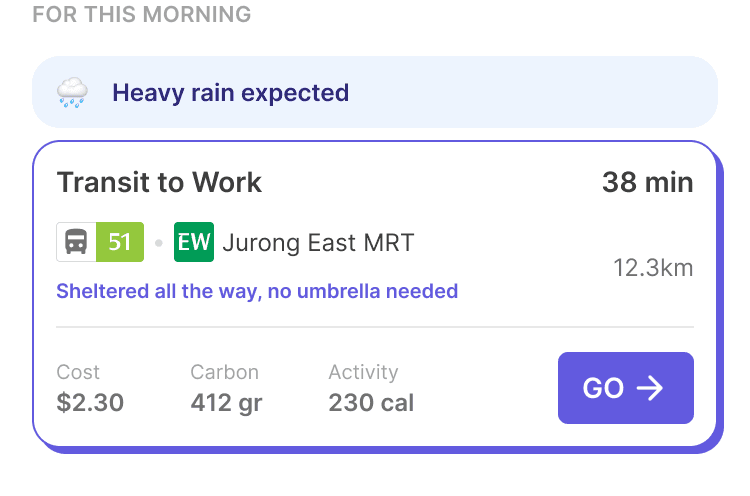
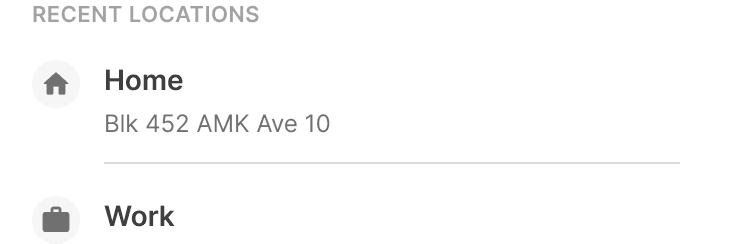
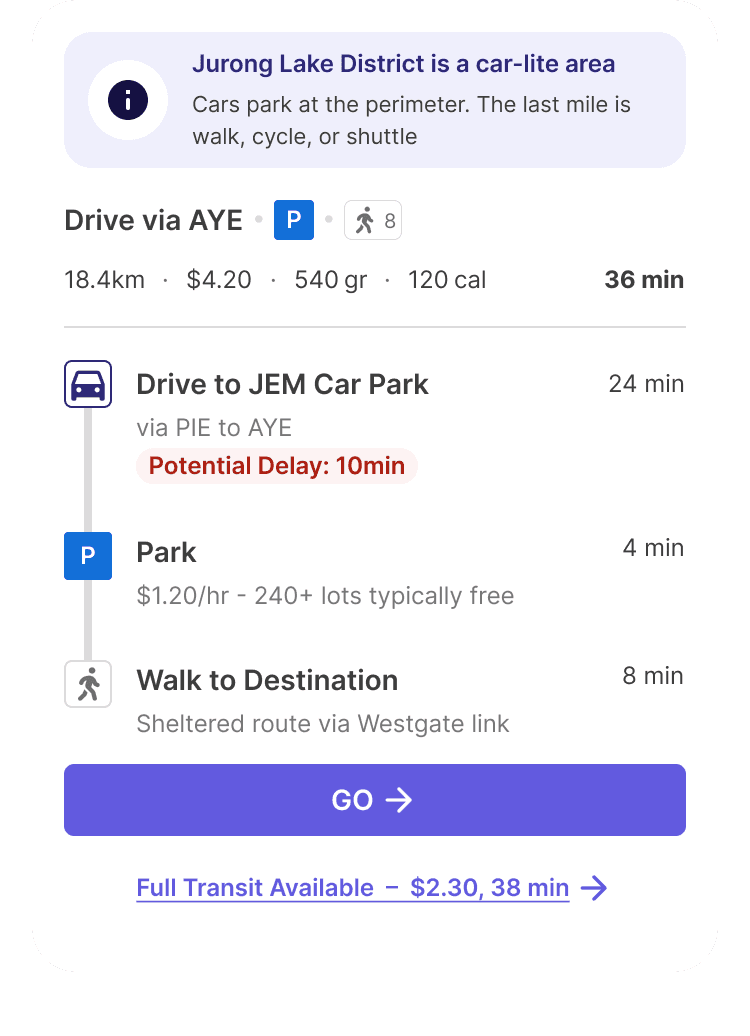
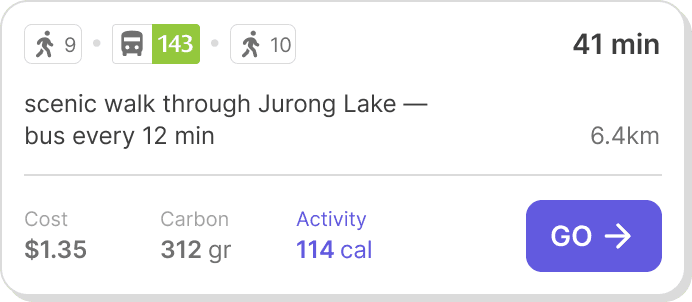
Without OZONE, Zhi Min would drive all the way into JLD, but with this nudge in a form of homepage card, it breaks that pattern. The system tries to shift that behavior gradually through Drive+Walk recommendation, not overnight. Over time, as Zhi Min gets comfortable with car-lite commuting, OZONE can recommend full transit on a daily basis.
This card does three things no existing journey planner does.
Proactive
the recommendation was ready, not searched
Contextual
weather, zone constraints, and service status all shape what appears on screen,
Transparent
shows a spectrum of options, along with the trade-offs, and lets the numbers make the case.
STAGE 2 — COMPARE
Make the trade-off legible
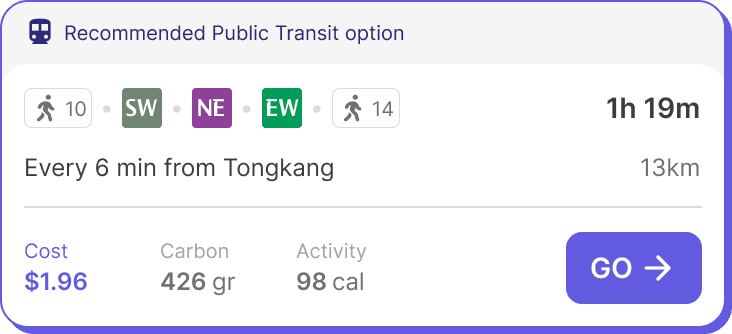
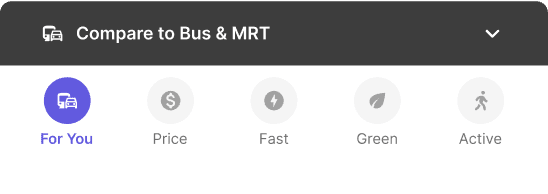
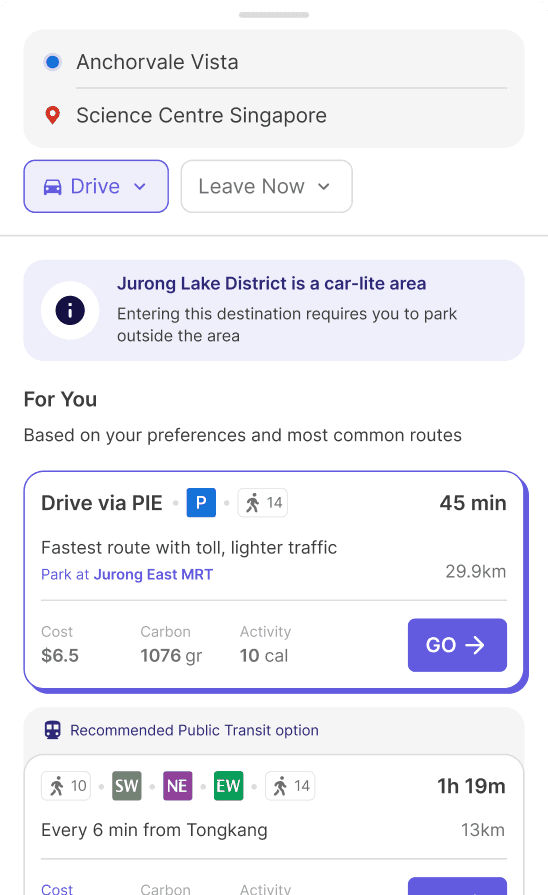
Zhi Min hasn’t committed to either option yet. He taps on “Full Transit Available” and OZONE opens up the detailed comparison page. Here the trade-off feels more concrete and personal through nudge cards that translate what the choice actually costs.


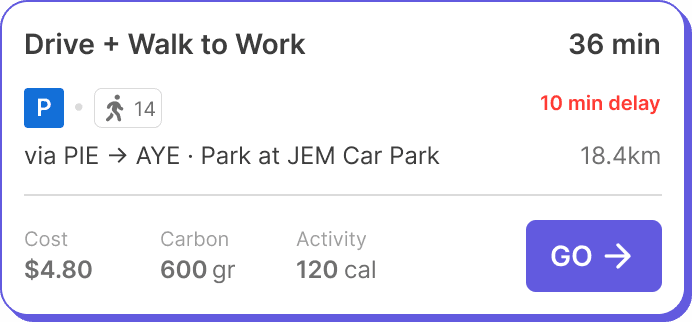
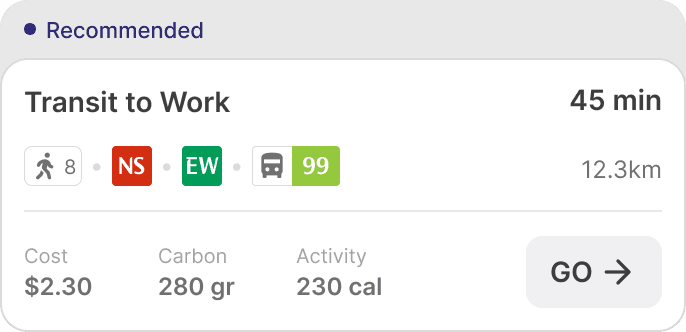

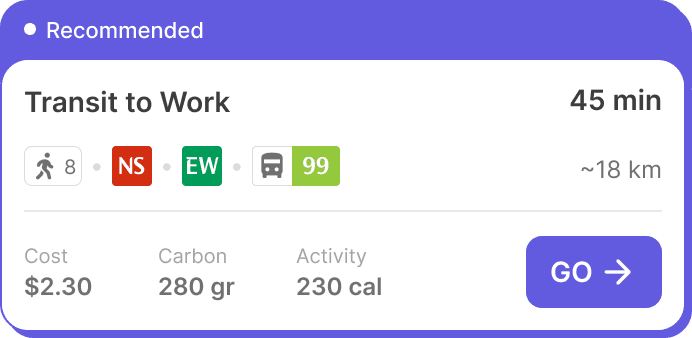
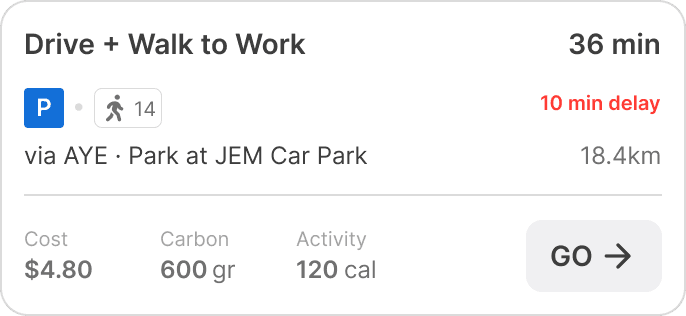


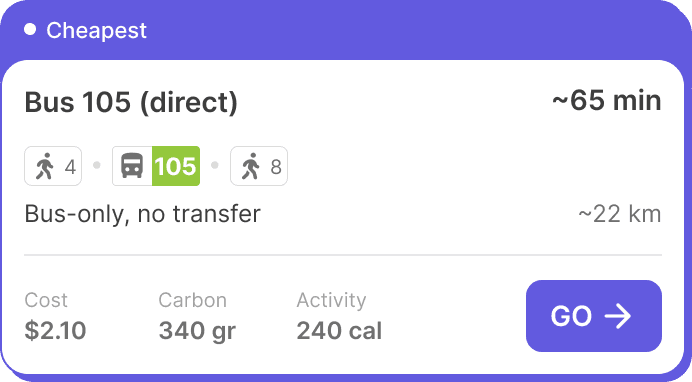
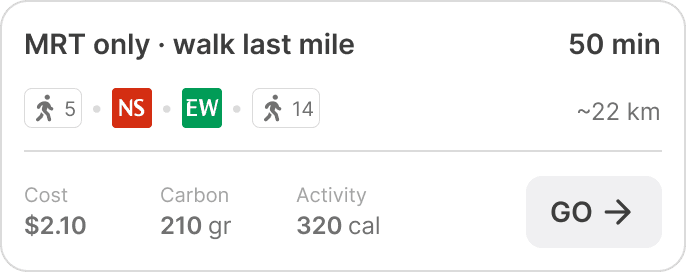
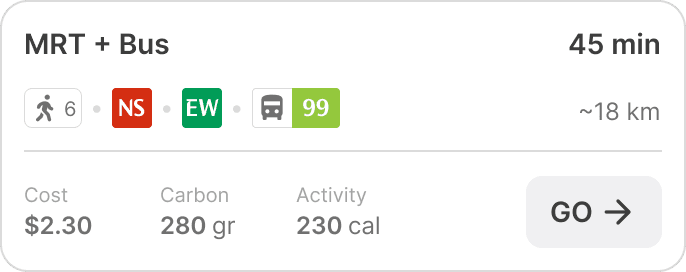


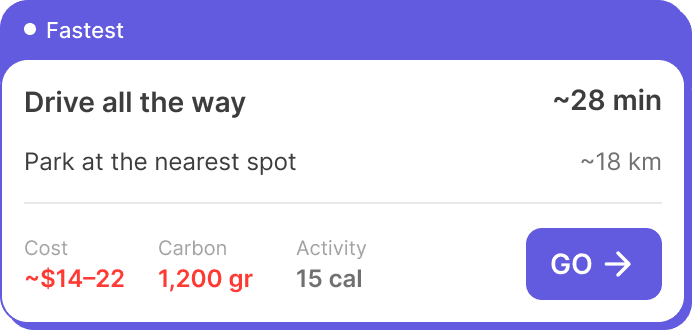



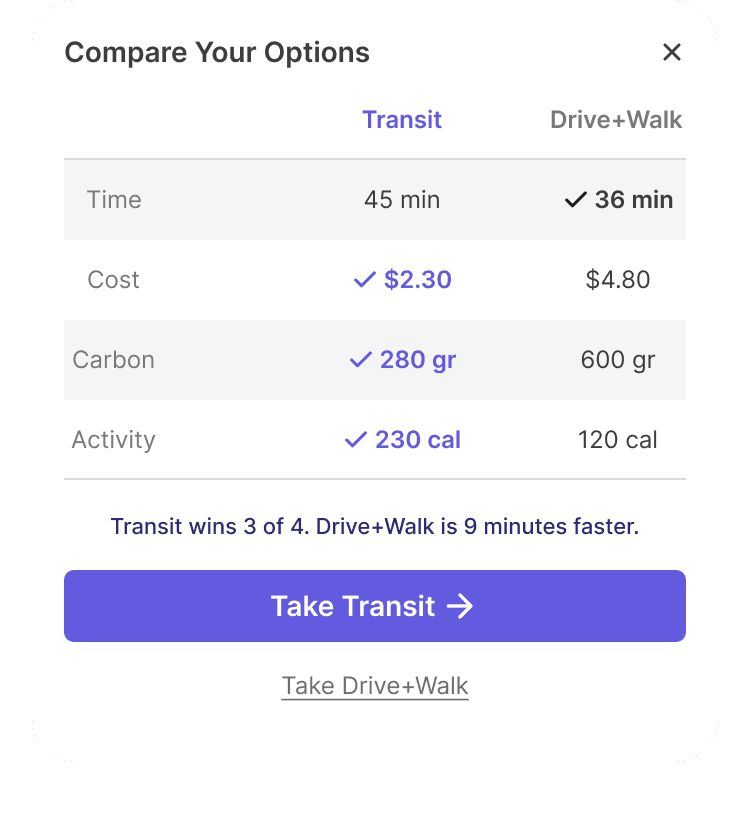
OZONE does not restrict choices but makes the better one easier to see and framed as a values decision instead of just a routing query, and that’s how the nudge meant to work as a system.
For a habitual driver with good intentions, this reframing is important to make sustainable commuting feels like the easier choice instead of the heavier one.
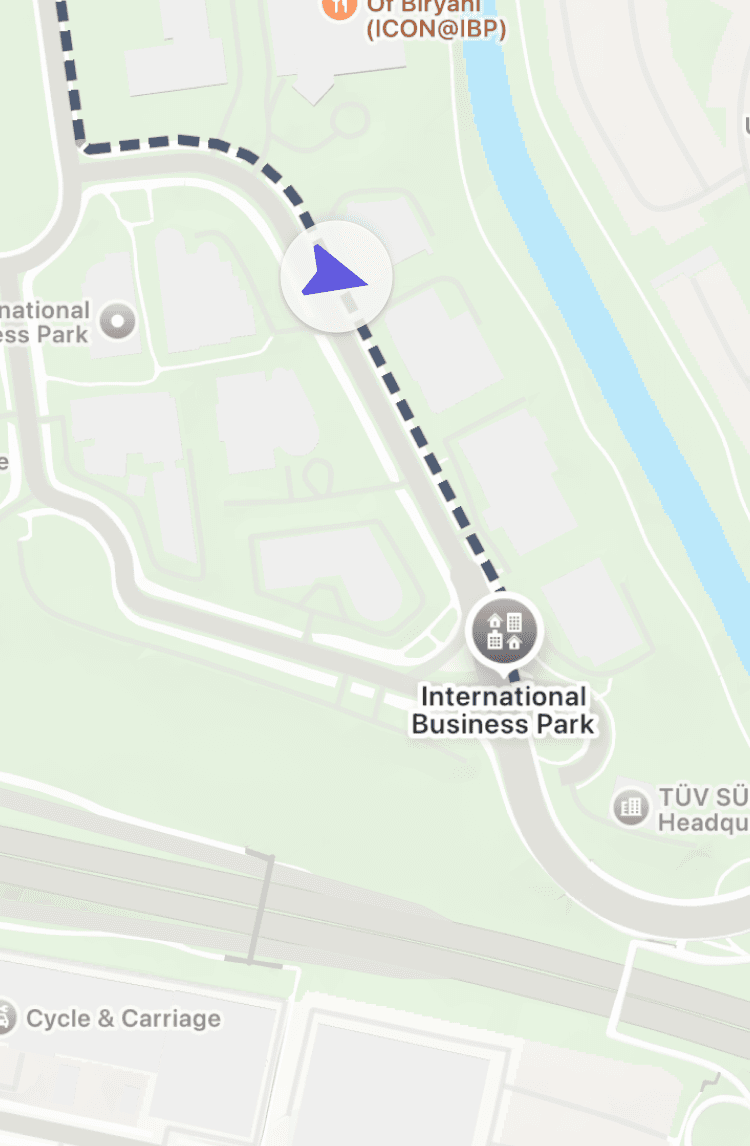

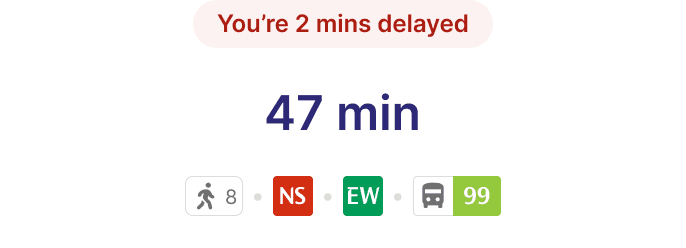
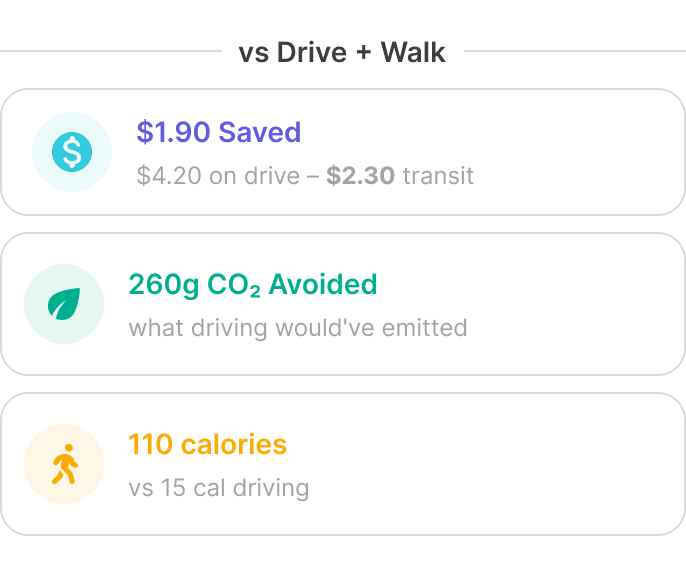

Zhi Min uses Transit to Work, and approaching his destination
This is what greets Zhi Min at his destination. OZONE measured his trip and gives him proof that he's making the better choice, Transit over Drive — mirrored back in cost, carbon, and calories as the measured impact. Nothing here pushes him further, but to see more, he can tap Open Trip Log.
STAGE 3 — REFLECT
Make the impact visible
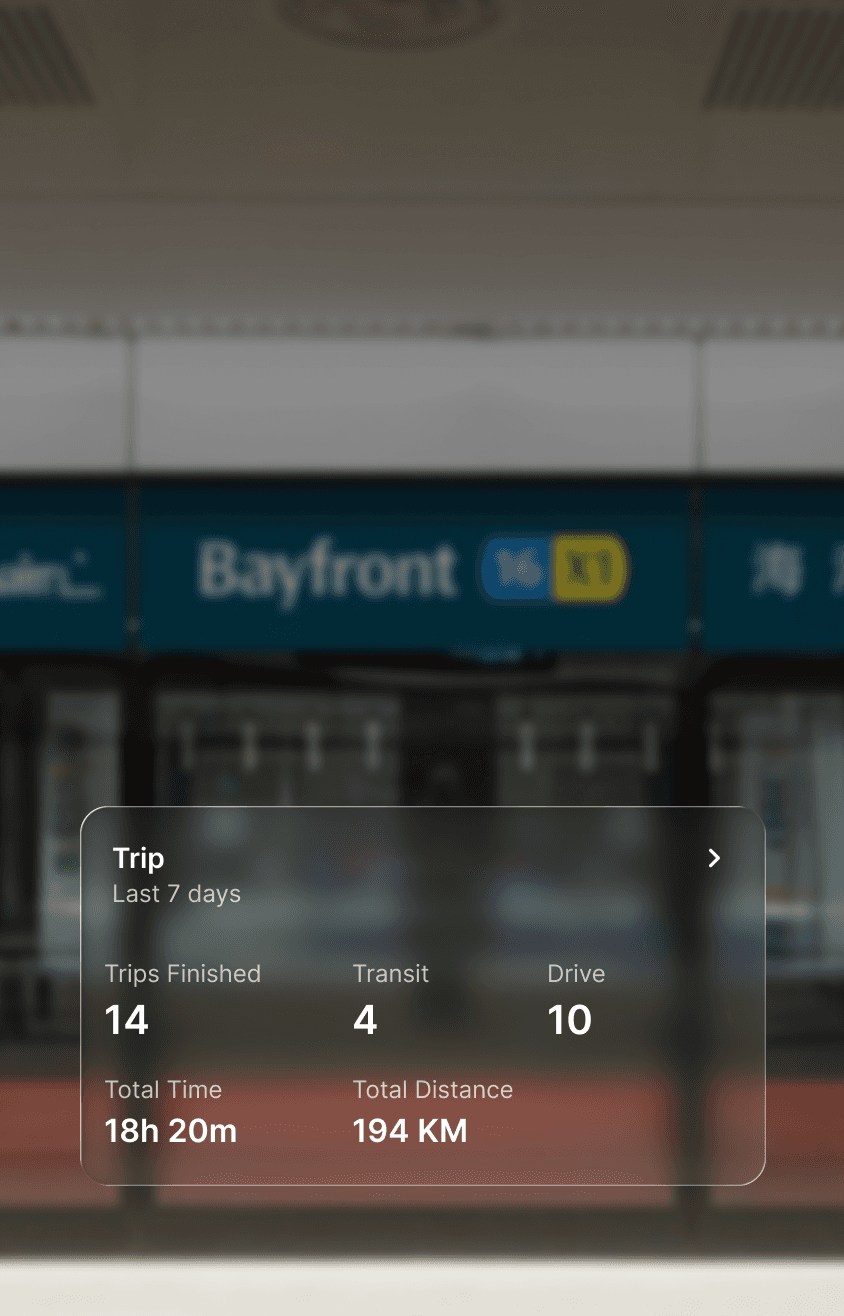
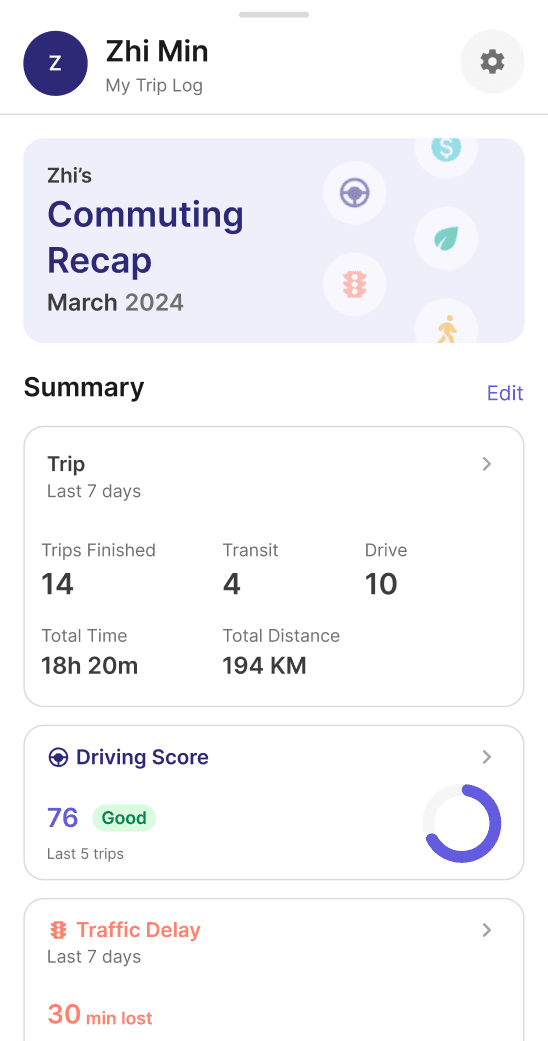
Zhi Min taps Open Trip Log, where those same numbers accumulate over time. This is where reflection turns into pattern: one trip becomes a data point, but a week of trips becomes a story.


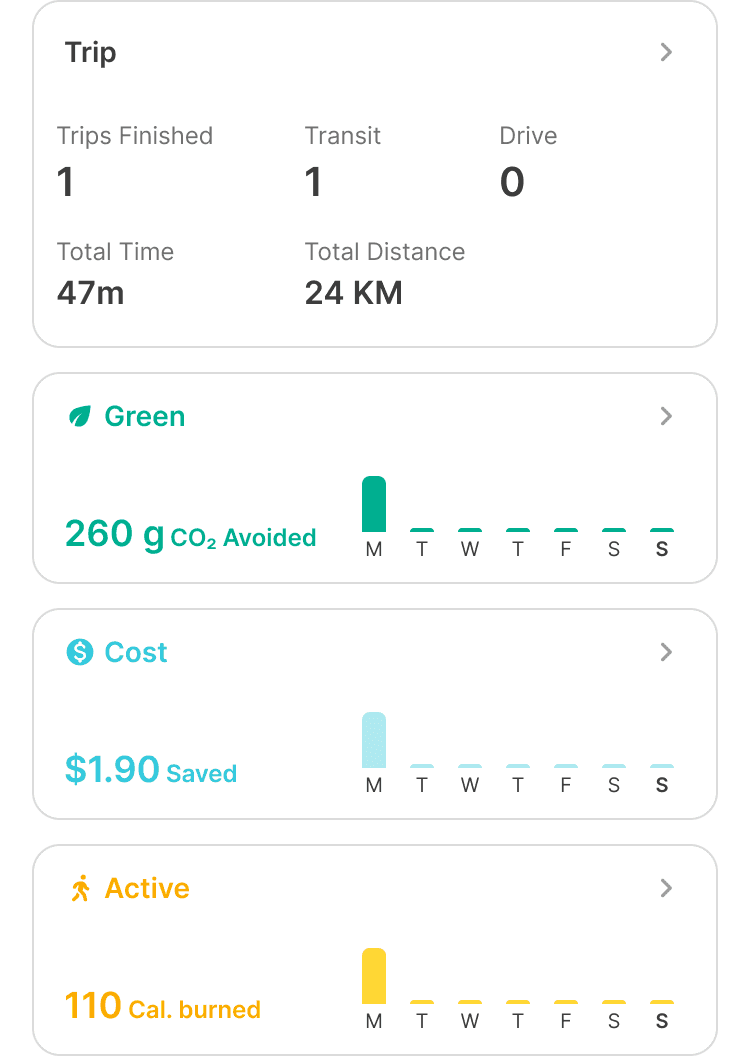

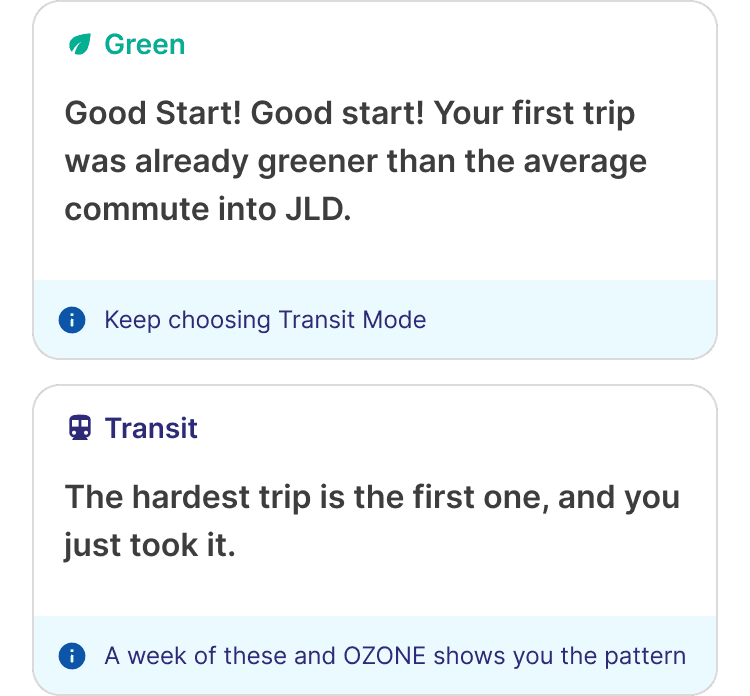
I designed the Trip Log around a single reusable card, so OZONE and NK can extend it to future cases and new data types without redesigning the UI.
One card, built to scale
THE LOOP CLOSES
Smarter Default
Across a week, the three stages compound. OZONE surfaced the better default (Start), made the trade-off legible (Compare), and made the impact visible (Reflect) — and now those reflections feed back.
Zhi Min’s next commute starts smarter than his last.



[↑] OZONE’s commute loop Back to Stage 1
Stage 3’s insights trigger a timely nudge that reopens OZONE with a smarter default.
GOING FURTHER
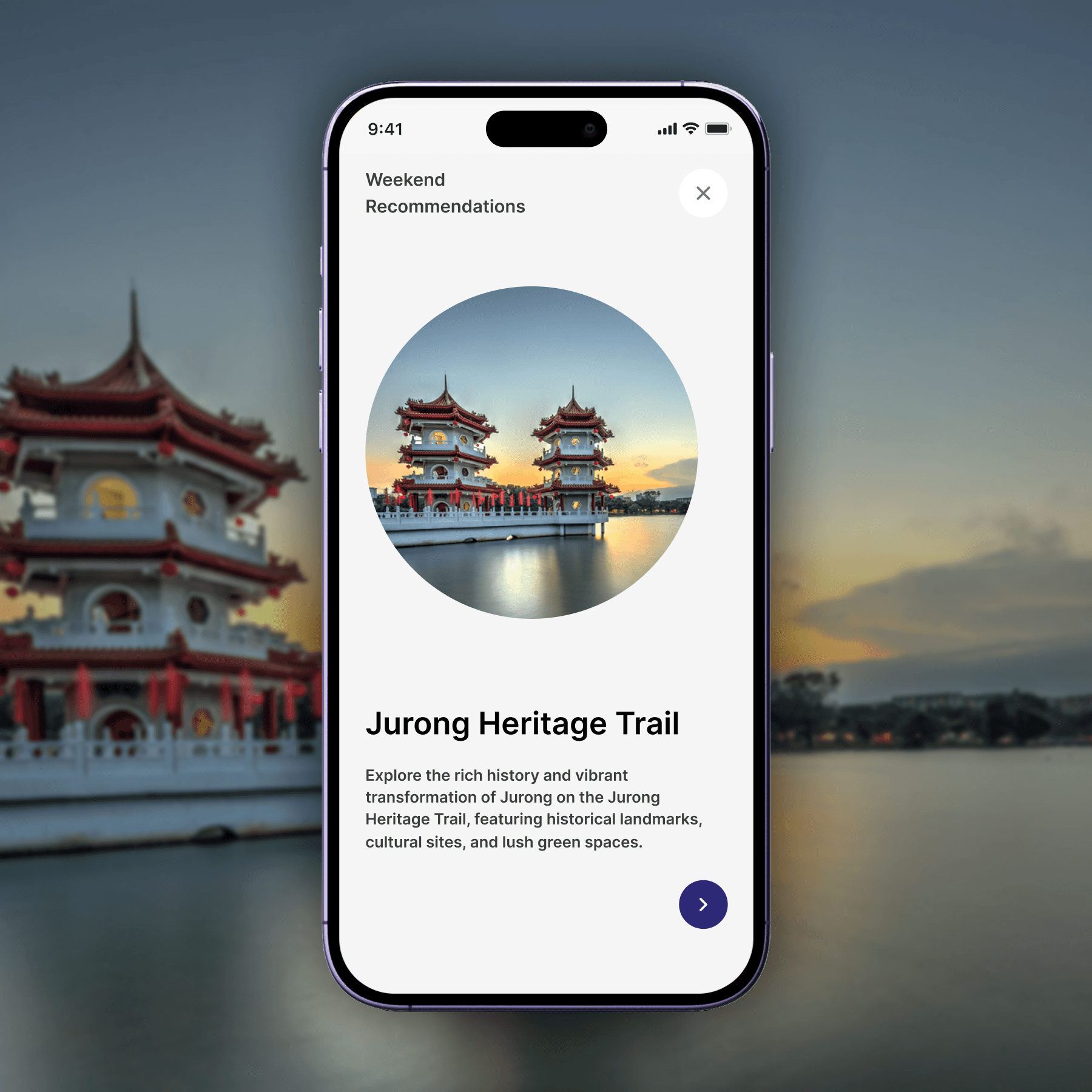
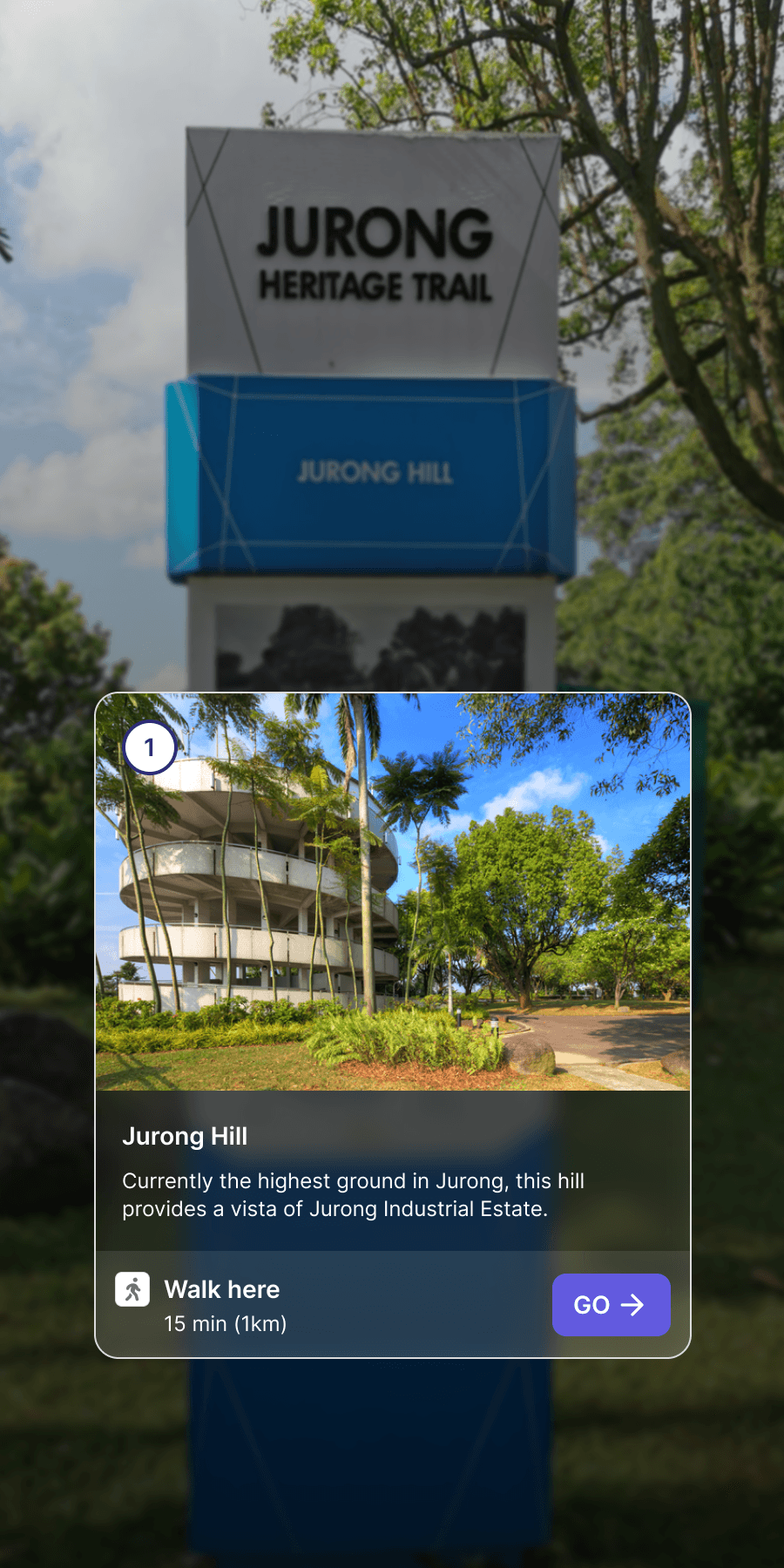
Weekend Recommendation: Explore with a Guided Walk
The 85% of Walk-Cycle-Ride in the brief target counts every trip and not just daily commutes. So beyond the ask, I extended the same nudge into weekends, keeping people car-lite when people are not commuting from Home to Work.
I uses homepage as the primary nudge. On weekends, it surface a proof-of-concept self-guided walk along the Singapore's in-city trails like; Jurong Heritage Trail.
[↑] OZONE’s Weekend Recommendation
nudging car-lite leisure on Singapore’s official trails
OUTCOME
Where this project landed
By hand-off, OZONE had evolved from a journey planner into a three-stage behavior-change system — one that doesn’t just show routes, but works to shift how drivers perceive and choose their commute.
Delivered as a proof of concept for stakeholder demos with SMRT, LTA, and URA, the concept wasn’t taken into production after Nippon Koei’s roadmap shifted — so the results below reflect the delivered system, not market KPIs. It also means it was never tested with drivers. The clearest next step would be validating whether the gradual default actually moves a habitual driver off the car.
Impact
Built a foundational framework
The Commute Loop — a Start / Compare / Reflect system that closes the loop on habit formation.
Shifted the conversation beyond “features”
A shared language that judged designs against the 85% car-lite target, not feature lists.
Left NK a reusable asset
Annotated specs and a component template to extend to new metrics and demo with government authorities — without a redesign.
Learnings
At first I took the brief at face value — build a better journey planner. But the real problem was upstream — how drivers perceived their commute, not their access to routes. Naming that early is the whole reason OZONE became a loop that works on the decision, instead of a faster search box — and why each nudge lands at the moment a choice is actually being made.
It also showed me that designing a proof of concept is its own discipline. With no guaranteed launch, every screen had to argue for the strategy to a room of stakeholders, not just serve an end user — and learning to make that case quickly and visually is now part of how I work.
Danu Izra Mahendra
Info