Back to all project
Designing to encourage active mobility with digital nudges in Singapore
Type
Client Project – Mobile App
Timeline
Feb 2024 – 1 Month
Role
Solo Designer - Feature Scoping, Research, Experience Design, Information Architecture, Visual Design, Design Handoff
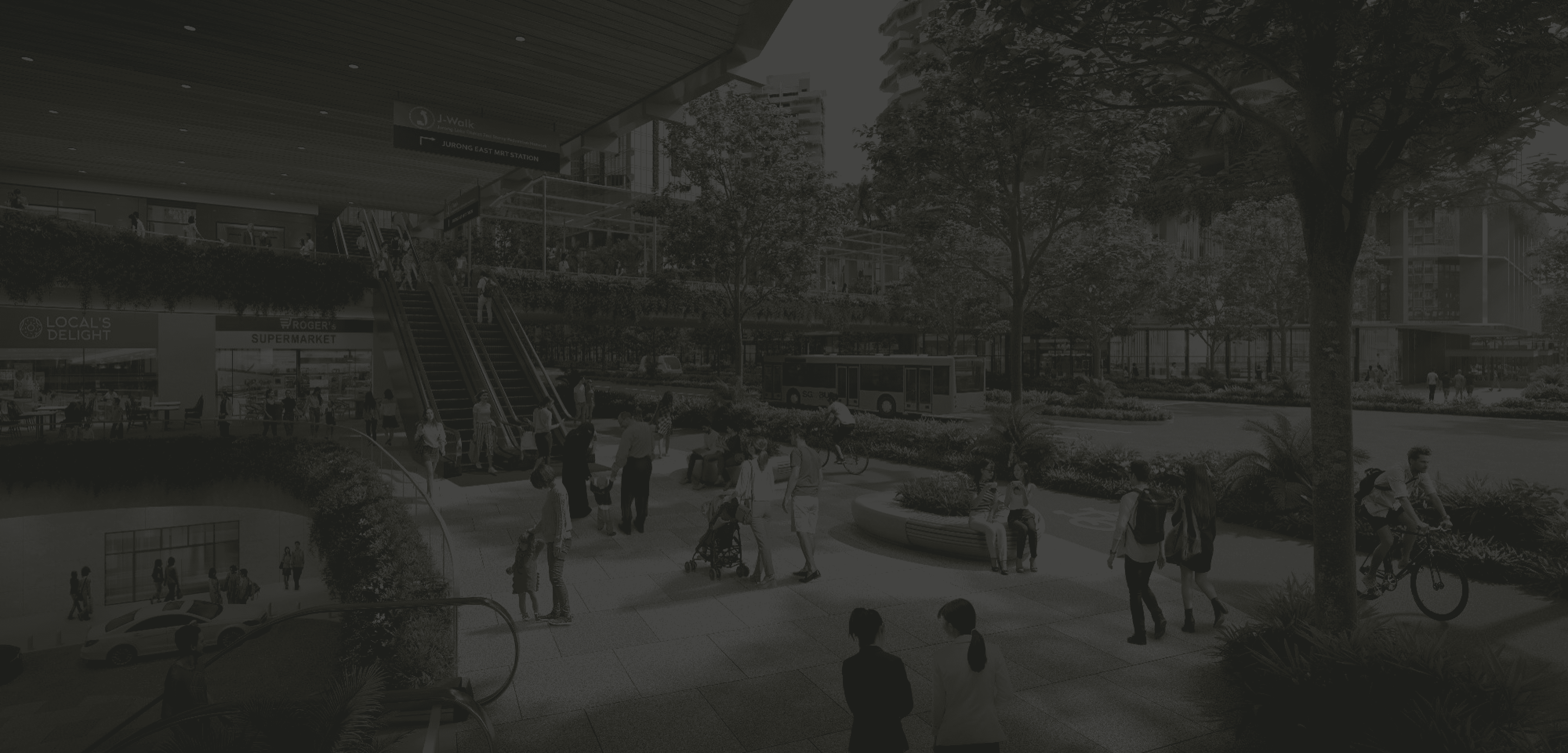
In early 2024, I collaborated with Nippon Koei (NK), a Japanese engineering consultancy, after their Singapore team won a Land Transport Authority (LTA) competition to tackle urban sustainability challenges in the CBD and Jurong Lake District (JLD).
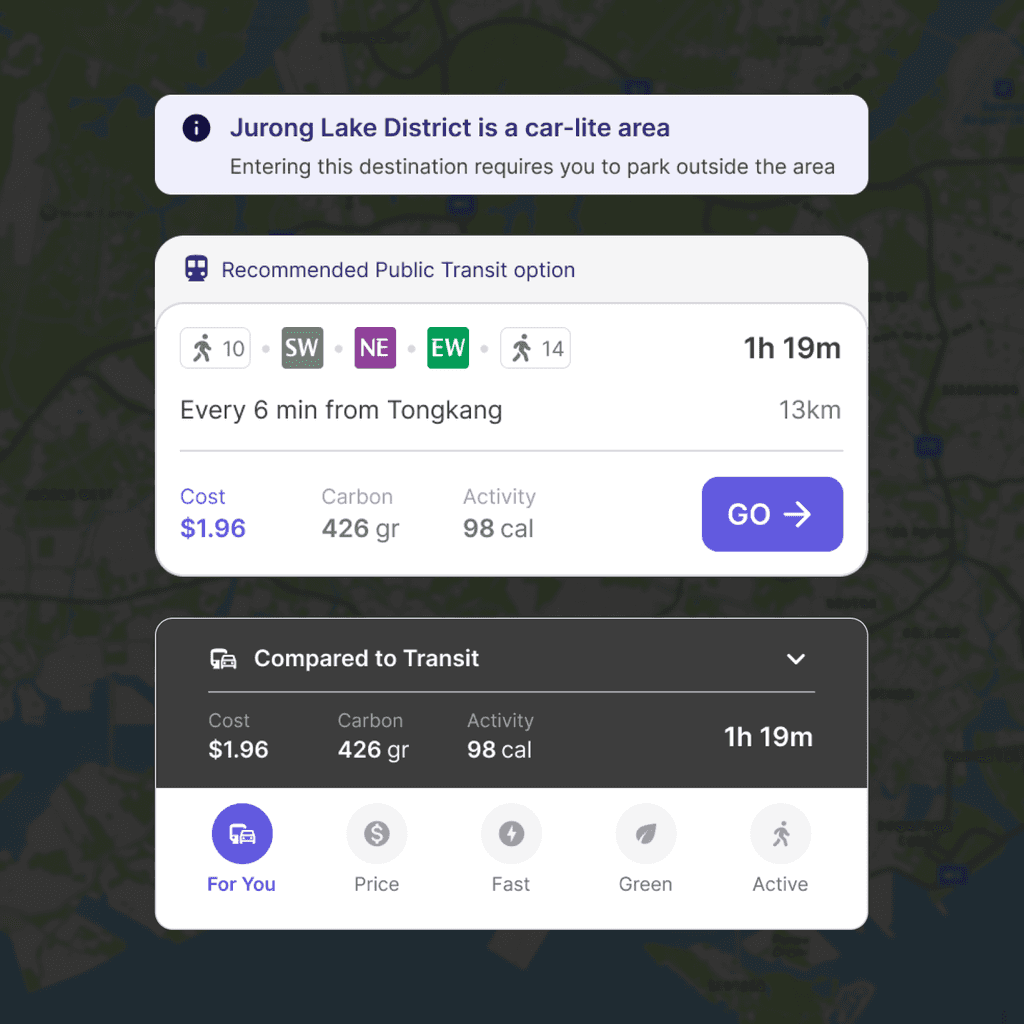
The project centered on OZONE, a digital product aimed at supporting Singapore’s “car-lite” vision—an initiative to reduce reliance on private vehicles by promoting active mobility like walking, cycling, and public transportation usage.
The vision
Our vision for this project was to create a functional demo app that could encourage active mobility in Jurong Lake District through simple, intuitive interactions. Rather than building a full brand identity or complex design system, we focused on delivering a clean, consistent interface that could be developed quickly and easily understood by user participants during testing.
In close collaboration with NK, we agreed to develop a strategic features that aligned with their strengths in data analytics; a journey planner supported by embedded nudges to subtly influence commuting behavior.
From Insights to Design Direction
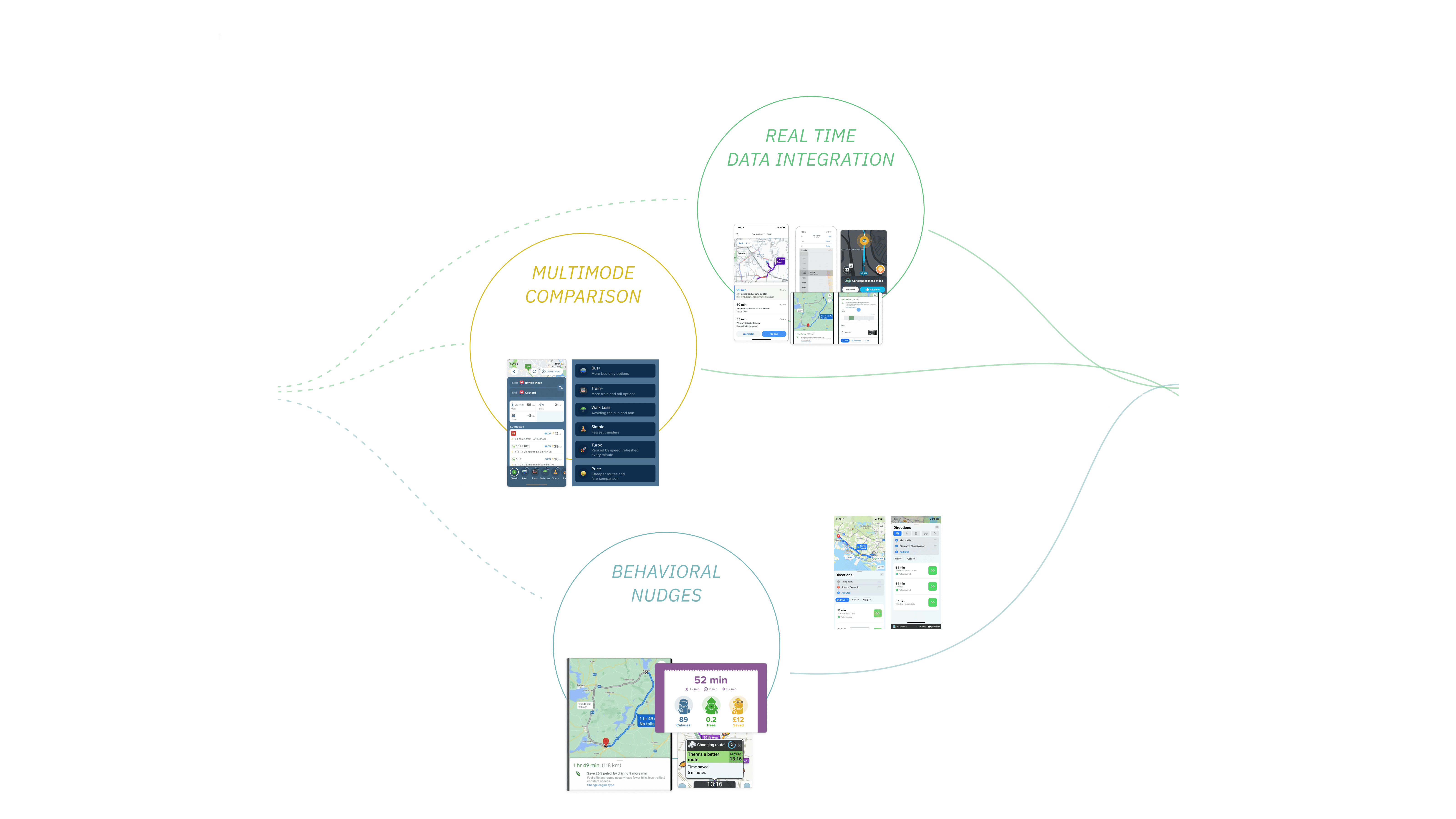
Due to time constraints and limited access to user research, we relied on desk research to gather insights quickly through a competitive analysis of journey planner apps and nudge design principles that helped shape OZONE’s strategy. While direct user feedback wasn’t available, this approach ensuring the design was grounded in relevant industry best practices.
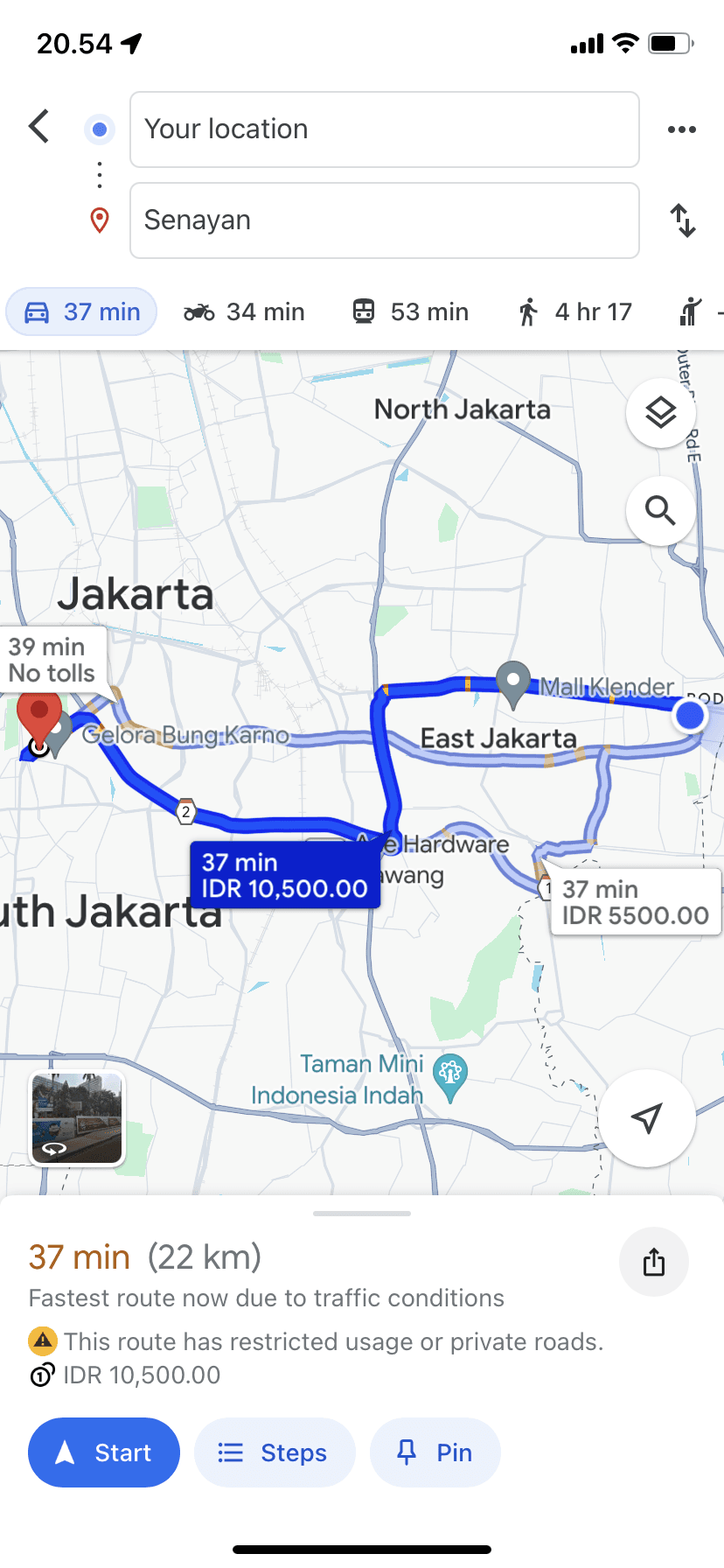
In analyzing best practices from popular journey planner apps like Google Maps, Waze, Apple Maps, and CityMapper, we observed how nudge design is applied to influence user behavior in various ways during their commute. The synthesis below highlights how these benchmarked features and nudge strategies informed our core design intention for OZONE.
Strategizing Nudge Design
Gaining insights from the patterns of best practices above, I focused on one key question: How might we guide users who wants to shift toward more car-lite commute but often defaults to driving, without overwhelming them with choices?
This led to a 3 stage nudge strategy that blends behavioral cues into the journey planner touchpoints. The goal was to gently steer decisions while still giving users a sense of control.
The 3 Stage Nudge Strategy;
Where nudges applied and mapped to the journey planner touch points
1
Decision Point
Before choosing a route
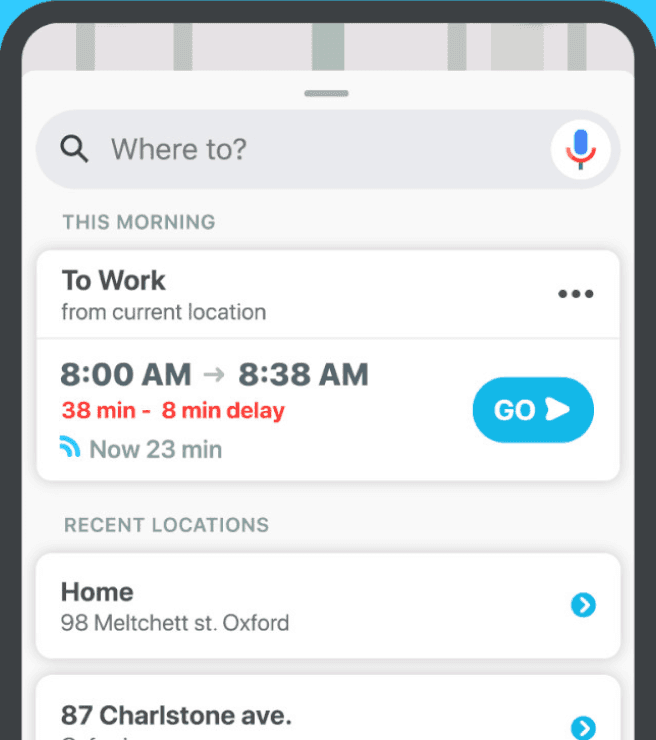
Make car-lite options easier to choose (e.g., smart defaults)
Thaler & Sustein: Defaults and Framing
2
During Action
While comparing options
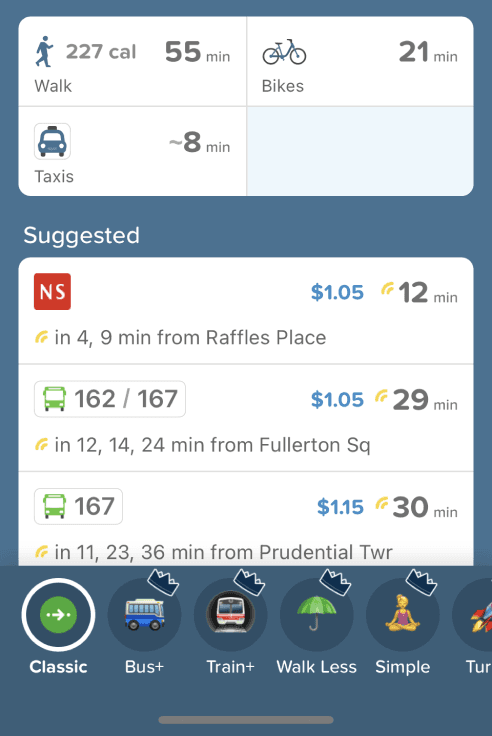
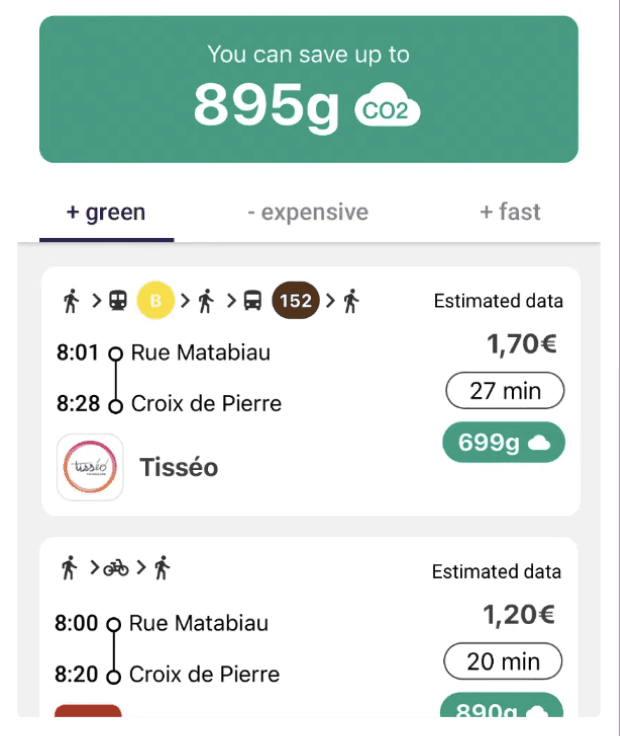
Reinforce decisions through real-time impact (e.g., CO₂, calories)
BJ Fogg: Feedback, Real time persuasion
3
Post Decision
After the trip
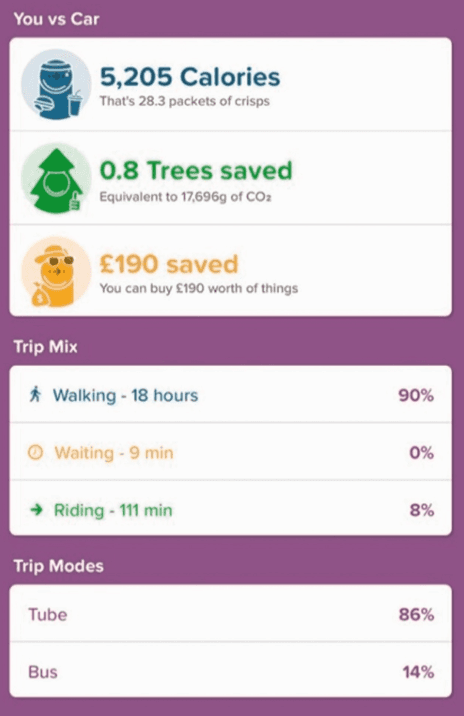
Support long-term shift through reflection and tracking
Kahneman & Duhigg; Reflections and habits
This framework would helped each design iteration to a specific behavior moment in user's journey
To translate the strategy into design, I first explored two directions, that represent how the "Decision Point" and "During Action" strategy.
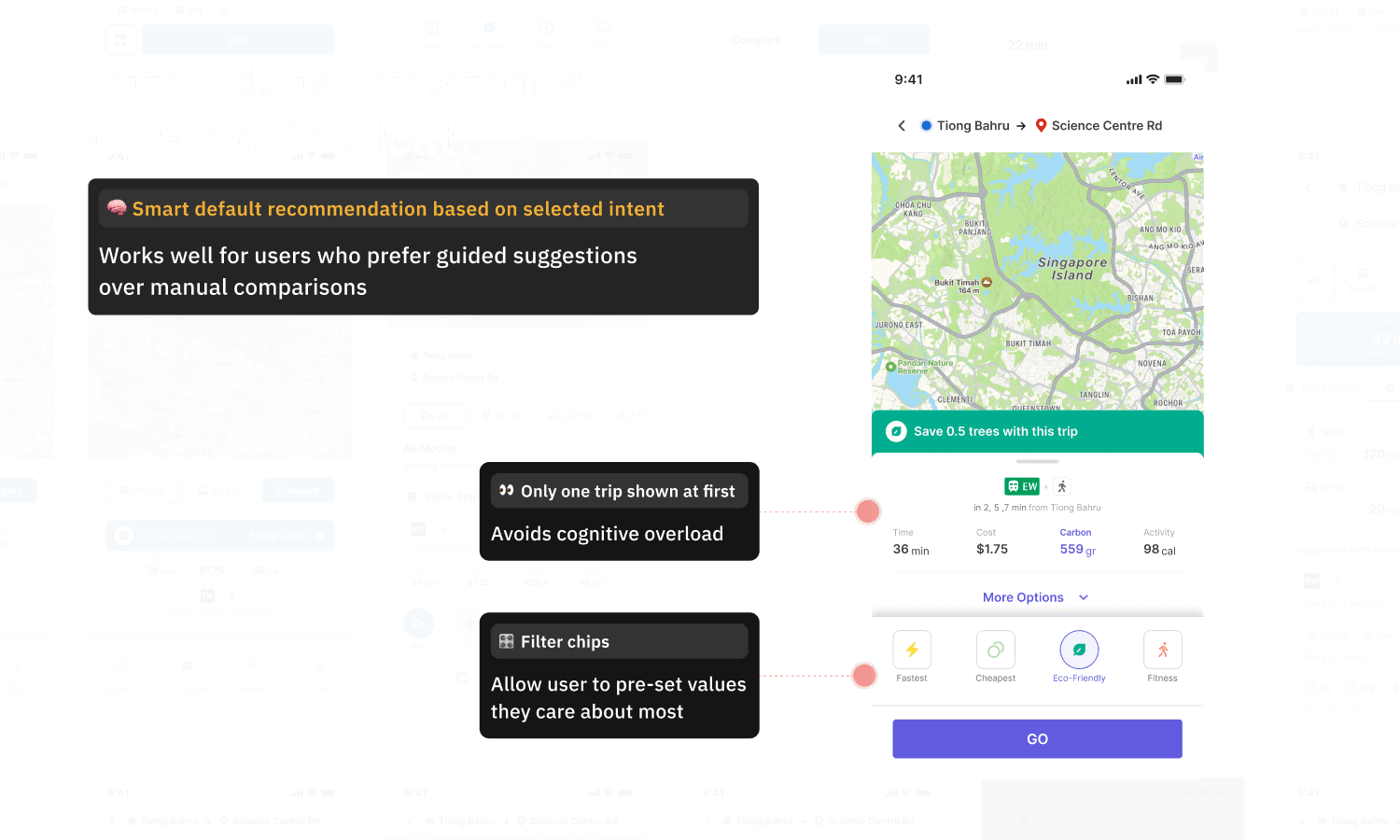
Stage 1; the Decision Point
This direction surfaces a single recommended route based on the user’s preferences (Fastest, Cheapest, Eco-Friendly, Fitness).
It applies choice architecture and provide default options by minimizing friction, only showing one option before offering “More Options”, hence making it ideal for quick, confident choices.
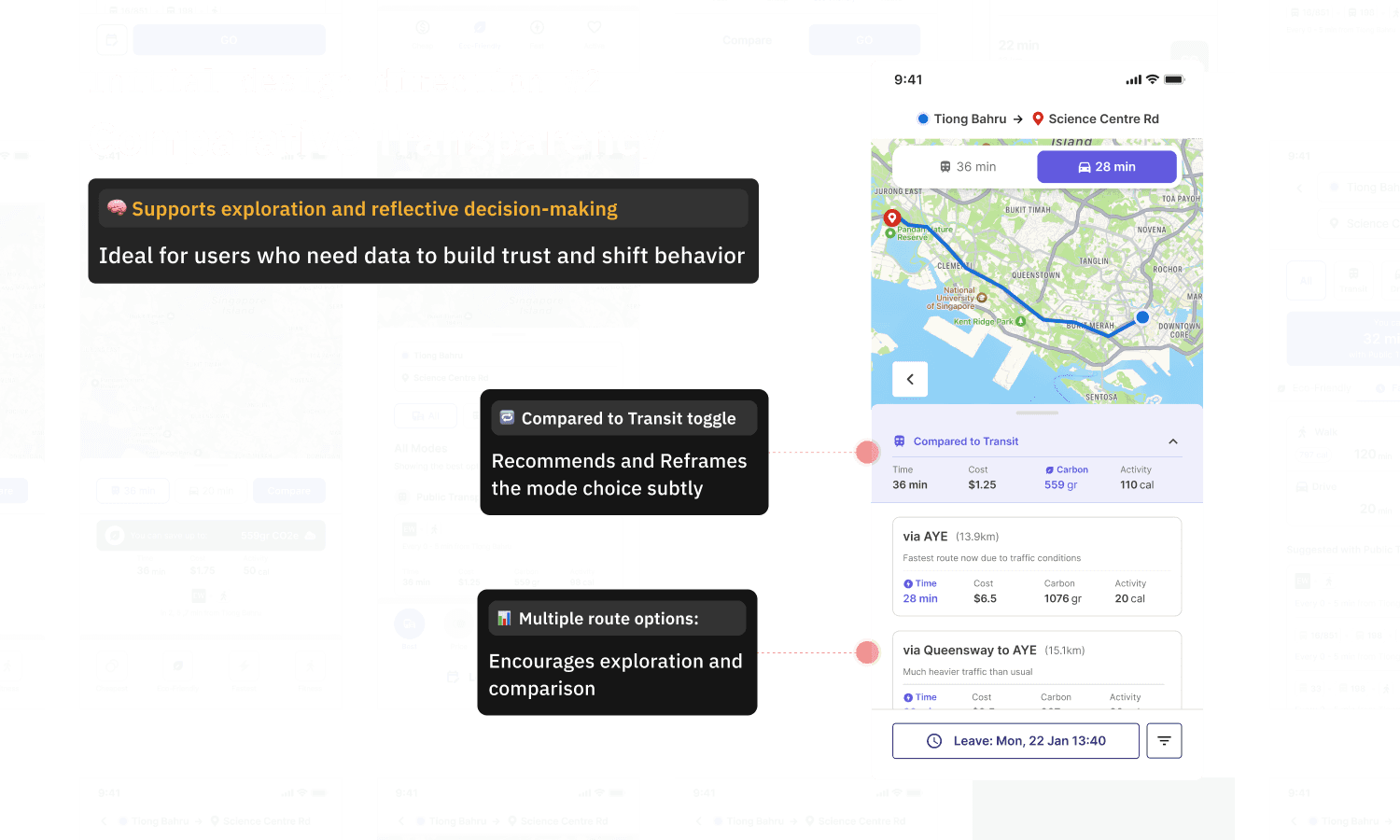
Stage 2; During Action
The layout emphasizes exploration and feedback, showing multiple route options with visible metrics for carbon, cost, and effort.
Nudges are embedded per route, allowing conscious comparisons. The “Compared to Transit” toggle reframes the default mindset to nudge shift saliently.
Since both design direction happen during route selection, I merged them into one balanced interface.
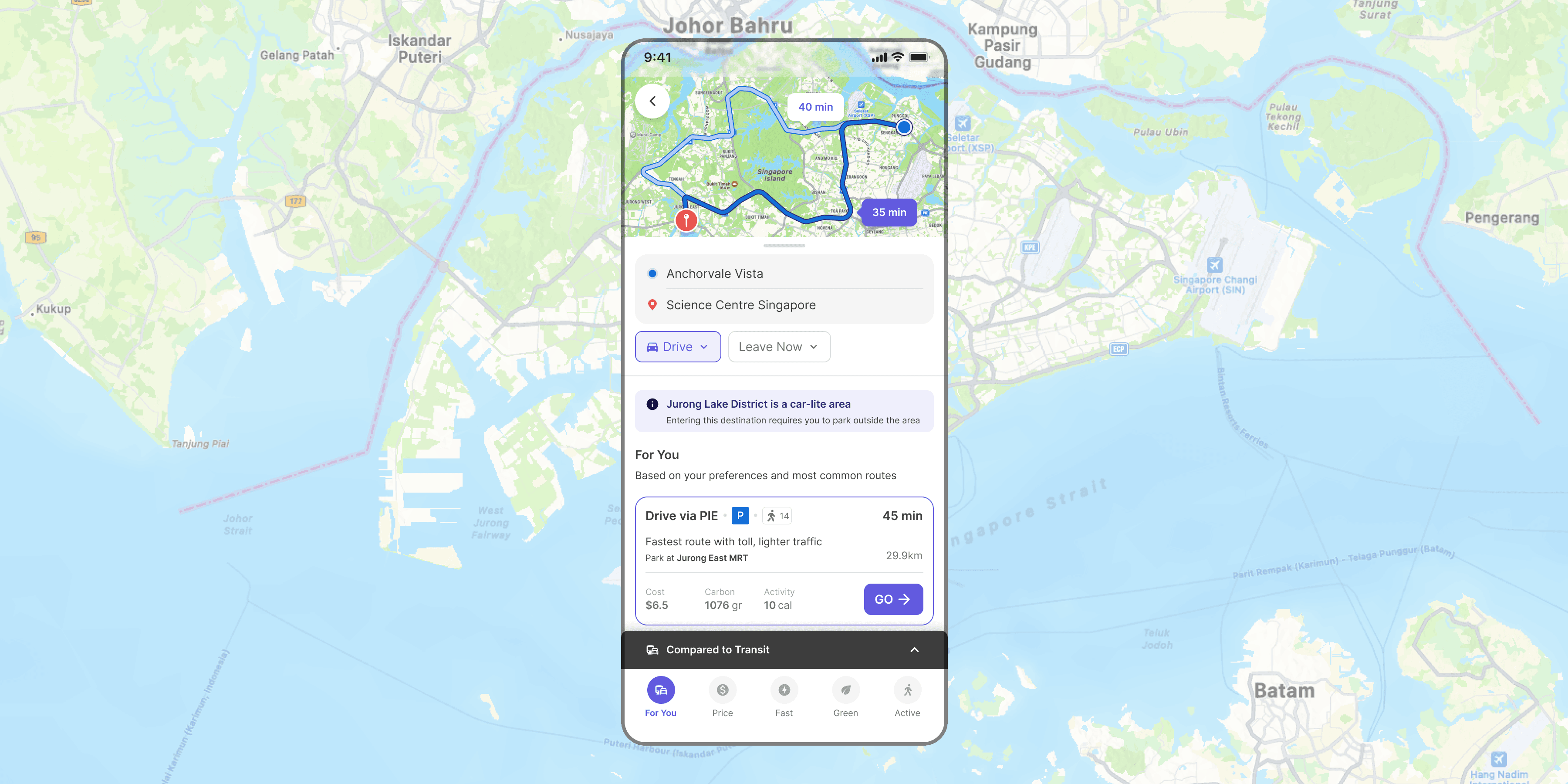
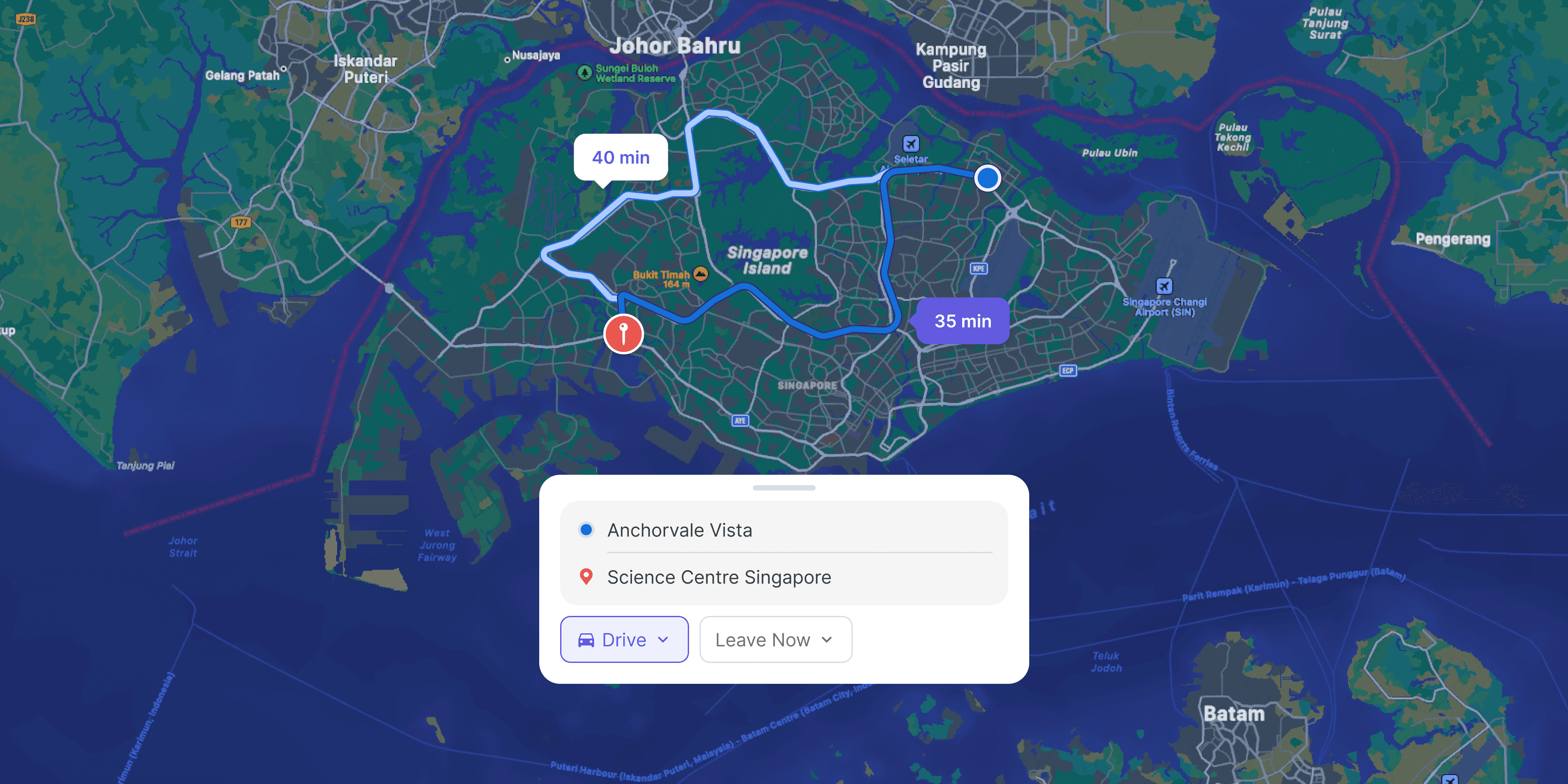
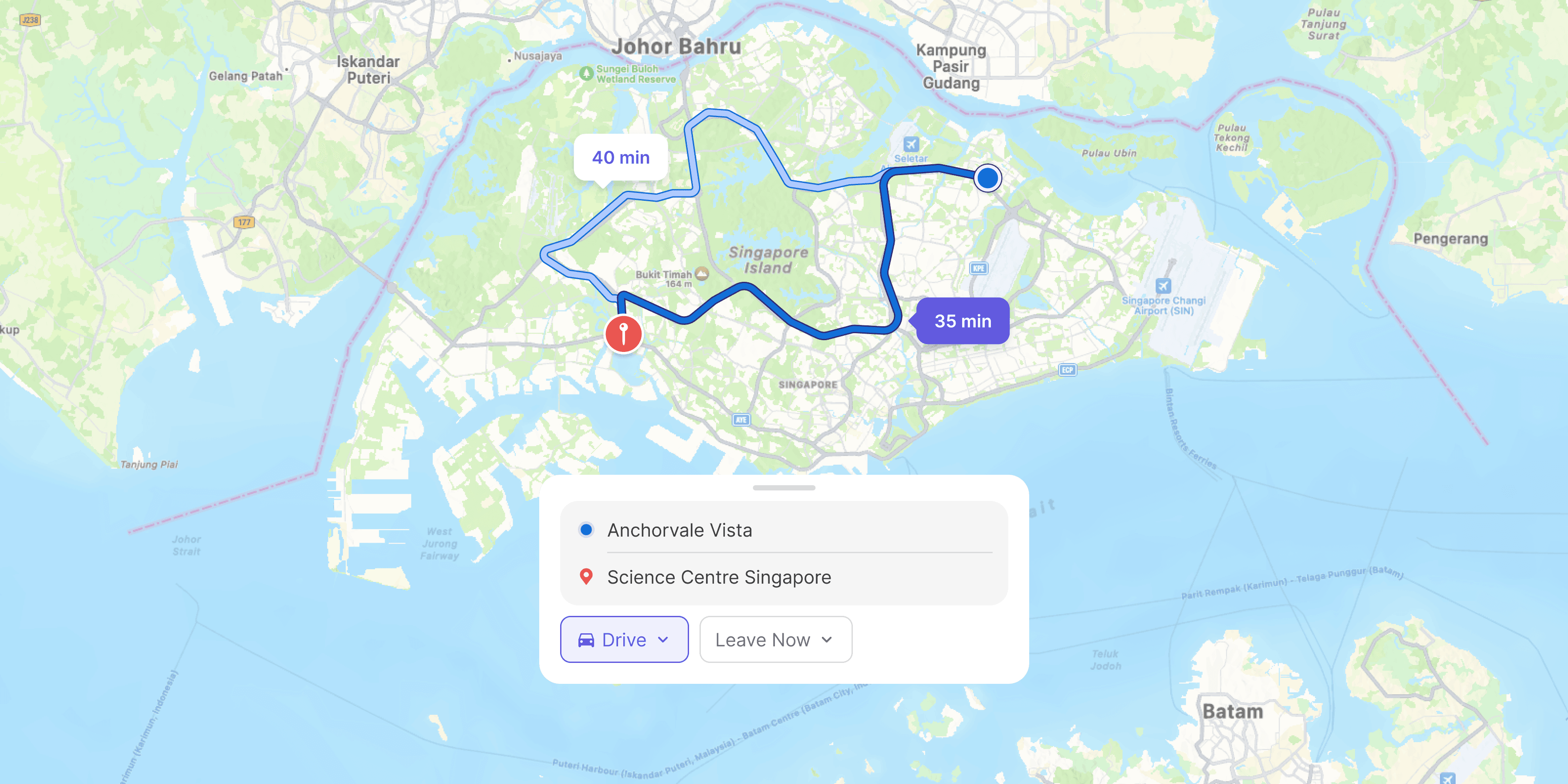
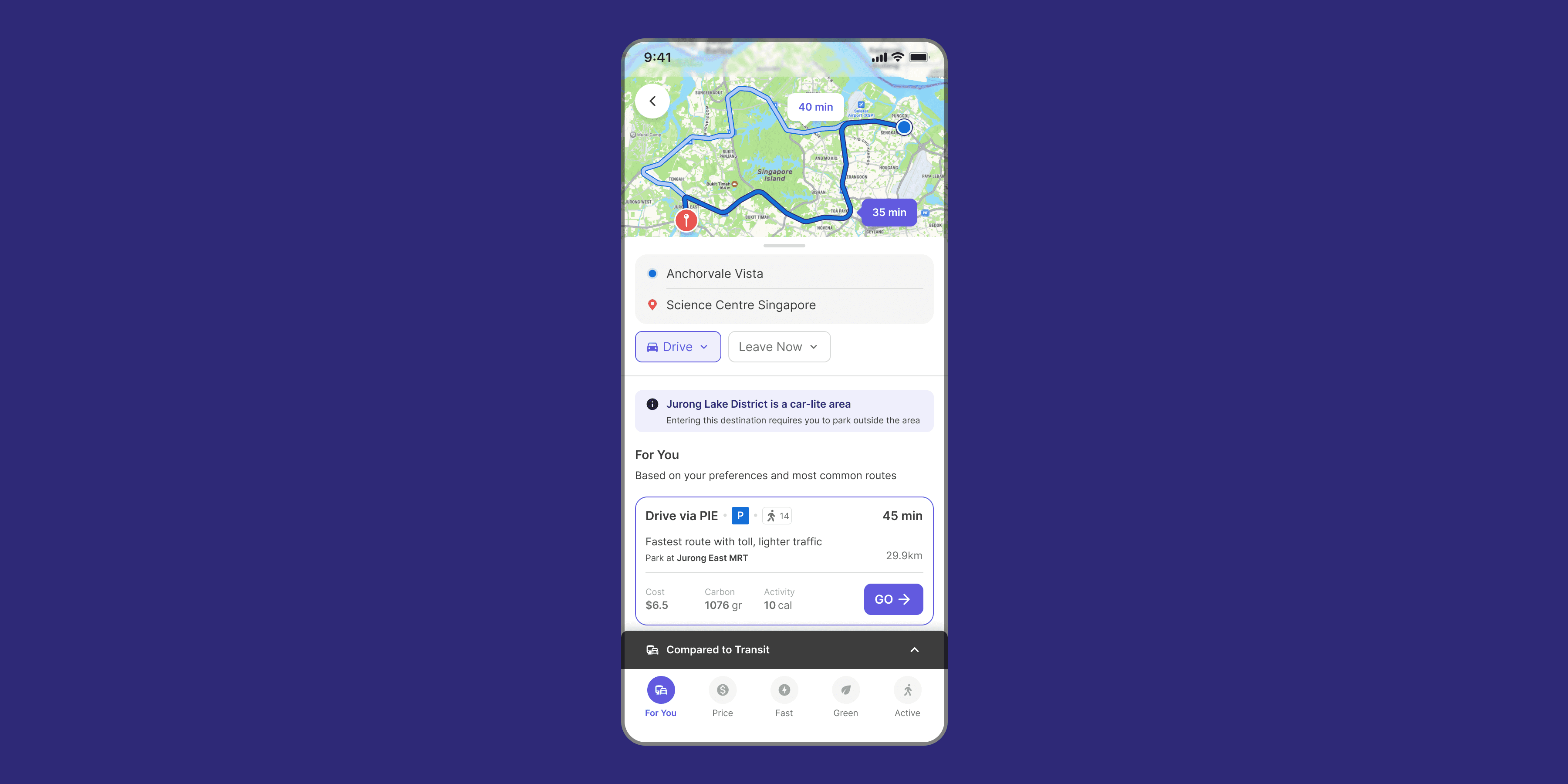
Stage 1 + 2 Combined
This design brings together the best of both:
a pre-selected smart suggestion backed by transparent, togglable insights.
Users are guided but can override and explore. The layout reinforces behavioral nudges while maintaining user control.
Solution 1
Journey Planner
Provide straightforward and spot-on recommendations
we prioritized creating a journey planner that effectively guides users to their destinations. Our recommendations aligned with user needs and Singapore’s on-ground context, ensuring information was clear and well-balanced.
The end-to-end commute selection flow is seamless and non-intrusive, providing sufficient information to guide users in making decisions while maintaining a frictionless experience.
OZONE homepage before
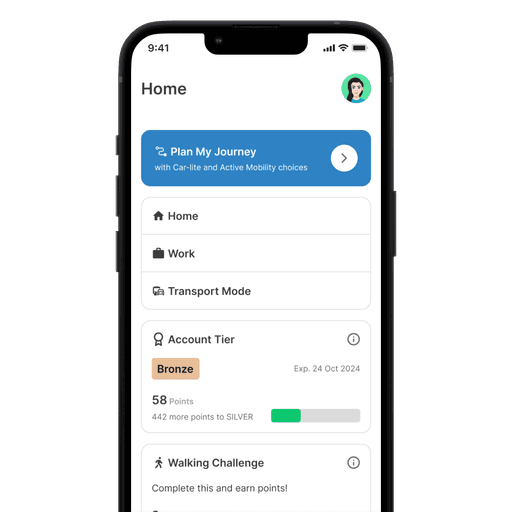
OZONE homepage after
Identify high value features
Together with NK, we had some brainstorming session on identifying high value features NK can implement based on their expertise in gathering data and data analytics. Here's what we came up with:
Design a journey planner as the main new feature
Design nudge components that can shift commuter behavior, integrated inside the journey planner
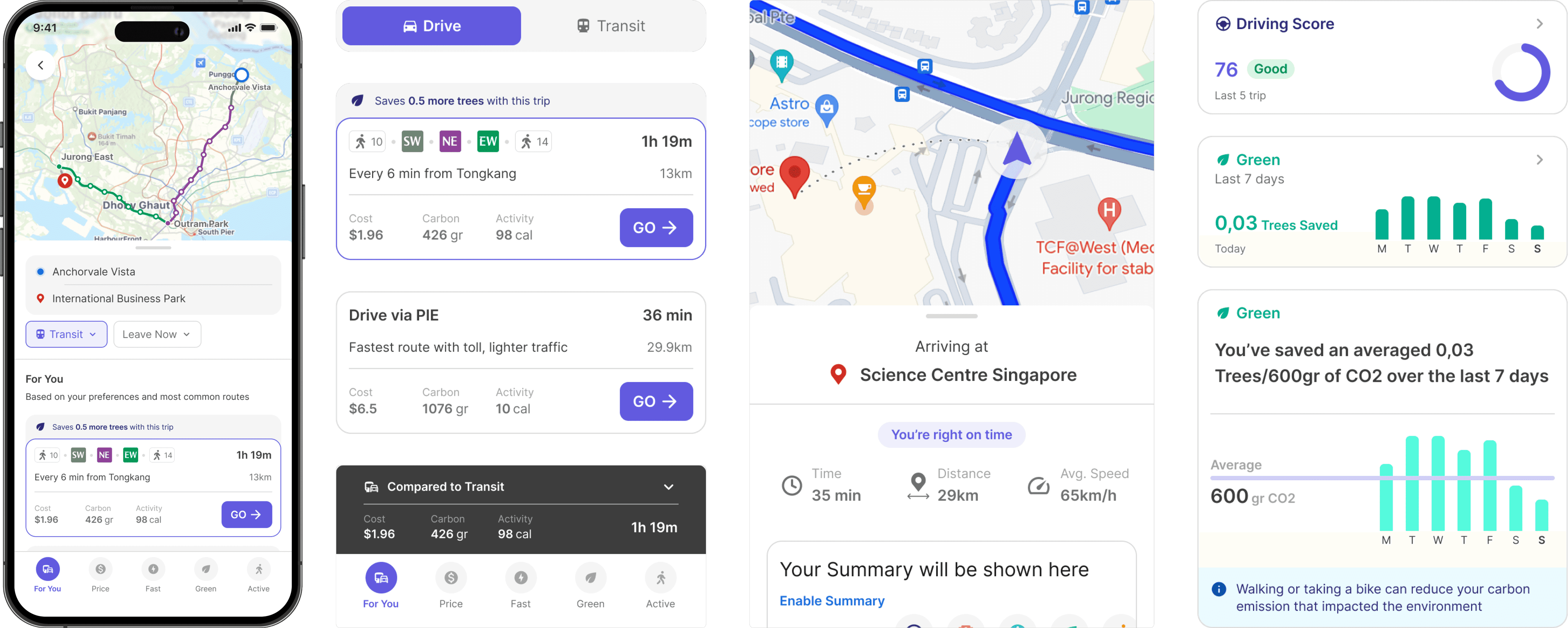
OZONE Journey Planner and nudge components
Thank you for reading up to this point!
Luckily, this project helped me to get an opportunity as a product designer intern and work with the Jaklingko team. See more details on the next case study
Back to all project
Next
Elevating Daily Trip Planning Experience
Let's Connect!
Drop me an email:
dizramahendra@gmail.com
Others
Medium
© All Rights Reserved - Danu Izra Mahendra 2023